AI Inference vs Training, Explained Simply
AI inference versus training, explained simply: training is teaching the model; inference is the model answering you. That one sentence is the whole distinction, but the reason it fills investment presentations, including the presenter’s “Elon Musk’s One Stock Retirement Plan,” is that the two phases spend money differently, and the shift between them decides which hardware companies get the next leg of growth. Here is the simplest honest walkthrough, plus why Brown thinks it is the biggest trade in tech right now.
Phase one: training, the classroom
Training is how a model gets smart. A neural network starts random; you show it enormous amounts of text, images, or code, and thousands of processors run for weeks, adjusting billions of internal parameters until its predictions stop being nonsense. The technical priority is raw throughput: calculations per second, because the faster you train, the more experiments you can afford. Clusters of graphics processors dominate this phase, which is why, in Brown’s framing, “Nvidia was the big beneficiary of that first phase” of AI. He calls this era “generic AI”: big models, built expensively, once.
Phase two: inference, the workforce
Once trained, the model deploys, and from then on every answer it produces, every email drafted, fraud flagged, call routed, is inference. Brown’s definition is as simple as it gets: “It simply means we’re running intelligence at speed and scale.” The technical priority shifts from throughput to latency: how fast one answer comes back. Models are too big for a single chip, so inference splits them across many processors that must constantly exchange information, and every exchange adds delay. Brown’s classroom analogy, the best in the business: “It’s like trying to pass a note down a long row of people sitting in a classroom. Every single person who has to take the note and hand it to the next one adds a little delay… That’s called latency in a computing system.”
Why the money follows inference
Training spend is episodic: a model gets built, then the cluster moves to the next project. Inference spend is permanent and compounding: it scales with every user and every use, forever. That is why the phase shift is an investment thesis rather than a technical footnote. As AI products go real-time, coding assistants, live security, instant agents, slow answers mean no product, so demand concentrates on hardware that minimizes latency. Brown attributes exactly those workloads to the partners of the company he teases: OpenAI using the technology “to make ChatGPT respond much faster,” Microsoft “to help software engineers write code faster,” CrowdStrike “to enable real-time AI security against cyber threats.”
His shorthand for the transition is the internet’s own: “Dial up was ‘slow internet’… Broadband was ‘fast internet’… And the companies that made that transition possible made their shareholders incredibly wealthy.”
The numbers in the pitch
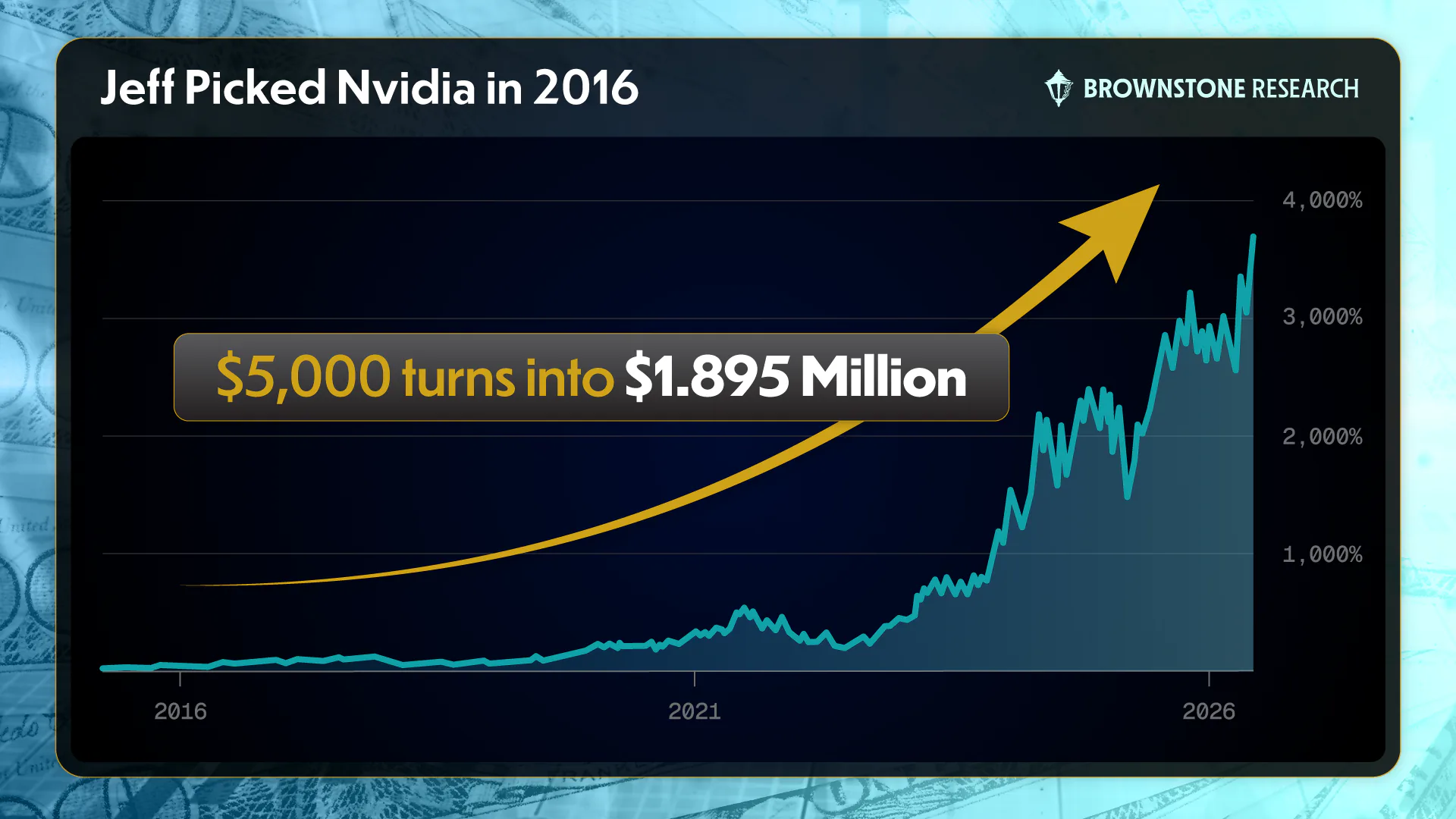
The company Brown teases, which our clue analysis matches to Cerebras (CBRS), attacks latency by building wafer-scale chips that put an enormous model’s compute on a single piece of silicon, collapsing the note-passing row. The pitch’s figures: patented technology that “can produce intelligence up to 1,000 times FASTER than regular AI” (his characterization, not a benchmark), “150 patents,” “a backlog of more than $24 billion,” capacity “sold out into 2027,” and sales growth “about 500% a year since 2022… almost six times faster than Nvidia’s current sales growth.” He sizes the company as “the same as Nvidia was in 2016,” ties demand to Musk’s Terafab and Starmind buildouts, and frames an AWS deployment as the near catalyst.
The honest frame
Three cautions belong in any simple explanation. Nvidia builds inference accelerators too; the phase shift does not evict the incumbent. Hyperscalers design their own inference silicon, a third force the teaser skips. And the “1,000x” claims are marketing scaling of a real architectural advantage; the durable question is unit economics at real workloads. Brown’s own hedge is the model posture: “I’m not recommending folks put their entire savings in this one stock.” His service’s disclosed average gain since inception, 39.4%, is the expectation anchor against the 37,800% headline.
Where to learn more
The specific ticker and analysis are in “The One-Stock Retirement Plan,” included with a $179 trial of The Near Future Report, backed by a 30-day keep-everything refund guarantee. For background, read our review of Brown’s 10X Project pitch, the Near Future Report profile, and the the presenter presenter profile. For the same distinction from another publisher, our AI model training explainer covers the classroom side in depth.
NewsletterVetter is an independent publication. We receive compensation from some of the services we review through affiliate links. Nothing on this site is investment advice. Always do your own research.