the presenter’s Golden Tablet AI Stock, Explained
The “golden tablet” is the physical prop at the center of the presenter’s One Stock Retirement Plan presentation for Brownstone Research, and it is one of the more effective teaching devices we have seen in an AI-era pitch. Brown holds up the hardware product of the small company he is teasing and uses it to explain a real computer science problem: latency, the delay that accumulates every time data moves between chips in a computing system. Understanding the golden tablet is the fastest way to understand the whole investment thesis. We break down that angle in our Jeff Brown’s Stock Picks: A Track Record Review piece. There is more on this in our Manifested AGI: Jeff Brown’s Moonshot Bonus Report article.
What the golden tablet is
In the presentation, the golden tablet is the teased company’s accelerator product, the hardware that Brown says “can produce intelligence up to 1,000 times FASTER than regular AI. And one little-known company controls it.” The name comes from the object’s appearance in the promo’s graphics, a slab-like accelerator module, and Brown uses it to make the distinction between the two phases of AI investment.
His explanation of latency is genuinely good: “It’s like trying to pass a note down a long row of people sitting in a classroom. Every single person who has to take the note and hand it to the next one adds a little delay… That’s called latency in a computing system.” The analogy matters because the fix is not more compute in the ordinary sense; it is shortening the distance and the number of handoffs. Brown stakes his career on the point: “As a former executive from two major chip makers… I can tell you this is a problem that has been plaguing the computer industry for 75 years. Nobody had been able to figure this out… Until now.”
The moat around it
The patent protection is the second pillar of the pitch. “Its technology is protected by this patent you see on the screen… plus 149 other patents. The only way for you to get access to its technology is to make a licensing deal with this company.” At the recap, Brown summarizes: “That’s not a moat. That’s a fortress.” Borrowing, explicitly, Warren Buffett’s language about businesses with “a wide and long-lasting moat around it.”
The adoption evidence is what makes the fortress claim credible. The customer list includes OpenAI (“now using their technology to make ChatGPT respond much faster”), Microsoft (“to help software engineers write code faster”), IBM (inside WatsonX), AMD, CrowdStrike (real-time AI security), and GlaxoSmithKline (drug discovery). The largest is Amazon’s AWS, which serves “more than 2 million businesses,” with Brown expecting deal details on an upcoming analyst call. The demand signal: “there’s so much demand for this golden tablet that they’re sold out into 2027,” and the $24 billion backlog is presented as contracted: “It’s not a prediction or a forecast. It’s a pipeline of future orders.”
Where the golden tablet fits in the AI stack
Brown’s framework splits the AI era into generic AI, the Nvidia-dominated training phase, and Accelerated AI, the inference phase: “AI is quickly becoming fully autonomous and making decisions on its own through a process known as inference… It simply means we’re running intelligence at speed and scale.” His dial-up-to-broadband analogy carries the why-now: “Dial up was ‘slow internet’… Broadband was ‘fast internet’… And the companies that made that transition possible made their shareholders incredibly wealthy.”
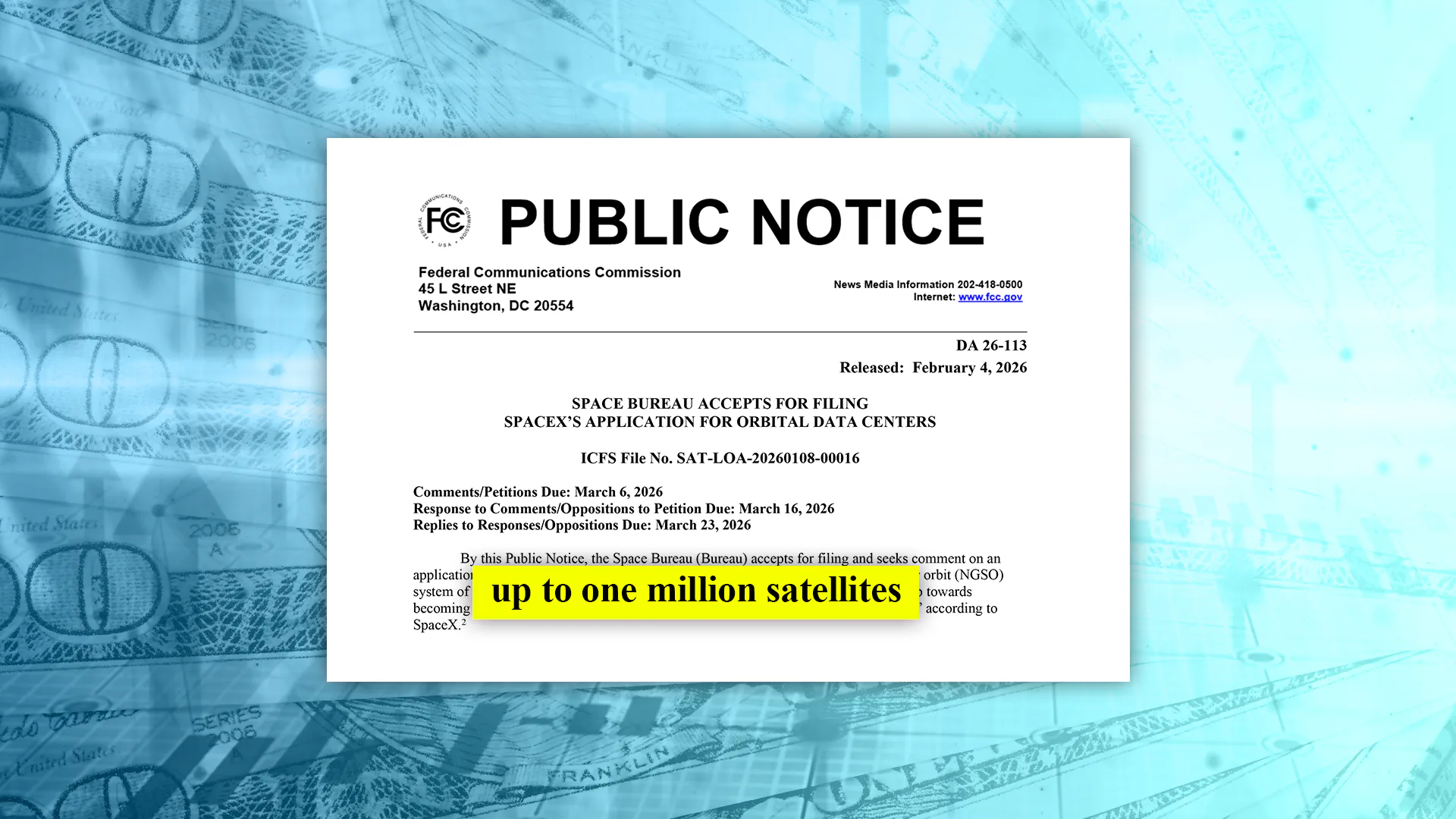
The demand side is anchored to two Musk projects: the $119 billion Terafab semiconductor plant in Texas, “set to be the world’s largest and most advanced chip-making operation,” and the Starmind satellite network permitted by the FCC to launch “up to one million AI satellites into orbit.” Both multiply the volume of inference workloads, and inference is where the golden tablet’s latency advantage pays.
Considerations
The performance claims, “1,000 times faster” and “2,000 times more powerful than Nvidia’s” technology, are the presenter’s characterization of a real advantage, not verified benchmarks, and should be weighted as such. What is verifiable: the customer partnerships, the patent count, the sold-out capacity, and Brown’s own 2016 Nvidia call, made the year of the Pascal chip. What is promotional: the November 11 deadline and the single-stock retirement framing. Brown’s own disclosed average for The Near Future Report, 39.4% since inception, is the number to hold onto.
Where to learn more
For related research, see our coverage of Brown’s Near Future Report thesis, his 10x Project memory research, and the FCC filing behind Musk’s Starmind satellite plan. The full golden tablet analysis is in Bonus Report #1 of the One Stock Retirement Plan package, included with the $179 discounted year of The Near Future Report and its 30-day refund guarantee.
NewsletterVetter is an independent publication. We receive compensation from some of the services we review through affiliate links. Nothing on this site is investment advice. Always do your own research.