Data Center Stocks: What Changed Since 2024
Investors searching “data center stocks” in 2024 were buying a simple story: hyperscale capex up, AI chips scarce, build everything. Two years later, the theme has produced spectacular winners and, just as important, changed shape. Understanding what has shifted since 2024 is the difference between buying the 2024 narrative at 2026 prices and positioning for what the current presentations, notably Marc Chaikin’s “The End of Elon?”, are actually arguing.
The 2024 baseline
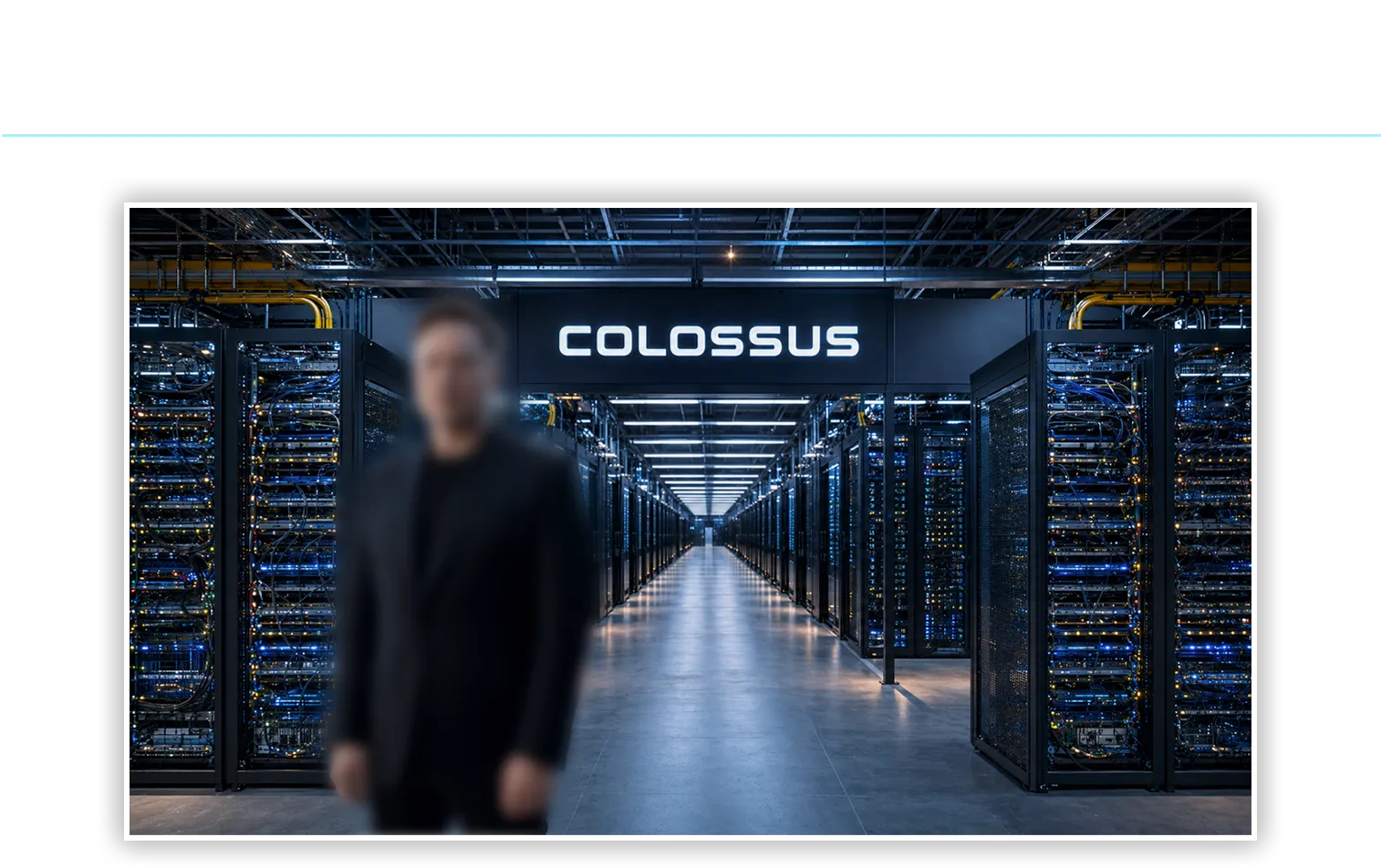
The 2024 data center trade was a scale trade. Hyperscalers and AI labs committed to campuses measured in hundreds of acres; Elon Musk’s Colossus became the emblem, “1,156 acres,” about “1,049 football fields,” drawing roughly two gigawatts of electricity. The winners were the obvious layer-one suppliers: chipmakers, server assemblers, networking, and power equipment. The gains in the current Chaikin presentation’s own reel date from that phase: Celestica “shot up more than 6,600% on the AI infrastructure boom,” Micron “soared 970% in a year,” Vertiv climbed “+586%” in the parallel resource-boom evidence set, and Constellation Energy, on the power side, “+149%.”
What changed: the constraints showed up
By 2026, the scale model started hitting physical limits, and the data is specific. The IEA projects data-center electricity use doubling “to around 945 terawatts” by 2030. Americans’ electric bills have soared “by an average of 267% in areas with high data-center concentrations, according to a Bloomberg study.” Data centers consume as much electricity as “100,000 households” each in the high-consumption framing. In other words: the constraint on the 2024 model of AI growth is no longer capital; it is power and physics. That is the setup for everything now being pitched as “the next layer.”
What changed: precision entered the thesis
The more technical shift, and the core of Chaikin’s current pitch, is precision. Today’s generative AI runs on low-precision FP16 hardware, which rounds numbers in ways that disqualify it from scientific work, his “Broccoli Problem” demonstration: ChatGPT failing to count the C’s in “broccoli,” and the lesson, “the floating point problem isn’t a software problem. It’s a hardware problem.” The Department of Energy is building the FP64 alternative: Lux, “the world’s first FP64-powered AI supercomputer,” at Oak Ridge, about “the area of a 7-Eleven convenience store… Literally 0.001% the size of Colossus,” drawing “as little as 24 megawatts,” seeding a “more than 50”-machine supercluster he calls American Atlas. The claim attached: “a sudden 360-fold acceleration in major AI-powered breakthroughs.”
What it means for stock selection
The practical difference between the 2024 and 2026 data center theses is where the incremental dollar goes. In 2024, it went to acres and megawatts for training. The 2026 layering, across the current generation of presentations, points to: precision hardware and the DOE supercluster supply chain (Chaikin’s American Atlas Portfolio, “17 companies that have signed deals… working directly on building American Atlas,” with AMD, whose Instinct chips power Frontier and El Capitan, revealed free); power and energy infrastructure for the compute buildout (the data-center power theme, with hyperscalers signing decade-plus offtakes); and efficiency, smaller, hotter, denser facilities rather than more acreage, which is what the “micro cluster” concept represents.
The honest caveats for anyone chasing the theme: the 2024-style maximum gains quoted in every presentation are rear-view numbers; “trillion times more powerful” style comparisons count representable values rather than throughput; and FP64 scientific machines and FP16 generative campuses coexist, solving different problems, so the rotation is a layering, not a replacement. Chaikin’s own advice to holders of the first wave is the right frame: “if you’re already positioned in today’s top AI plays, that’s a good thing. What I’m showing you today is a different layer of the same opportunity. I want you to have both.”
Questions readers ask
What did the 2024 baseline get right and wrong? The 2024 crop of data-center winners, the power names, the electrical equipment names, the GPU-centered compute names, was right about demand and rough on constraints: electricity, transformers, and construction timelines became the story. The American Atlas pitch builds on exactly that constraint set, arguing the next generation of facilities is small-footprint, low-power, FP64-centered, which changes which suppliers get paid.
What is the split to watch? Consumer inference and scientific computing are diverging into two different builds. Colossus-class training and chat infrastructure at 2 gigawatts a site, and Oak Ridge-class FP64 machines drawing as little as 24 megawatts with a 7-Eleven footprint. Both grow, but they buy different equipment, and the market has mostly priced them as one trade so far.
What is the free way in? AMD, whose Instinct accelerators power Frontier and El Capitan, the DOE’s existing flagship machines. The 17-stock American Atlas Portfolio covers the contracted builders, and the “landmine stocks” report covers the other side of the trade, the names the thesis says are priced for the old regime. Our full review has the complete picture.
Where to learn more
Start with our End of Elon? American Atlas review, then the supercluster stock universe and the AI data center energy problem. The full presentation is at the Chaikin Analytics offer page, discounted from $499 with a 30-day full-refund guarantee.
NewsletterVetter is an independent publication. We receive compensation from some of the services we review through affiliate links. Nothing on this site is investment advice. Always do your own research.