The Power Gauge Rating System, Explained
The Power Gauge rating is the engine behind every recommendation Marc Chaikin publishes, including the American Atlas Portfolio in his current “The End of Elon?” presentation, and it is one of the few newsletter-industry rating systems with a genuine institutional pedigree. Understanding what the Gauge actually measures, and what it has flagged historically, is the fastest way to evaluate any Chaikin pitch, because the pitch always reduces to the same claim: the system signaled bullish before the move.
What the Power Gauge is
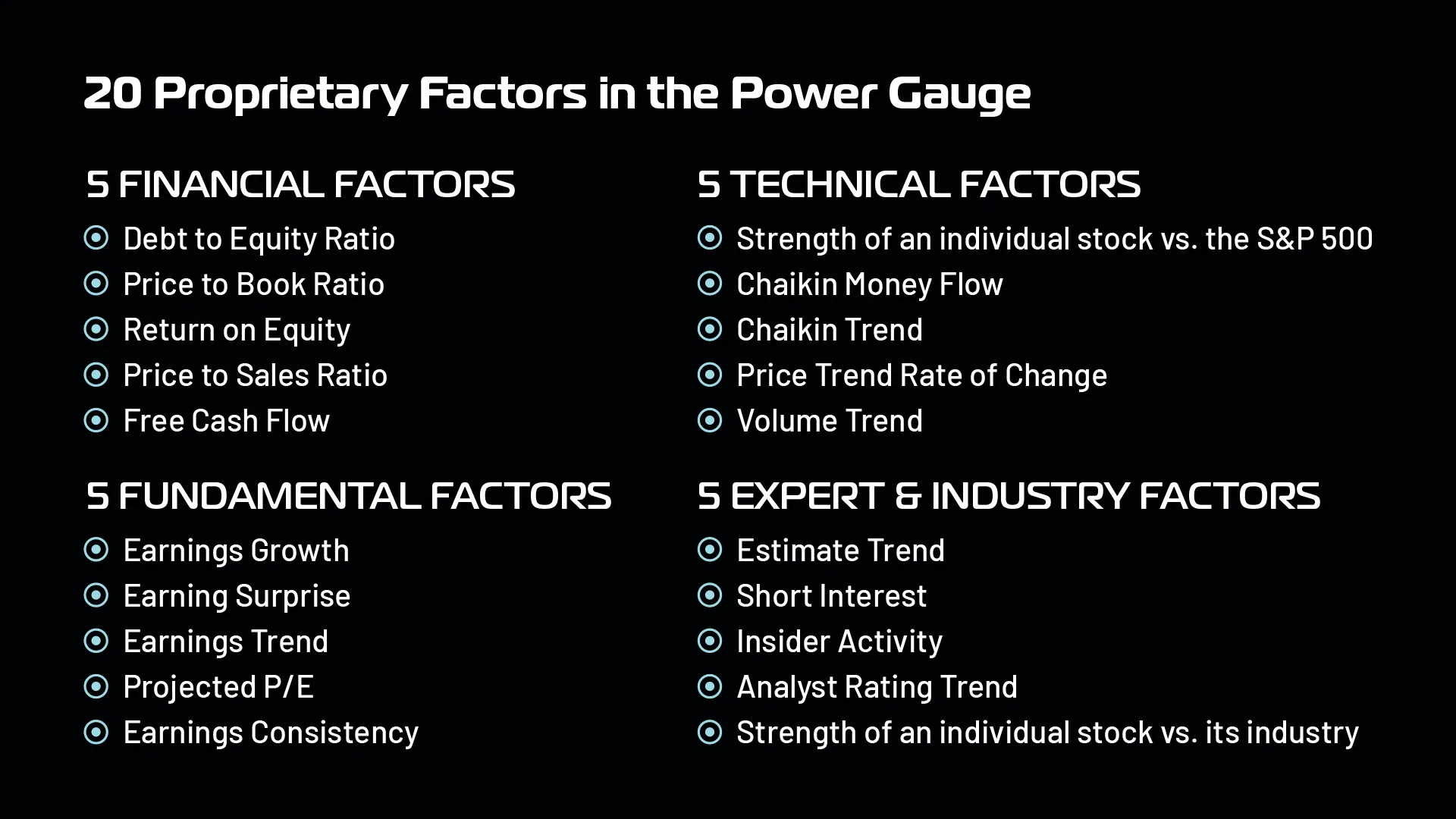
The Power Gauge is a quantitative stock-rating system that distills roughly 20 factors into a single rating, bullish to bearish. The factor families are intuitive: money flow, where institutional capital is actually moving; earnings quality and growth; expert revision trends, the direction analysts are editing their estimates; valuation; and technicals. The output is designed to answer one question, “is this stock under accumulation by the people who move it,” before the price fully reflects the answer.
The institutional lineage is what separates it from most newsletter scoring systems. Chaikin, who entered the markets in 1965 and whose clients “have included George Soros, Michael Steinhardt, Paul Tudor Jones, and Steve Cohen,” invented the Chaikin Money Flow indicator, “found in every Bloomberg and Reuters terminal on the planet today.” Institutions pay “$24,000 EVERY SINGLE YEAR” for terminal access to his indicator. The Power Gauge is that institutional analytics toolkit repackaged for retail, and Nasdaq separately hired him to build three indices for the exchange.
The track record the system claims
The presentation’s evidence reel is long and specific. On stocks: “Micron Technology before it soared 970% in a year… Celestica before it shot up more than 6,600% on the AI infrastructure boom… And it even flashed BULLISH on Nvidia back in 2014… before it skyrocketed more than 50,000%,” plus Fulgent Genetics (+799%), NIO (+884%), Vistra (+1,375%), and Alpha Metallurgical Resources (+2,175%). On the systematic claim: “backtests show that it would’ve accurately flashed bullish on at least 7 out of the top 10 stocks of the year since 2016.” On macro: the COVID crash warning in January 2020, the bottom “just 24 hours before the greatest market recovery in American history,” the 2022 bear call, the 2023 rebound call before “the S&P gained 24% that year and another 23% the next,” and the Liberation Day warning.
The presentation deserves credit for the hedge attached to all of it: “These are long term, maximum gains from stocks flagged by Marc’s system. Past performance is no guarantee of future results.” Maximum peak gains on best picks are the most favorable possible presentation, and the backtest is a simulation, not a live record.
How it drives the American Atlas picks
In the current presentation, the Gauge is the mechanism that converts a macro thesis, FP64 supercomputing at the DOE labs, into a buy list. The thesis: “the world’s first FP64-powered AI supercomputer,” Lux, is being assembled at Oak Ridge, seeding the American Atlas network of “more than 50” DOE machines, and the companies supplying that buildout will show accumulation in the Gauge’s factors before the story is mainstream. The free pick arrived through that screen: “It’s the first company on my American Atlas ‘buy’ list, Molly. I’m talking about Advanced Micro Devices, ticker symbol AMD,” whose Instinct chips already power Frontier and El Capitan. The paid portfolio extends to “17 companies that have signed deals… They’re all working directly on building American Atlas.”
Members get the system itself, not just the output: “you’ll get full 24/7 free access to Marc’s proprietary Power Gauge system for one full year,” rated “a $1,000 value on its own,” which lets you run the rating on any holding, including the AI stocks the “Landmine Stocks” report flags on the bearish side.
Questions readers ask about the rating system
What is the Power Gauge? A 20-factor rating system Marc Chaikin built after his institutional career, the analytical engine behind Power Gauge Report. The presentation prices its institutional legacy honestly: the Chaikin Money Flow indicator sits in every Bloomberg and Reuters terminal, where access costs $24,000 a year, and Nasdaq hired Chaikin to build three new indices and invited him to ring the opening bell.
What is the claimed hit rate? The backtest claim: “would’ve accurately flashed bullish on at least 7 out of the top 10 stocks of the year since 2016.” The dated stock calls: Nvidia in 2014 before 50,000%, Micron before 970%, Celestica before 6,600%. The hedge, on the slides: “These are long term, maximum gains from stocks flagged by Marc’s system. Past performance is no guarantee of future results.”
How does it drive the American Atlas picks? The 17-company portfolio and the “landmine stocks” avoid-list are both presented as Power Gauge output, which means the system’s factor weights decide which DOE-linked builders make the buy list. Subscribers get one full year of 24/7 Power Gauge access with the $499-anchored membership, a $1,000 stated value on its own, plus the 30-day full refund. See the full review for how the picks fit the thesis.
Where to learn more
Start with our End of Elon? American Atlas review, our assessment of whether the Power Gauge Report is worth it, and the American Atlas Portfolio explained. The full offer, including Gauge access, is at the Chaikin Analytics page, discounted from the $499 list with a 30-day full-refund guarantee.
NewsletterVetter is an independent publication. We receive compensation from some of the services we review through affiliate links. Nothing on this site is investment advice. Always do your own research.