Elon Musk’s Phone: What the Starphone Evidence Shows
Is Elon Musk building a phone? The honest answer is that Musk has denied it, twice, while his companies have filed every piece of paperwork a phone launch would require. That tension is the entire subject of “Starphone,” Josh Baylin’s presentation for Stansberry Research’s True Innovations Report, and it is the most evidence-dense Musk-phone analysis we have reviewed. Here is what the record actually shows.
The reports and the denials
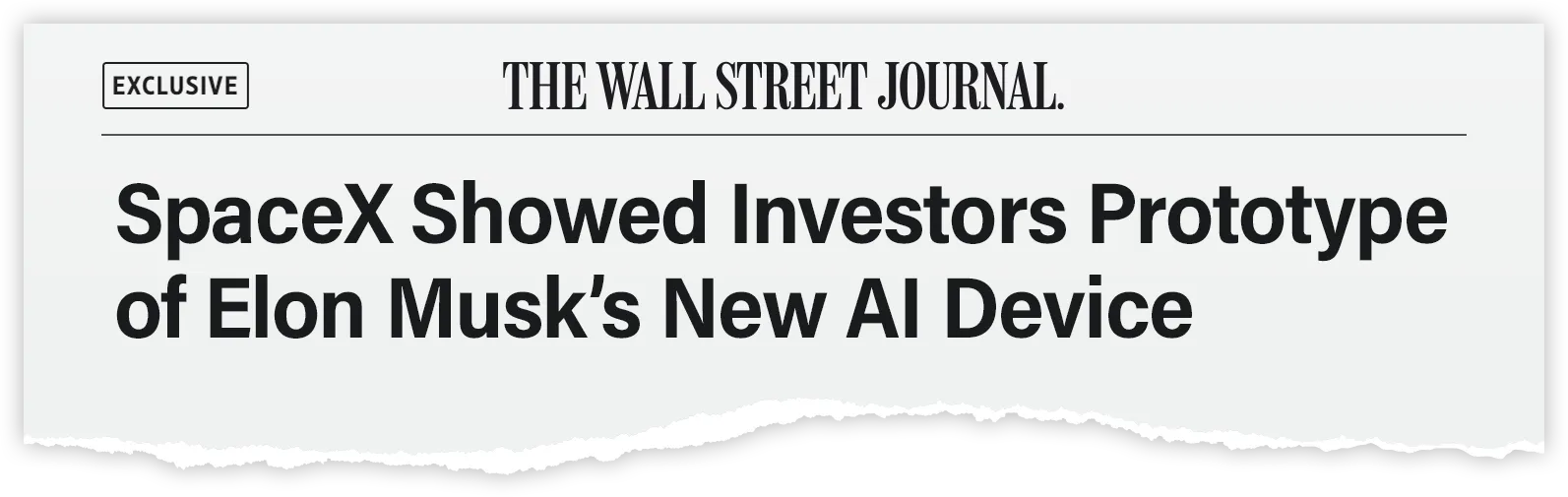
The Wall Street Journal reported that SpaceX debuted a prototype phone to investors ahead of its IPO. Reuters reported the same in February. Musk’s response, per the presentation: he called the story “utterly false.” Baylin’s rebuttal is the most interesting idea in the whole pitch. He argues Musk is exploiting a “semantic loophole”: “He’s letting you assume ‘phone’ means what it’s always meant. Meanwhile, he’s likely building something totally new.”
His supporting analogies come from Musk’s own product history: “He doesn’t call Tesla a car. He calls it a ‘robot on wheels.’ He doesn’t call Cybertruck a truck. He calls it ‘an armored personnel carrier from the future.’” Baylin even concedes the denial may be technically honest: “I don’t think there’s a finished phone sitting in a drawer at SpaceX headquarters right now. But everything required to build one, the spectrum, the chips, the trademark, the legal groundwork, and maybe even a working prototype shown to his own investors, that’s already been filed, funded, and built.”
The paper trail
Whatever you make of the denials, the filings are real and checkable:
- Trademarks. SpaceX filed “Starlink Mobile” and “Powered by Starlink” the same day, and separately trademarked “Starmind” for a new class of compute satellites.
- Spectrum. SpaceX “bought exclusive-use, nationwide spectrum from EchoStar. For $17 billion.” EchoStar’s stock, Baylin notes, went from around $15 to $127 in under a year after the deal.
- The FCC. New rules make satellite licensing faster and easier, and the agency has approved next-gen Starlink satellites, with roughly 15,000 more capable birds starting to come online.
- The SEC. SpaceX’s IPO paperwork describes a next-generation direct-to-smartphone service “on par with terrestrial mobile networks.”
- Chip partners. Qualcomm and MediaTek have both signed deals to build satellite connectivity into future phones.
The satellite advantage
The core technology is Direct-to-Cell, which Baylin summarizes cleanly: “Instead of a bare-bones emergency lifeline, D2C turns Starlink’s satellites into cell towers. So Starphone would be able to text, call, and use the Internet without a cell tower or Wi-Fi.” The scale behind that is hard to overstate. Starlink made up 69% of SpaceX’s revenue in Q1 2026, and SpaceX operates “19 TIMES more active satellites than even the U.S. military, the Chinese military and the Russian military… combined,” in Baylin’s telling. There is more on this in our Starmind: SpaceX’s Orbital Compute Satellite Network article.
The AI layer is Grok, which he says “consistently ranks among the top AI models in independent benchmarks” and is “one of the most efficient AI models out there.” Musk’s own vision for the device, from his Joe Rogan appearance, is quoted directly: “I don’t think there’ll be operating systems. I don’t think there’ll be apps. The phone will just display the pixels and make the sounds.”
Who is Josh Baylin to say this?
The presenter matters here. Baylin says he briefed Congress in 2004, three years before the iPhone launched, that a new device was coming “that would change society in ways we weren’t prepared for.” He later worked at SAC Capital, where he walked into a meeting and told Steve Cohen that Apple would not sell a million iPhones “like every other analyst was predicting… It was going to sell a billion.” He was, he says, “literally laughed out of the room” and later tracked $200 million positions for the fund. His track-record picks include Palantir, where every $10,000 became $82,000 at the peak, and Apple, where $10,000 became $68,000, all carrying the disclaimer that these are maximum gains on best picks.
His stated upside for Starphone suppliers: “I wouldn’t be surprised if early investors have the chance to make 50 times their money by the time Starphone launches, if you own the right stocks.”
The free ticker
Baylin gives one away on the spot: “I think everyone watching should put a little bit of money in Qualcomm. Ticker Q-C-O-M.” His reasoning: SpaceX “has already tapped Qualcomm, which is a chipmaker, to build satellite connectivity into their future devices. So, when Starphone finally launches… there’s a real chance it runs through Qualcomm’s satellite chip. I think the stock could easily double over the next few years.”
The smaller supplier names stay in his bonus report, “Elon Musk’s AI Phone Supplier List,” which comes with a trial of the True Innovations Report, backed by Stansberry’s 30-day full-refund guarantee. One supplier, he says, “has supplied hardware to SpaceX for close to a decade,” and “most of them trade for under $100.”
Considerations
Musk has not confirmed a phone, and Baylin is upfront about that. The precedent cuts both ways: Jobs denied the iPhone too, but companies also file trademarks they never use. The stronger evidence is economic, in Baylin’s own phrase: “a trillion-dollar company doesn’t jump over all these hurdles just for fun.”
For more, see our coverage of Oxford’s rival take on Musk’s phone partner, our look at the FCC filing behind Musk’s million-satellite AI plan, and orbital data centers as an investment theme. Stansberry’s own publisher profile has the firm’s 27-year background.
NewsletterVetter is an independent publication. We receive compensation from some of the services we review through affiliate links. Nothing on this site is investment advice. Always do your own research.