Physical AI Stocks in 2026: Josh Baylin’s Thesis
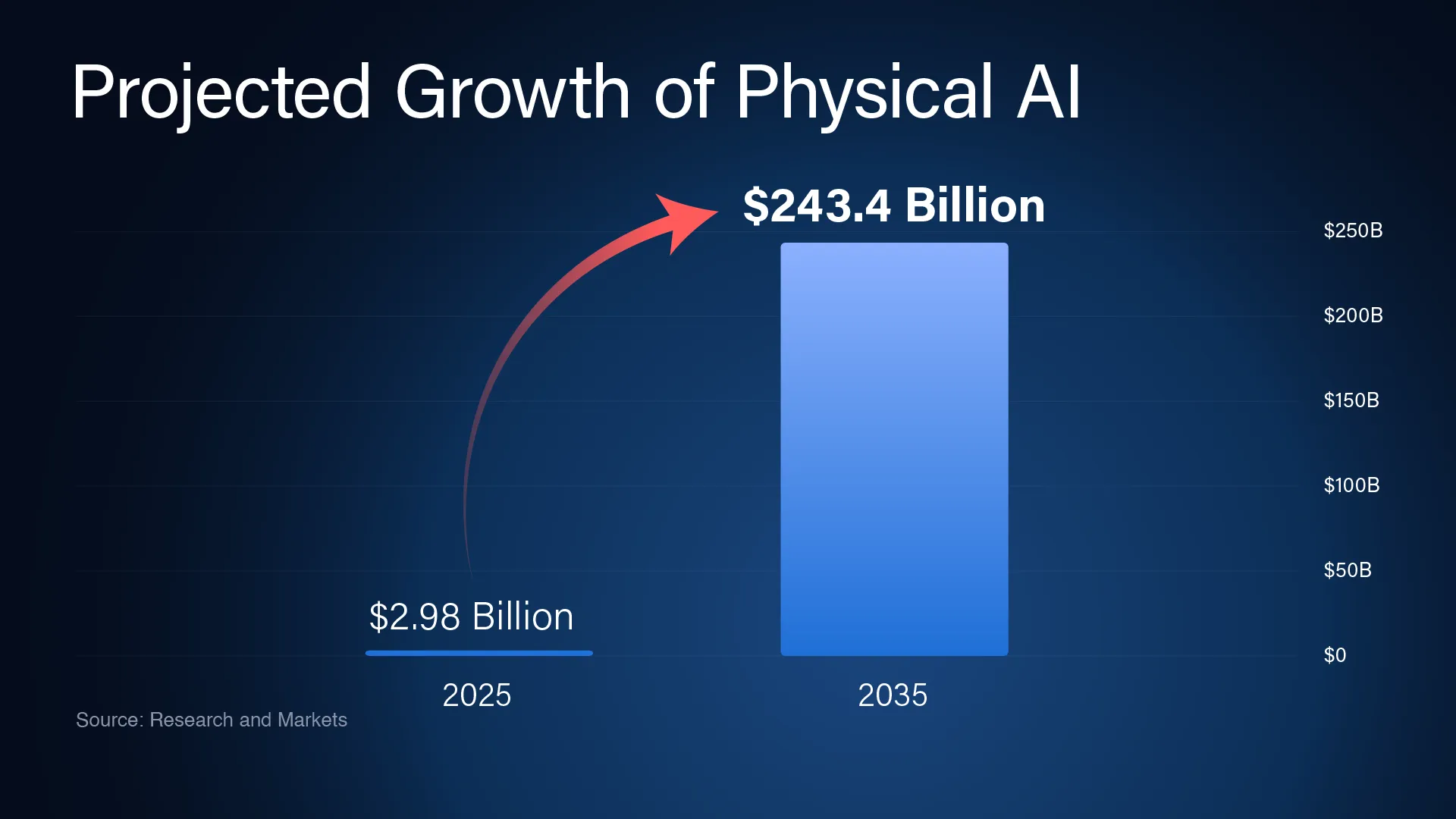
Physical AI stocks in 2026 are the subject of Josh Baylin’s “Starphone” presentation for Stansberry Research’s True Innovations Report, and the pitch is more specific than most: intelligence is leaving the data center and entering devices, satellites, and machines, and the companies that build that hardware get the next leg of the AI trade. Baylin’s line is direct: “Physical AI is going to be one of the defining wealth-building trends of the next few years.” Here is his thesis, the evidence behind it, and what it means for a 2026 portfolio. Our Physical AI Stocks: The Companies Behind the Trend explainer covers this in detail. There is more on this in our Sam Altman’s Next Venture: The 500X AI Convergence article.
The three pillars of the thesis
Baylin builds the Starphone case from three layers of Musk infrastructure, each with 2026-vintage evidence:
The spectrum layer. SpaceX “bought exclusive-use, nationwide spectrum from EchoStar. For $17 billion,” and filed “Starlink Mobile” and “Powered by Starlink” trademarks the same day. EchoStar’s stock went from around $15 to $127 in under a year after the deal.
The compute layer. The AI1 orbital data-center satellite, “the wingspan of a Boeing 747,” generating “somewhere around 120 to 150 kilowatts of computing power… on sunlight alone,” trademarked under “Starmind.” Google “agreed to pay SpaceX $920 million a month for SpaceX computing capacity” through 2029, “worth more than $30 billion.”
The device layer. The hypothetical Starphone: “thinner than an iPhone… usable worldwide without cell towers… running on one of the most powerful AI-based platforms in existence,” what Baylin calls “the first truly physical AI device of its kind.” Musk’s own vision, from his Joe Rogan appearance: “The phone will just display the pixels and make the sounds.”
The 2026 catalysts
What distinguishes this pitch from the generic “physical AI” theme is a dated catalyst list: the FCC’s new rules making “satellite licensing faster and easier”; roughly 15,000 next-generation Starlink satellites, “each about 20 times better than current capacity,” starting to come online; the Qualcomm and MediaTek deals to build satellite connectivity into phones; SpaceX’s SEC IPO paperwork describing a direct-to-smartphone service “on par with terrestrial mobile networks”; and Starlink’s Direct to Cell texting live with T-Mobile. Each item is a checkable public event, which is more than most theme pitches can say.
The supplier trade
The investable core of the thesis is the supply chain, and Baylin’s historical framing is the smartphone transition: Motorola “quadrupled between 1991 and 1995”; Skyworks went “up as much as 491%”; Cirrus Logic “as high as 489%”; Amkor “as much as tripled”; Cadence Design Systems “rose as high as 16,000%.” His claim for the physical AI wave: “I wouldn’t be surprised if early investors have the chance to make 50 times their money by the time Starphone launches, if you own the right stocks,” with the standing disclaimer that those historical figures are maximum gains on best picks.
The free pick is the chip layer: “I think everyone watching should put a little bit of money in Qualcomm. Ticker Q-C-O-M… it’s already tapped Qualcomm, which is a chipmaker, to build satellite connectivity into their future devices. So, when Starphone finally launches… there’s a real chance it runs through Qualcomm’s satellite chip.” The full list, including a company that “has supplied hardware to SpaceX for close to a decade” and names trading under $100, is in “Elon Musk’s AI Phone Supplier List,” included with a trial of the True Innovations Report under Stansberry’s 30-day full-refund guarantee.
Who is making this call
The presenter matters to the thesis’s weight. Baylin says he briefed Congress in 2004, three years before the iPhone, that “a new device was coming that would change society in ways we weren’t prepared for,” then worked at SAC Capital, where he told Steve Cohen Apple would sell “a billion” iPhones when every other analyst said a million, and was “literally laughed out of the room” for it. His track-record picks, Palantir at $10k-to-$82k, Microsoft, Apple, carry the maximum-gains disclaimer.
Considerations for 2026
The physical AI theme is broad enough to justify almost any tech holding, which is the discipline problem: the thesis is only actionable when tied to specific revenue, like satellite-connectivity chips actually shipping in phones, or orbital compute contracts actually being paid. Musk has denied the phone, twice; the base case is the network scaling while the device remains optionality. And supplier stocks are cyclicals wearing a theme costume; they will trade with the semiconductor cycle regardless of how the Starphone story resolves.
Where to learn more
For the device story, see Oxford’s take on Musk’s secret phone partner; for the compute layer, orbital data centers as a theme; and for the on-device intelligence trend from another publisher, Ambient AI edge stocks. Stansberry’s history is in our publisher profile.
NewsletterVetter is an independent publication. We receive compensation from some of the services we review through affiliate links. Nothing on this site is investment advice. Always do your own research.