SpaceX Starmind: The AI1 Orbital Data Center Explained
SpaceX Starmind is the trademarked name for the company’s compute-satellite program: a plan to move AI processing into orbit, where satellites run on uninterrupted sunlight instead of grid electricity. It is a core pillar of Josh Baylin’s “Starphone” presentation for Stansberry Research’s True Innovations Report, and it is one of the more forward-looking pieces of the Musk infrastructure story: if the phone connects to everything, something has to do the thinking, and SpaceX’s answer is a network of orbital data centers. Here is what is known. For the full backstory, see our Stansberry Research: Is It a Scam? An Honest Look article. Our Starmind: SpaceX’s Orbital Compute Satellite Network explainer covers this in detail.
The AI1 satellite
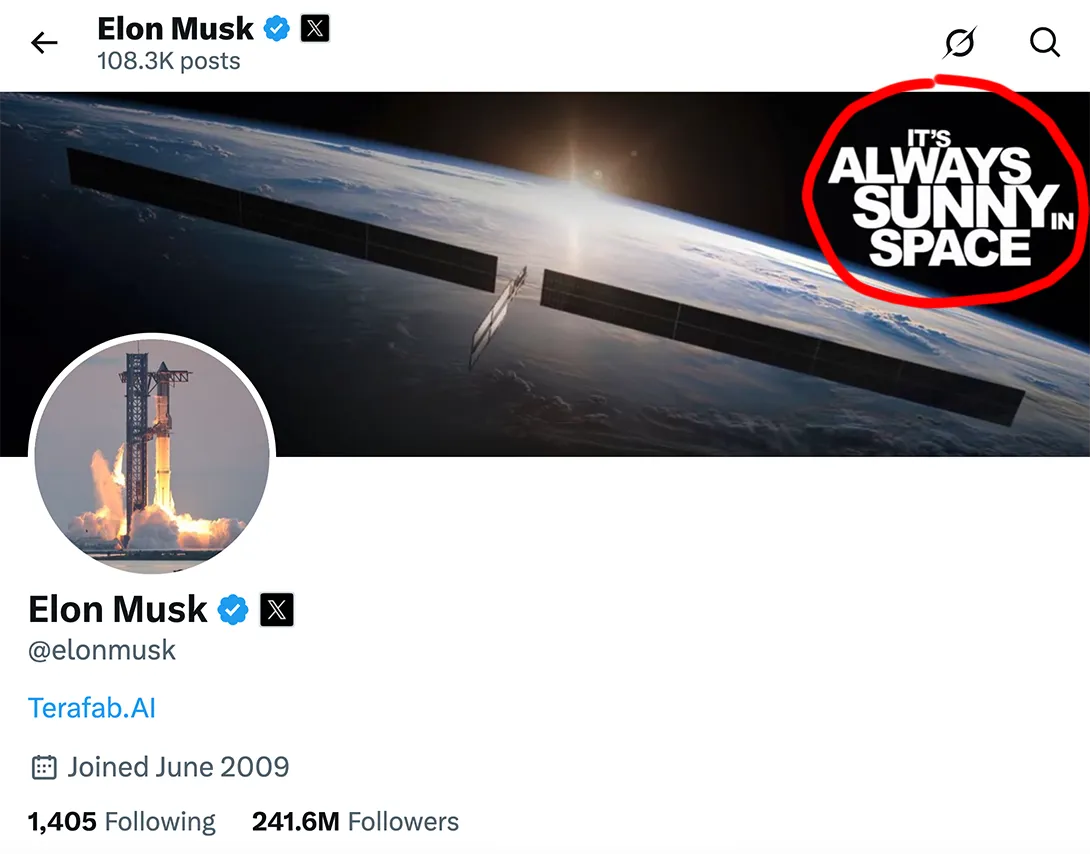
The concrete anchor of the program is the AI1 orbital data-center satellite, which SpaceX has unveiled. The specifications Baylin cites: “the wingspan of a Boeing 747” and “somewhere around 120 to 150 kilowatts of computing power,” running “on sunlight alone.” Elon’s own phrase for the solar economics, quoted in the presentation: “It’s always sunny in space.”
The engineering logic is worth spelling out, because it is more sensible than it first sounds. Terrestrial data centers are constrained by two things: electricity, which is expensive and increasingly scarce near grids, and cooling, which consumes a large fraction of the power budget. A satellite gets continuous solar input and can radiate heat into space, and the same physics that make orbit harsh for hardware make it generous for energy. The trade-off is launch cost and the difficulty of servicing hardware 300 miles up.
The Google contract
The commercial proof point is the biggest number in the presentation: Google “agreed to pay SpaceX $920 million a month for SpaceX computing capacity” under a contract running through 2029, “worth more than $30 billion.” Read that figure twice: per month. If accurate, it means one of the largest AI buyers on Earth has already priced orbital compute as a real part of its infrastructure strategy, years before any Starphone exists. That single contract does more to legitimize the Starmind concept than any amount of visionary language.
How Starmind fits the Starphone thesis
Baylin’s pitch builds the phone from three pillars: the legal framework (Starlink’s “bought exclusive-use, nationwide spectrum from EchoStar. For $17 billion”), the physical infrastructure (Starmind’s compute satellites), and the AI (Grok, “now part of SpaceX, too,” which “consistently ranks among the top AI models in independent benchmarks”). The phone, in this construction, is a thin device: Musk’s own vision, quoted from his Joe Rogan appearance, is “I don’t think there’ll be operating systems. I don’t think there’ll be apps. The phone will just display the pixels and make the sounds.” All the heavy lifting, connectivity, compute, and intelligence, happens in the network overhead.
That architecture is why Baylin calls the hypothetical device “the first truly physical AI device of its kind”: it would be a consumer product whose entire intelligence layer is satellite-based. Starmind is the middle layer that makes the concept coherent.
The investment angle
Direct exposure to Starmind is SpaceX itself, which is going public through its IPO, and Starlink already made up “69% of SpaceX’s revenue” in Q1 2026 per the presentation. For supplier exposure, the same logic as the phone applies: the companies building radios, power systems, and chips for satellites get paid whether or not the consumer device ships. Baylin’s free pick is Qualcomm (QCOM): “SpaceX is bogged down with speculative money. Meanwhile, it’s already tapped Qualcomm, which is a chipmaker, to build satellite connectivity into their future devices.” His fuller supplier list, including a company that “has supplied hardware to SpaceX for close to a decade,” is in “Elon Musk’s AI Phone Supplier List,” included with a trial of the True Innovations Report under Stansberry’s 30-day refund guarantee.
Considerations
Orbital compute is early-stage by any standard. Launch capacity is finite, radiation-hardened AI hardware is expensive, and the economics only work for workloads that tolerate latency to orbit, around 20-30 milliseconds round trip, which rules out some real-time applications and leaves others untouched. The Google contract, if its terms are as described, is the strongest evidence the model works; skepticism is fair until the numbers appear in disclosed financials. As with the phone itself, Musk has not confirmed a “Starmind” consumer product, and Baylin’s own framing, that the pieces are “already been filed, funded, and built” while the device is not, applies here too.
Where to learn more
For the phone story built on this infrastructure, see our coverage of Musk’s secret phone partner from the Oxford series and orbital data centers as an investment theme. The FCC filing behind Musk’s million-satellite plan covers the regulatory side, and Stansberry’s history is in our publisher profile.
NewsletterVetter is an independent publication. We receive compensation from some of the services we review through affiliate links. Nothing on this site is investment advice. Always do your own research.