Cerebras (CBRS) Stock Price: What Drives It
Cerebras stock, which trades under the ticker CBRS, has become a frequent search among viewers of the presenter’s “One Stock Retirement Plan” presentation, because the clues in that teaser line up most closely with the wafer-scale AI chip company. If you are trying to understand what actually moves the Cerebras stock price, this article breaks the drivers down honestly: backlog, capacity, the Amazon catalyst, growth rate, and sentiment around the inference market.
Driver one: the backlog
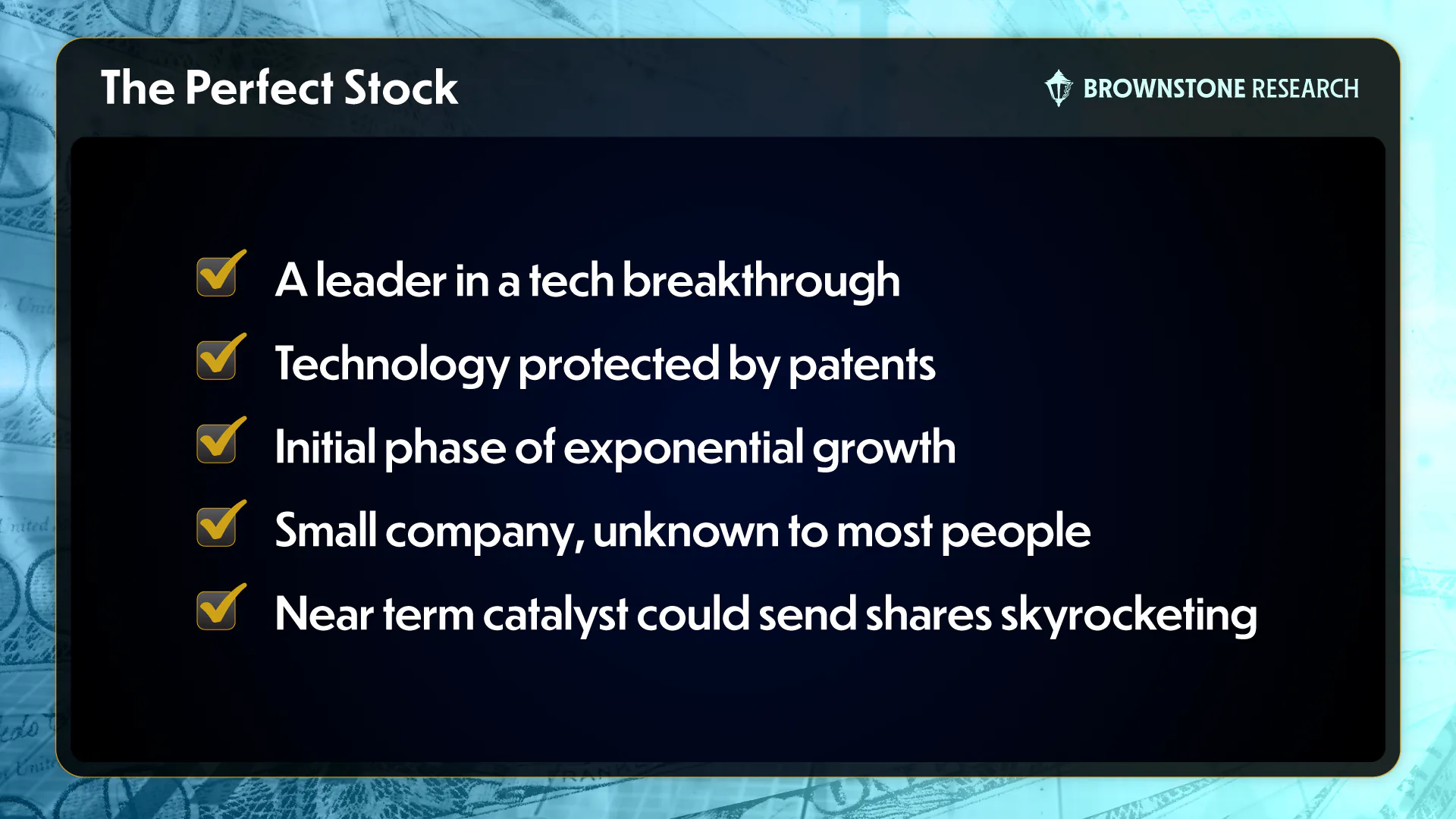
The single biggest fundamental number in Brown’s pitch is the order book. He cites “a backlog of more than $24 billion” for the teased company and emphasizes its quality: “It’s not a prediction or a forecast. It’s a pipeline of future orders.” For a semiconductor company, backlog is the closest thing to visibility an investor gets. A $24 billion contracted pipeline means future revenue is substantially spoken for, and each quarter that converts backlog into recognized sales becomes a checkable milestone for the stock.
Backlog also has a second effect: pricing power. When customers queue for years, the supplier holds the upper hand on contract terms. That is a meaningful margin tailwind if the pipeline keeps growing.
Driver two: sold-out capacity
Brown says the company is “sold out into 2027.” Capacity constraints cut both ways for a stock price. In the short term, they cap revenue: you cannot bill for chips you cannot make. In the long term, they are evidence of demand exceeding supply, which is usually the condition that precedes capacity expansion, price increases, or both. Watch for capital expenditure announcements and any expansion of manufacturing arrangements; those are the signals that the constraint is being addressed and growth can accelerate.
Driver three: the Amazon catalyst
The event Brown ties his timing to is a distribution deal with AWS. “Executives of this company have promised that they’ll begin to deploy this technology through Amazon’s network very soon,” he says, and he expects the details to be revealed “on an important call with Wall Street analysts.” He frames the window as “before November 11,” tied to Elon Musk’s Terafab and Starmind announcements.
Treat the date with skepticism; newsletters use deadlines to create urgency, and no company calendar was cited. But the underlying logic is sound: a global distribution deal with the largest cloud provider is exactly the kind of catalyst that re-rates a small-cap semiconductor stock, because it converts a promising technology into a mass-market channel. Nvidia’s 2016-era growth famously accelerated through exactly this kind of hyperscaler distribution. If Cerebras is the teased company and an AWS deployment is confirmed, that is a fundamental event, not just a talking point.
Driver four: the growth rate
Brown claims sales have been growing “about 500% a year since 2022… almost six times faster than Nvidia’s current sales growth,” and that “Wall Street analysts are expecting sales to more than TRIPLE in 2027.” Hypergrowth names trade on the ratio of actual growth to expected growth. As long as revenue beats the consensus trajectory, the multiple holds up; the first big miss is usually where hypergrowth stocks break. For Cerebras specifically, quarterly revenue against that 500% baseline is the number to watch.
Driver five: the competitive frame
The stock’s sentiment rests on the training-versus-inference narrative. Brown’s pitch: “Nvidia was the big beneficiary of that first phase. But the future will be powered by what I call ‘Accelerated AI.’” As long as investors believe inference is the next phase of AI spending, an inference-native hardware maker gets the benefit of the doubt. If Nvidia, AMD, or the hyperscalers’ in-house chips neutralize the latency advantage, that narrative premium fades. Claims like “2,000 times more powerful than Nvidia’s” are the presenter’s characterization, not verified benchmarks; the durable question is whether wafer-scale economics beat cluster economics at real-world inference workloads. For the full backstory, see our Training vs Inference: Why the Distinction Matters article.
Considerations for the stock price
A few honest cautions. A recently public semiconductor company carries volatility, lockup expirations, and index-inclusion dynamics that have nothing to do with fundamentals. Teaser-driven attention can push a price ahead of the actual catalyst, which hurts late buyers even when the thesis is right. And Brown’s own service disclosure is a useful reality check: The Near Future Report averages a 39.4% gain since inception, against peak picks like Nvidia at 4,100%. Size positions accordingly; as Brown says himself, “I’m not recommending folks put their entire savings in this one stock.”
Where to learn more
Brown’s specific ticker and full analysis are in “The One-Stock Retirement Plan,” included with a $179 trial of The Near Future Report, protected by a 30-day keep-everything refund guarantee. For background, read our review of Brown’s 10X Project pitch, the Near Future Report profile, and the the presenter presenter profile. For the technical story behind the pitch, our edge inference explainer covers the training-to-inference shift in depth.
NewsletterVetter is an independent publication. We receive compensation from some of the services we review through affiliate links. Nothing on this site is investment advice. Always do your own research.