Elon Musk’s Terafab Chip Factory: The Texas Project
Elon Musk’s Terafab chip factory is the Texas semiconductor plant the presenter calls the first of two “genius moves” that he believes will “turbocharge the AI revolution,” in his “Elon Musk’s One Stock Retirement Plan” presentation. A $119 billion manufacturing project sited in the state where Musk builds everything else, Terafab is the hardware expression of a strategy every AI watcher understands: whoever controls compute capacity controls the pace of the revolution. Here is the project, the claims, and the investment angles. We walk through the specifics in our How to Profit From Elon Musk’s Terafab, Per Jeff Brown piece. Our Terafab: Elon Musk’s $119 Billion Texas Chip Plant explainer covers this in detail.
The project, as presented
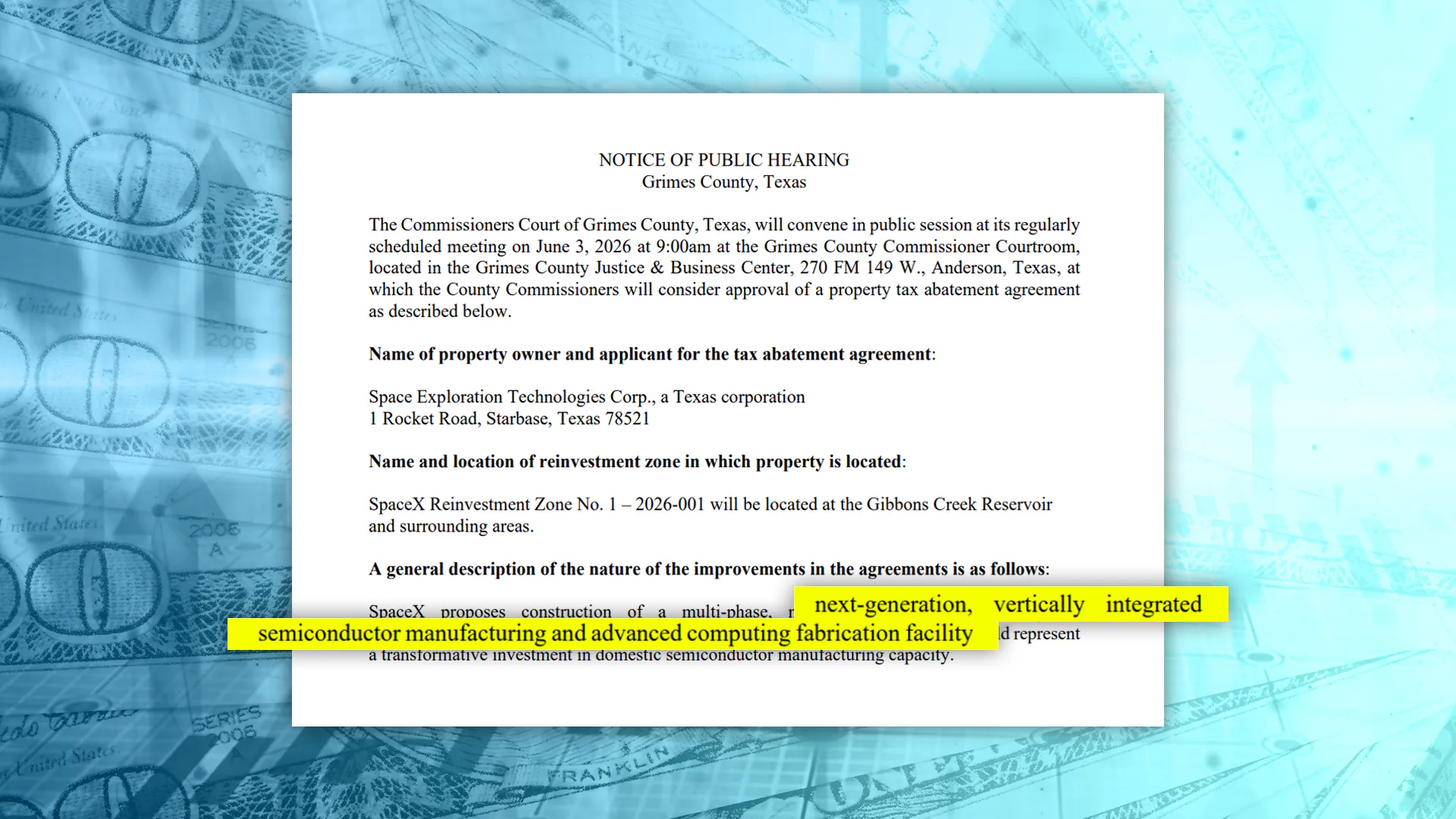
Brown introduces it with a physical prop: “a Texas government document confirming Elon Musk is building a $119 billion semiconductor manufacturing plant. He calls it Terafab… set to be the world’s largest and most advanced chip-making operation.” The production ambition he cites: “up to 200 billion chips per year… almost 10 times more than what Taiwan Semiconductor makes.”
The personal verification is a nice touch of specificity: “I was actually invited to visit the Texas Gigafactory recently. And while I was there, I drove to the site where they’re building Terafab… so I can tell you from first-hand experience that this project is well under way.” For a former senior executive of Qualcomm and NXP Semiconductors to say he has stood at the site carries weight that a generic teaser cannot.
Reading the scale claims honestly
Two numbers deserve context before they anchor any investment decision. “Up to 200 billion chips per year” is a stated maximum ambition, and chips span everything from simple sensors to flagship processors, so a raw unit count does not compare one-to-one with TSMC’s revenue-leading output of advanced logic. And fab projects build in phases: Brown’s own presentation, elsewhere, describes more modest production realities, with meaningful output years out. What is not in dispute: the filing is public record, the site is real, and a fab of any fraction of that scale is a decade-defining industrial project for the region, for the US chip supply chain, and for Musk’s AI ambitions.
Why Musk wants his own fab
The strategic logic is coherent from Musk’s perspective. His companies, Tesla, xAI, SpaceX, are among the world’s hungriest consumers of advanced silicon, and the US chip buildout is backed by federal incentives that reward exactly this kind of domestic capacity. Vertical integration is Musk’s signature play: batteries at Tesla, rockets at SpaceX, and now, if Terafab scales, compute capacity he controls end to end. For the AI race specifically, more fab capacity on US soil reduces the single biggest strategic dependency the industry has, advanced chips from Taiwan.
The investment angles
Brown’s pitch connects Terafab to his thesis two ways:
Indirect, through inference demand. More chips from Terafab plus more AI satellites from Starmind, the FCC-noticed plan to launch “up to one million AI satellites,” means more deployed AI, which means more inference, the phase his teased “Accelerated AI” company serves. That company, which our clue analysis matches to Cerebras (CBRS), carries, per the pitch, “a $24 billion backlog” and is “sold out into 2027,” with sales growing “about 500% a year since 2022.”
Direct, through equipment. His bonus report “How to Profit from Elon Musk’s New Terafab Project” profiles a company “already been approached by Tesla to supply semiconductor manufacturing equipment,” with “at least 26 brokerage firms on Wall Street recently raised their price target.” The equipment category is the classic fab trade: the machine makers get paid on every wafer regardless of whose logo is on the chip.
The deadline framing
The presentation stamps the thesis with urgency: “By November 11, Elon Musk is set to trigger a historic rally in… The Only AI Stock You Need to Retire.” The honest parsing we apply to every dated teaser: the filings are real, the projects are real, the date is a marketing device, and the analyst call Brown expects to reveal the teased company’s Amazon deal is unscheduled. What is durable is the buildout; what is manufactured is the countdown.
Considerations
Fabs are among the hardest industrial projects to execute: TSMC’s US fabs have slipped by years against initial schedules, and equipment suppliers are cyclical even when the long-term story is intact. “Approached by Tesla” is not “contracted with Tesla.” And Musk’s timelines, while often eventually delivered, are famously optimistic in the short run. Brown’s hedge is the right model: “I’m not recommending folks put their entire savings in this one stock.”
Where to learn more
The Terafab equipment report comes with a $179 trial of The Near Future Report, protected by a 30-day keep-everything refund guarantee. For background, read our review of Brown’s 10X Project pitch, the Near Future Report profile, and the the presenter presenter profile. Another publisher’s coverage of the same project is in our INI-Xpanse Terafab article.
NewsletterVetter is an independent publication. We receive compensation from some of the services we review through affiliate links. Nothing on this site is investment advice. Always do your own research.