Nvidia Stock Dividend: What It Pays and Why It’s Small
Nvidia pays a dividend, but if you are searching “nvidia stock dividend,” you are almost certainly noticing the same thing every income investor notices: the yield is tiny, well under 0.1% at recent prices. Nvidia raised its payout after its 10-for-1 split, yet the dividend remains a rounding error on the share price. That is not an oversight. It is a deliberate capital-allocation choice, and understanding it tells you a lot about what kind of company Nvidia is, and what the presenter argues the next phase of AI investing looks like.
The numbers
Nvidia pays a small quarterly cash dividend per share, a fraction of a percent in annual yield. The company has also returned enormous sums through share buybacks, tens of billions of dollars’ worth in recent fiscal years, which mathematically benefits shareholders more than the dividend ever could. The buyback also flatters earnings per share by shrinking the share count. So the honest answer to “what does Nvidia pay?” is: a token dividend, a huge buyback, and the rest of the cash plowed back into the business.
Why the dividend is so small
Three reasons, in order of importance. First, Nvidia is a growth company in the middle of the largest data center buildout in history, and every dollar reinvested in research, supply commitments, and its software ecosystem earns far more inside the business than a yield-focused investor would accept. Second, hyperscale AI demand is so hot that Nvidia’s constraint is supply, not customers; cash buys capacity. Third, Nvidia’s shareholder base does not buy the stock for income. The market prices NVDA on earnings growth, and management caters to that.
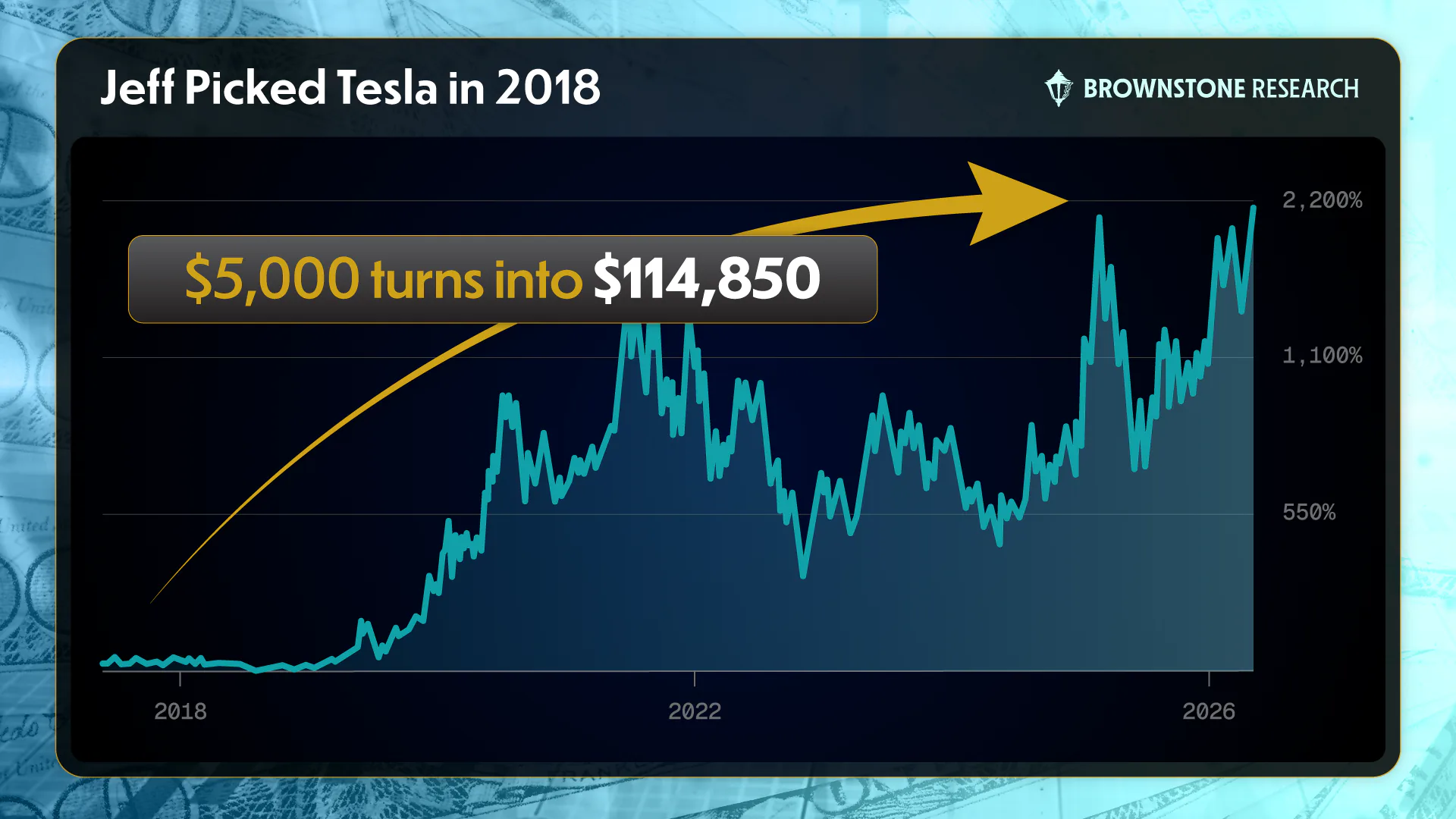
This is worth remembering when newsletter presentations dangle passive income framing. the presenter’s “One Stock Retirement Plan” pitch includes a chain like this: a $5,000 investment in his teased company grows the way Nvidia did, becomes $1,895,000, and that sum parked in “a CD that pays 4% a year… You’d now be making more than $75,000 annually in passive income… Year, after year, after year.” Read that carefully: the passive income comes from a hypothetical bank CD after a hypothetical 37,800%-style gain, not from any stock’s dividend. Nvidia itself never paid a meaningful yield on the way to its 37,800% run (our NVDA stock price prediction review covers what analysts project from here), and Brown’s teased inference company, which our clue analysis suggests is Cerebras (CBRS), is a hypergrowth name that would almost certainly reinvest everything too.
What the dividend question reveals about the AI trade
Here is the useful part. A tiny dividend is the signature of the training era of AI: growth at any cost, capex forever, shareholders paid in appreciation. Brown’s pitch argues the baton is passing to the inference era, where AI models are deployed and run at “speed and scale,” and where the economics reward speed rather than raw size. His framing: “Most of the investments in AI so far have focused on what I call ‘generic AI.’ And Nvidia was the big beneficiary of that first phase. But the future will be powered by what I call ‘Accelerated AI.’”
Income investors watching the AI boom should take two things from this. If you want actual income from the AI buildout, the dividends do not sit in the chipmakers; they sit further downstream, in the power generators and infrastructure owners serving data centers, names like Constellation Energy in nuclear or the royalty-style resource plays other publishers pitch. And if you want growth, the dividend is irrelevant to the thesis anyway, for Nvidia or for the inference challengers.
The honest frame on total return
Nvidia’s historical case shows the point: a token dividend contributed essentially nothing to a 37,800% peak gain; the compounding of earnings did everything. Brown’s own service disclosure is a useful calibration for any of these numbers: The Near Future Report’s average gain since inception is 39.4%, with peak picks like Nvidia at 4,100% carrying the qualifier “if you had held on past their original recommendations and sold at their peak.” Peak-to-peak framing is the most flattering possible presentation; the average is the realistic anchor.
Considerations
If you own Nvidia for the growth story, the dividend will stay immaterial unless the company matures dramatically, which would itself signal the growth era ending. If you own it for income, you own the wrong stock, full stop. And if a teaser’s passive-income math caught your eye, run it backward the way we did above; the income projection is usually a bank product layered on top of a speculative stock gain, not a property of the stock itself.
Where to learn more
Brown’s specific inference pick and ticker are in “The One-Stock Retirement Plan,” included with a $179 trial of The Near Future Report, backed by a 30-day keep-everything refund guarantee. For background, read our review of Brown’s 10X Project pitch, the Near Future Report profile, and our the presenter presenter profile. For the downstream income angle on AI’s power buildout, our data center power stocks coverage is the companion read.
NewsletterVetter is an independent publication. We receive compensation from some of the services we review through affiliate links. Nothing on this site is investment advice. Always do your own research.