Elon Musk’s One Stock Retirement Plan Review: Is The Near Future Report Worth It?
Jeff Brown’s newest presentation, “Elon Musk’s One Stock Retirement Plan,” is built around one of the boldest framings we’ve seen this year: a single AI stock, tied to two Elon Musk infrastructure projects, that Brown believes could be “the only AI stock you need to retire.” The pitch leans on his signature “Accelerated AI” concept, a physical prop he calls a “golden tablet,” and a dated catalyst, November 11, that he says will trigger “a historic rally” in the shares.
We worked through the entire transcript, pulled the claims apart, checked what’s verifiable, and read the offer’s fine print. Here is the full review.

The Presenter
Jeff Brown is one of the few newsletter presenters whose credibility stack holds up when you check it. He spent over a decade as a senior executive inside the semiconductor industry itself, at Qualcomm and NXP Semiconductors, and before that at Juniper Networks. The presentation puts it plainly: “Jeff is a former senior executive of three major public tech companies,” firms that “now generate more than $60 billion in annual sales.” When Brown says “I know the chip industry like the palm of my hand,” that is a claim backed by an actual career inside it, not a title borrowed from a weekend certification.
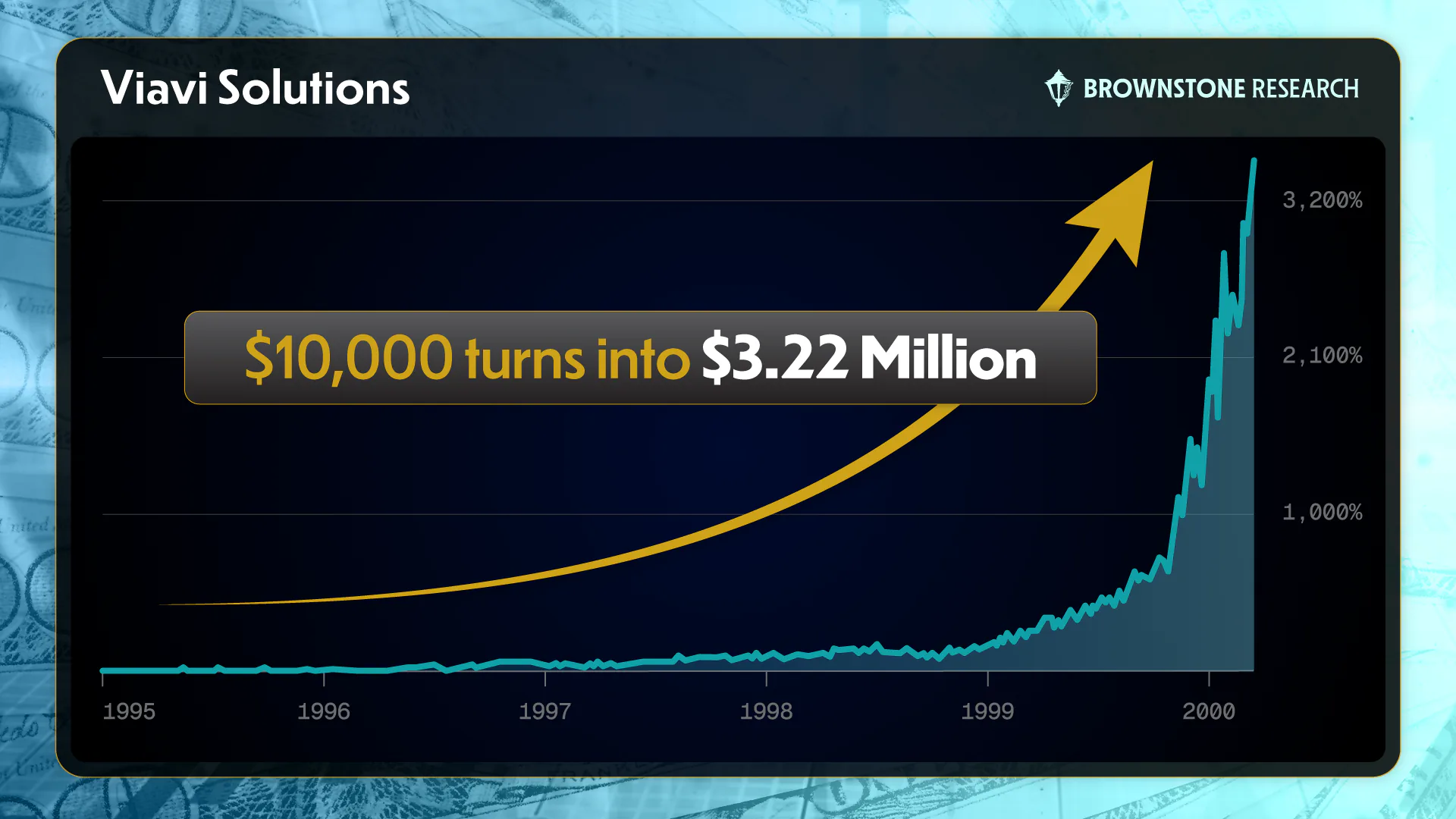
His big calls are the reason most readers know his name. He recommended Bitcoin before its enormous run, Tesla before its 2,200% climb, and, most importantly for this presentation, Nvidia in 2016, before a 37,800% rise. The Nvidia call is dated and specific in the transcript: “That’s when it launched a chip called the Pascal… It was 45 times more powerful than traditional computer chips… This is the chip that kicked off the AI revolution.” He has also been an active angel investor in private tech companies, and the presentation cites individual deal returns “as high as 5,344%, 7,367%, and even a mind-blowing 11,011%.” Those are best-case numbers from hundreds of deals, and the promo says so with the words “as high as,” which is more disclosure than most offers give.
On the government side, Brown has consulted with the Department of Commerce, the National Institute of Standards and Technology, and the Defense Intelligence Agency. And in a detail we genuinely appreciate, the presentation volunteers the honest baseline most promos hide: “the average gain since inception for The Near Future Report is 39.4%.” That is the real number a subscriber should weight most heavily, and Brown says it himself.
The Big Idea
The thesis has two layers: Elon Musk’s two infrastructure moves create a tidal wave of AI demand, and one small company’s patented hardware is positioned to catch it.
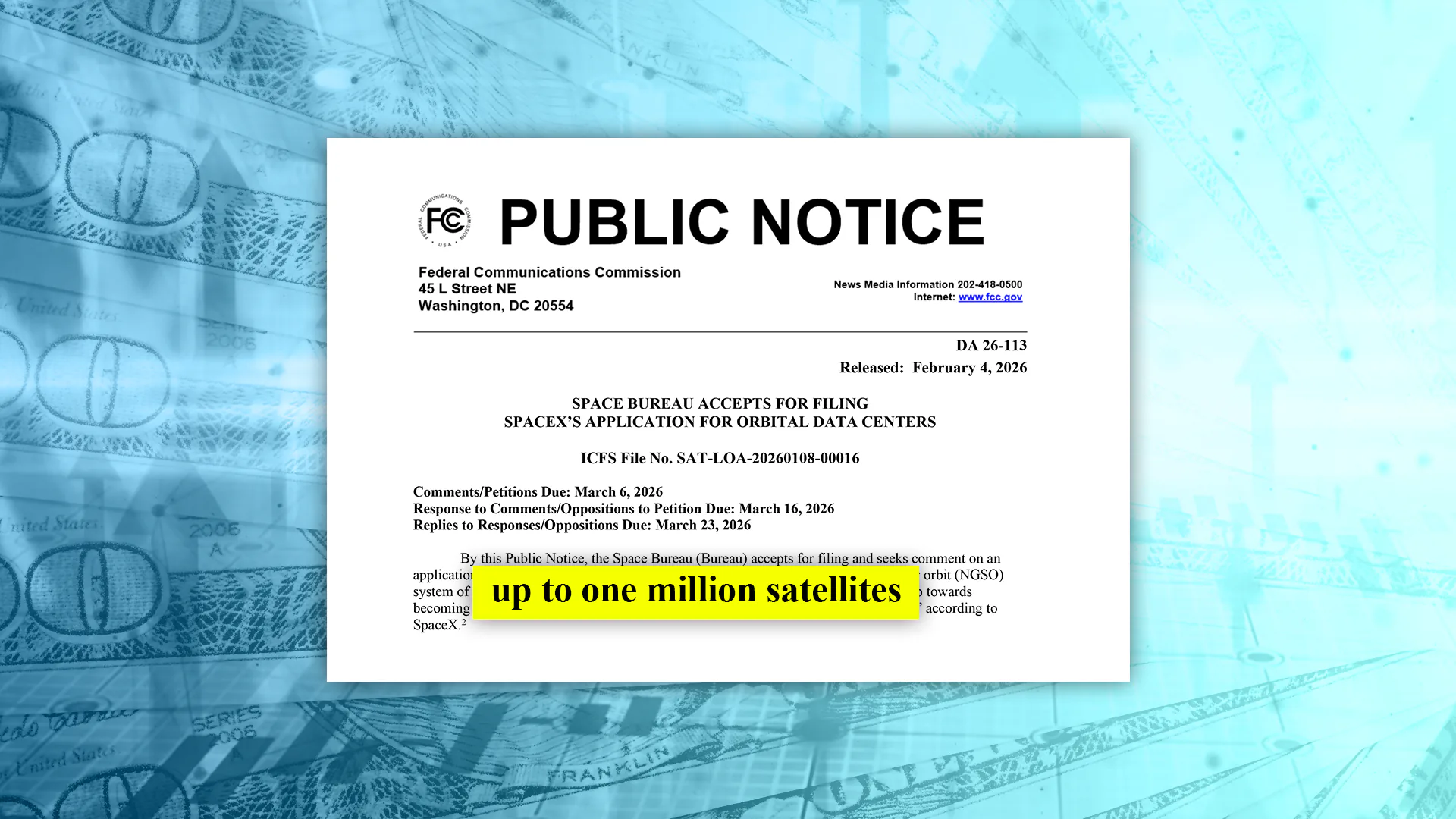
Layer one is the two “government documents” Brown holds up on camera. The first is “a Texas government document confirming Elon Musk is building a $119 billion semiconductor manufacturing plant. He calls it Terafab… set to be the world’s largest and most advanced chip-making operation,” with a stated ambition of producing “up to 200 billion chips per year.” Brown adds first-hand color: “I was actually invited to visit the Texas Gigafactory recently. And while I was there, I drove to the site where they’re building Terafab… so I can tell you from first-hand experience that this project is well under way.” The second is “a public notice from the Federal Communications Commission or FCC… Accepting Elon Musk’s request to launch up to one million AI satellites into orbit,” a project Brown calls Starmind, powered by solar energy. In his telling, “I believe it will completely solve the energy bottleneck.”
Layer two is where the investment lives. Brown’s core distinction is between what he calls “generic AI” and “Accelerated AI”: “Most of the investments in AI so far have focused on what I call ‘generic AI.’ And Nvidia was the big beneficiary of that first phase. But the future will be powered by what I call ‘Accelerated AI.’” Generic AI is the training phase, where Nvidia built its empire. Accelerated AI is inference at speed and scale: “AI is quickly becoming fully autonomous and making decisions on its own through a process known as inference… It simply means we’re running intelligence at speed and scale.”
The physical prop is the “golden tablet,” the teased company’s hardware product, which Brown says “can produce intelligence up to 1,000 times FASTER than regular AI. And one little-known company controls it.” His technical explanation is latency, told through a classroom analogy: “It’s like trying to pass a note down a long row of people sitting in a classroom. Every single person who has to take the note and hand it to the next one adds a little delay… That’s called latency in a computing system.” As he puts it: “As a former executive from two major chip makers… this is a problem that has been plaguing the computer industry for 75 years. Nobody had been able to figure this out… Until now.”
The why-now analogy is the transition from dial-up to broadband: “Dial up was ‘slow internet’… Broadband was ‘fast internet’… And the companies that made that transition possible made their shareholders incredibly wealthy.” That is a fair framing of a real industry shift. The move from training compute to inference-at-scale is well documented, and interconnect latency genuinely is the bottleneck in large inference deployments. Brown’s “1,000 times faster” is his own characterization of a real performance advantage rather than a verified benchmark, but the underlying engineering problem is real, and his moat claim has teeth: the technology is “protected by this patent you see on the screen… plus 149 other patents.” His recap: “That’s not a moat. That’s a fortress.”
The Key Claims
The headline claim is right in the title, and the dollar figure is repeated throughout:
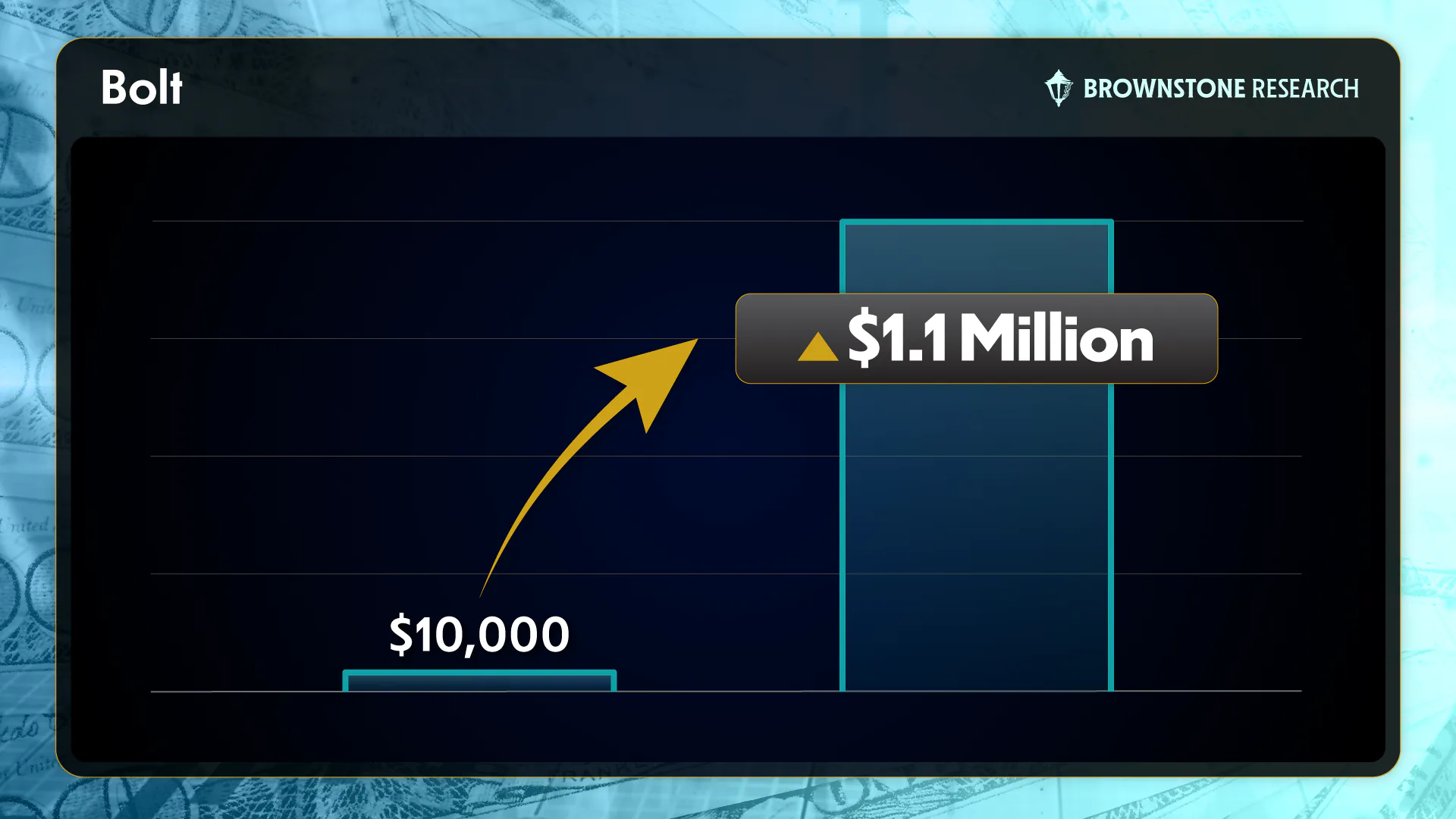
“Before shares skyrocketed 37,800%… Enough to turn $5,000 into an entire retirement nest egg of $1,895,000.”
The supporting claims stack up fast: “This stock could triple between now and 2027.” Sales have “been growing about 500% a year since 2022… almost six times faster than Nvidia’s current sales growth.” The hardware “can support up to 120 trillion parameters… it can make simultaneous computations at or above the level of the human brain.” And the passive-income extension: a Nvidia-style win parked in “a CD that pays 4% a year… You’d now be making more than $75,000 annually in passive income… Year, after year, after year… All from a single $5,000 investment.”
The urgency is dated and layered three ways. First, the November 11 catalyst: “By November 11, Elon Musk is set to trigger a historic rally in… The Only AI Stock You Need to Retire.” Second, an Amazon deal reveal: “I believe this company’s executives will reveal all the details on this new deal with Amazon on that call… Sending shares skyrocketing higher. Which is why I’m pounding the table to get in right now.” Third, supply scarcity: “there’s so much demand for this golden tablet that they’re sold out into 2027.”
How should a reader weigh these? The $24 billion backlog is presented as “a pipeline of future orders,” and semiconductor backlogs are auditable numbers, so that part is solid ground. The November 11 date is the most manufactured element: it ties a personal buying deadline to Musk’s announcement calendar rather than the company’s own timeline. The claims are mostly wrapped in “could” and “I believe,” which matters. The testimonials, to the promo’s credit, carry a proper disclosure: “The investment results described in these testimonials are not typical; investing in securities carries a high degree of risk; you may lose some of the investment.” And the strongest structural claims, like “It can produce intelligence 1,000 times FASTER than regular AI,” are presented as facts about the technology rather than predictions, so treat those as the presenter’s characterization of a real advantage, scaled up for the stage.
The most important tension in the whole presentation is the one Brown himself surfaces: the dream number is $1,895,000 from $5,000, and the honest baseline is a 39.4% average gain since inception. Both numbers are his. A reader should hold them side by side.
The Free Ticker
This is a teaser-style promo, so no free ticker is revealed. All three picks sit behind the paid reports. But the transcript is unusually dense with clues, and our read of them points at a specific profile of company.
The market-cap anchor is explicit: the company is “as big as Nvidia was in 2016” and “the exact same size Nvidia was in 2016,” which puts it roughly in the $20 to 40 billion range today. The customer list is a who’s-who of tech: “multi-billion dollar deals with OpenAI, Microsoft, IBM, AMD, & Amazon,” plus CrowdStrike for “real-time AI security against cyber threats” and GlaxoSmithKline “to speed up its drug research and discovery.” The financial profile: a $24 billion backlog, capacity “sold out into 2027,” sales growing roughly 500% a year since 2022, and Wall Street expecting sales “to more than TRIPLE in 2027.” The product is a wafer-scale or co-packaged inference system, the “golden tablet,” supporting “up to 120 trillion parameters.”
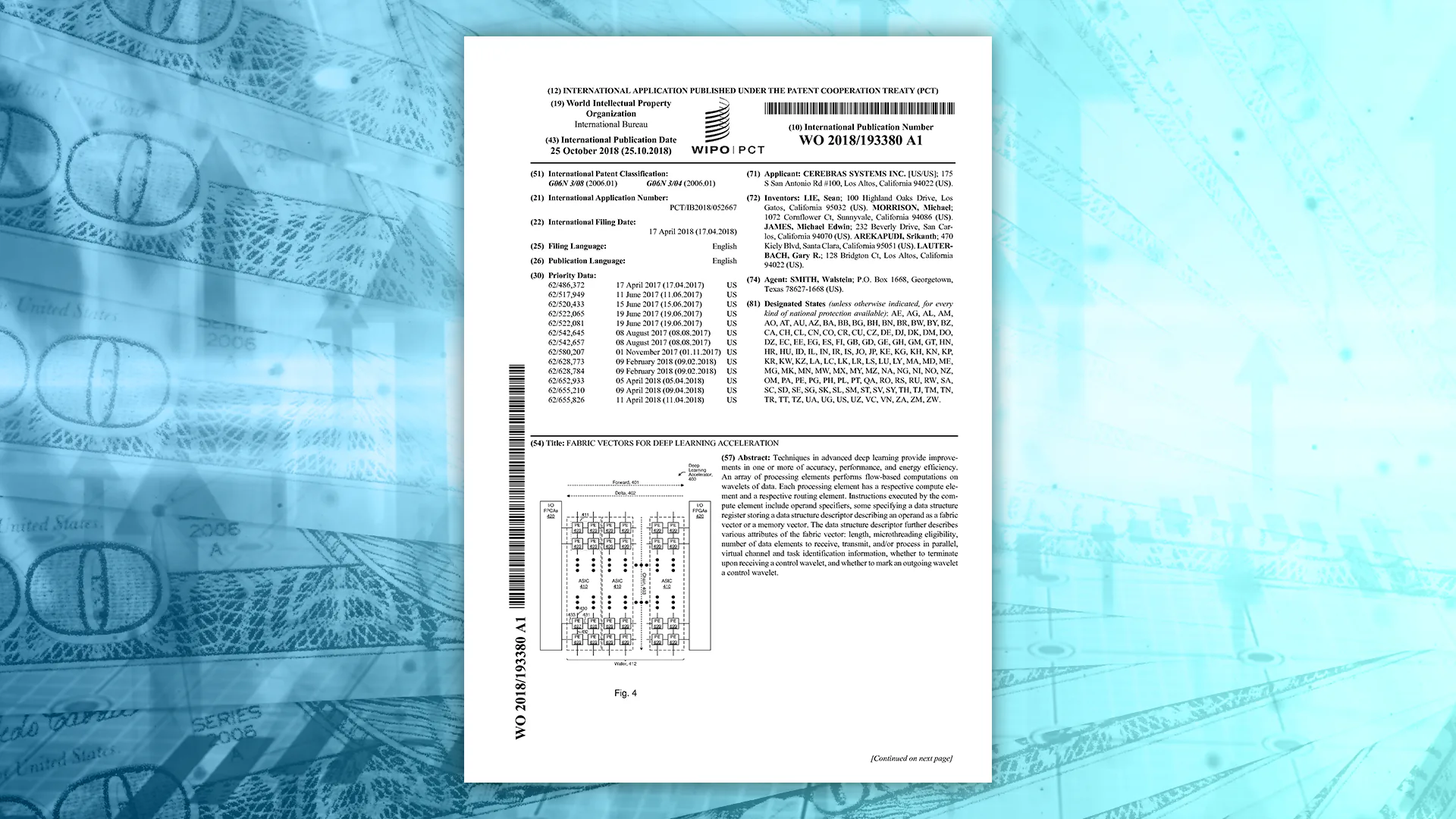
Our read of the clues is that the profile most strongly resembles a Cerebras-class wafer-scale inference hardware company, with the OpenAI, AMD, and AWS partnerships being the fastest way to confirm or eliminate candidates against the public record. We want to be clear that this is our read of the clues, not a confirmed identification, and Brown leaves the name and ticker inside the bonus report. If the identification matters to you, the $179 entry price is the cheapest way to get it, and the 30-day refund window gives you time to evaluate the pick after reading it.
What You Get
The product is The Near Future Report, Brown’s flagship monthly newsletter. Members get twelve monthly issues per year covering “AI, robotics, self-driving cars, quantum computing and all the most exciting tech trends of our time,” plus “full, 24/7 access to Jeff’s members-only website… all the issues, all the special reports, video updates, and his model portfolio.”
The price is anchored and discounted: “Normally a one-year membership to The Near Future Report usually costs $499. But today you’ll get a HUGE discount. You can begin your risk-free membership for just $179.” That $179 sits at the low end of the industry’s entry tier, and it comes with three bonus reports:
- The One-Stock Retirement Plan: the flagship. “Inside, you’ll find the name, the ticker symbol and Jeff’s full analysis on this ‘Accelerated AI’ company.”
- The Elon Musk Moonshot: The #1 Stock for the Manifested AGI Revolution: “a little-known Elon Musk supplier that I believe could go parabolic,” with “39 hedge funds” already holding it and Morgan Stanley recommending it.
- How to Profit from Elon Musk’s New Terafab Project: a semiconductor-equipment supplier Brown says has “already been approached by Tesla,” with “at least 26 brokerage firms on Wall Street recently raised their price target.”
The guarantee is genuine and generous: “He’ll give you 30 days to test out the service – with no risk… We’ll give you a full refund on your order, no questions asked. And we’ll let you keep everything you received as a member – at no charge.” One fine-print note: the renewal price is not stated in the presentation, so assume the $499 list price applies at renewal and calendar the decision before day 30 if you want out.
Our Take
There is a lot to like here. The presenter is real, the mechanism is real, and the offer is one of the more honest ones we’ve reviewed this quarter. The AI training-to-inference shift is a genuine, well-documented industry transition, latency is a genuine decades-old bottleneck, and the partner list and backlog are checkable claims about a real company. Brown’s disclosure of the 39.4% average gain is the kind of reader-friendly honesty we wish every promo copied, and his objection handling is notably responsible: when the host raises diversification, Brown answers, “I’m not recommending folks put their entire savings in this one stock. I would never do that with my money. And I would never recommend that to anyone. That would be irresponsible.” That is exactly the right answer, stated on camera.
The parts to keep in proportion: the 2,000x and 1,000x power claims are stage-scaling of a real advantage, not verified benchmarks. The November 11 date is a marketing deadline, not a company catalyst. And the “one stock retirement” framing, complete with the $75,000-per-year passive-income extension, is a hypothetical construction, legal in its “could” wrapping but emotionally the number most viewers will walk away remembering. The gap between the 39.4% honest baseline and the 37,800% dream is the real story of this promo, and Brown deserves credit for giving you both numbers.
Our recommendation: this is a strong fit for tech-focused investors who want a credible semiconductor insider’s read on the inference transition and are comfortable evaluating a concentrated, volatile AI hardware position with money they can afford to risk. The $179 price with a keep-everything refund makes the downside a half hour of your time. It is a poor fit for anyone who actually intends to fund a retirement with one stock; take Brown at his word when he says that would be irresponsible. Readers who want the broader Musk-infrastructure angle should also see our American Atlas review of the Chaikin pitch on the government’s supercomputer buildout, and our Starphone review of Stansberry’s take on Musk’s phone ambitions.
Where to Learn More
- For the government-side counterweight to Musk’s private AI buildout, see our American Atlas review covering the Department of Energy’s FP64 supercomputer network and the free AMD pick.
- For the consumer-device angle on Musk’s ambitions, read our Starphone review on the Direct-to-Cell thesis and the free Qualcomm pick.
- For Brown’s commodity-side work at the same publisher, see our Brownstone Research publisher profile.
- Have a promo you want us to vet? Submit it here.
- Ready to try The Near Future Report? Click here to see the One Stock Retirement Plan presentation. (Note: a tracked affiliate link for this promo will replace the direct URL once the tracking code is provisioned.)
NewsletterVetter is an independent publication. We receive compensation from some of the services we review through affiliate links. Nothing on this site is investment advice. Always do your own research.