Elon Musk’s Starphone Review: Is Stansberry’s True Innovations Report Worth It?
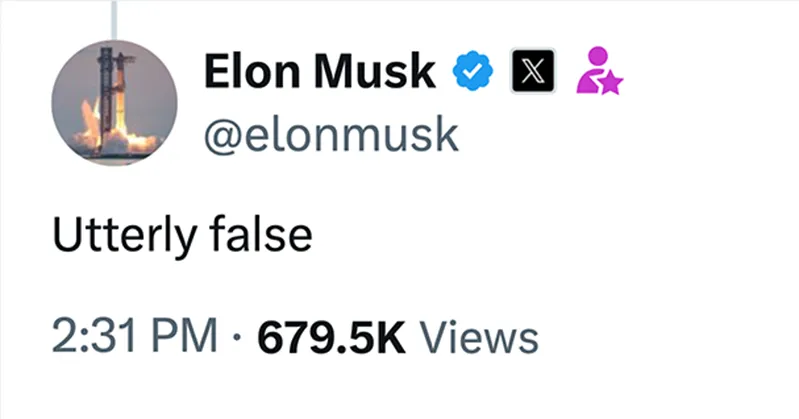
The most interesting thing about Josh Baylin’s new Stansberry presentation is that its central claim has already been denied by the person it’s about. The Wall Street Journal reported that SpaceX debuted a phone prototype ahead of its IPO. Musk called the story “utterly false.” Reuters reported the same thing, and he denied it again. Baylin’s response is the spine of the whole pitch: Elon is telling the truth, and that is exactly why you should pay attention. His argument is that “Starphone” may not mean what you think it means, that Musk has quietly assembled every piece a category-killing AI phone would require, and that the supplier stocks around that buildout, not SpaceX itself, are where early investors get paid. He gives one of them away free on camera: Qualcomm.
We took the full presentation apart, checked the paper trail Baylin cites, and read the offer’s fine print. Here is what we found.

The Presenter
Josh Baylin has the rarest kind of credibility in this business: a documented, dated call on the exact category he is pitching again. In 2004, he says, “I sat in a Congressional hearing… and told top politicians that a new device was coming that would change society in ways we weren’t prepared for.” That was three years before the iPhone shipped. He then spent time at SAC Capital with Steve Cohen, and his Apple call there is the story the whole presentation hangs from: “I walked into a meeting with Steve one day and told him we needed to load up on Apple… I said I didn’t think it would sell a million iPhones like every other analyst was predicting… It was going to sell a billion. I was literally laughed out of the room.” The vindication followed: “I was tracking $200 million positions for the fund not long after.”
His origin story explains the methodology. “I started as a Bloomberg tech reporter, right after 9/11. I covered the telecom industry while it was collapsing in real time… I knew that all the ‘dead’ fiber everyone was writing off would become the pipes for the next wave of technology.” That is the template applied here: ignore what people say, follow what they do. His more recent picks cited in the presentation include Palantir, Microsoft, and Apple, and the promo carries the correct hedge on each: “These are maximum gains following some of Josh Baylin’s best picks. They are no guarantee for performance.”
The access signals are unusually specific. He has attended the White House correspondents’ dinner, and the detail we found most telling: “I’ve been in the room with this guy. I was invited to his brother’s birthday party… Elon is a calculated genius.” Modest, checkable-sounding, and hard to fake. He is also explicit about what he is not doing: “I’m actually NOT recommending SpaceX today, no.”
The Big Idea
The pitch is built as a three-pillar proof walk, framed as what Musk would need to corner the AI phone market. Each pillar is anchored to a dated, checkable event.
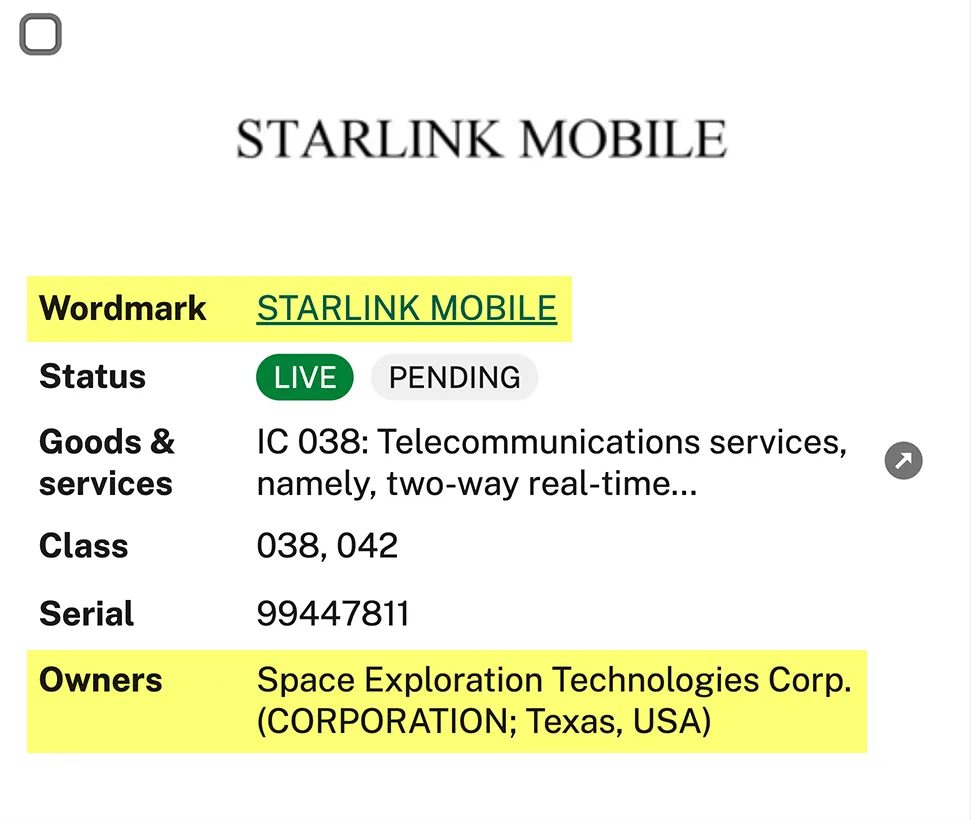
Pillar one, the spectrum. SpaceX’s Starlink business now makes up “69% of SpaceX’s revenue,” and the Direct-to-Cell concept is the key technology: “Instead of a bare-bones emergency lifeline, D2C turns Starlink’s satellites into cell towers. So Starphone would be able to text, call, and use the Internet without a cell tower or Wi-Fi.” Then the receipts: SpaceX “bought exclusive-use, nationwide spectrum from EchoStar. For $17 billion.” It also filed two trademarks the same day, “Starlink Mobile” and “Powered by Starlink.” When Musk already commands “19 TIMES more active satellites than even the U.S. military, the Chinese military and the Russian military… combined,” the network layer is not theoretical.
Pillar two, the orbital compute. A new class of “compute satellites” trademarked “Starmind.” The AI1 orbital data-center satellite has “the wingspan of a Boeing 747” and puts out “somewhere around 120 to 150 kilowatts of computing power,” running “on sunlight alone,” in Musk’s own phrase, “It’s always sunny in space.” The commercial proof is striking: Google “agreed to pay SpaceX $920 million a month for SpaceX computing capacity” through 2029, a contract “worth more than $30 billion.” An orbital data-center business with a hyperscaler anchor tenant is the least speculative part of this whole story.
Pillar three, the AI. Grok, “now part of SpaceX, too,” which “consistently ranks among the top AI models in independent benchmarks” and is “one of the most efficient AI models out there… one of the cheapest to use for each task.” Musk’s own Joe Rogan quote sketches the device concept: “I don’t think there’ll be operating systems. I don’t think there’ll be apps. The phone will just display the pixels and make the sounds.” That is the “first truly physical AI device” framing: “Thinner than an iPhone… usable worldwide without cell towers… running on one of the most powerful AI-based platforms in existence… and likely sell for a price the iPhone could NEVER compete with.”
The most intellectually interesting move in the presentation is Baylin’s handling of the denials. He takes them at face value and then reframes: “I think he’s telling the truth! I don’t think there’s a finished phone sitting in a drawer at SpaceX headquarters right now. But everything required to build one – the spectrum, the chips, the trademark, the legal groundwork, and maybe even a working prototype shown to his own investors – that’s already been filed, funded, and built.” His name for the gap is the “semantic loophole”: “He’s letting you assume ‘phone’ means what it’s always meant. Meanwhile, he’s likely building something totally new.” The precedent is on his side, and he cites it: “Keep in mind, Jobs denied the iPhone was coming, too.”
The Key Claims
The central claims, in the presentation’s own words:
“Ultimately setting Elon up for total domination over yet another multitrillion-dollar industry, and making early investors a fortune in the process.”
“I wouldn’t be surprised if early investors have the chance to make 50 times their money by the time Starphone launches – if you own the right stocks.”
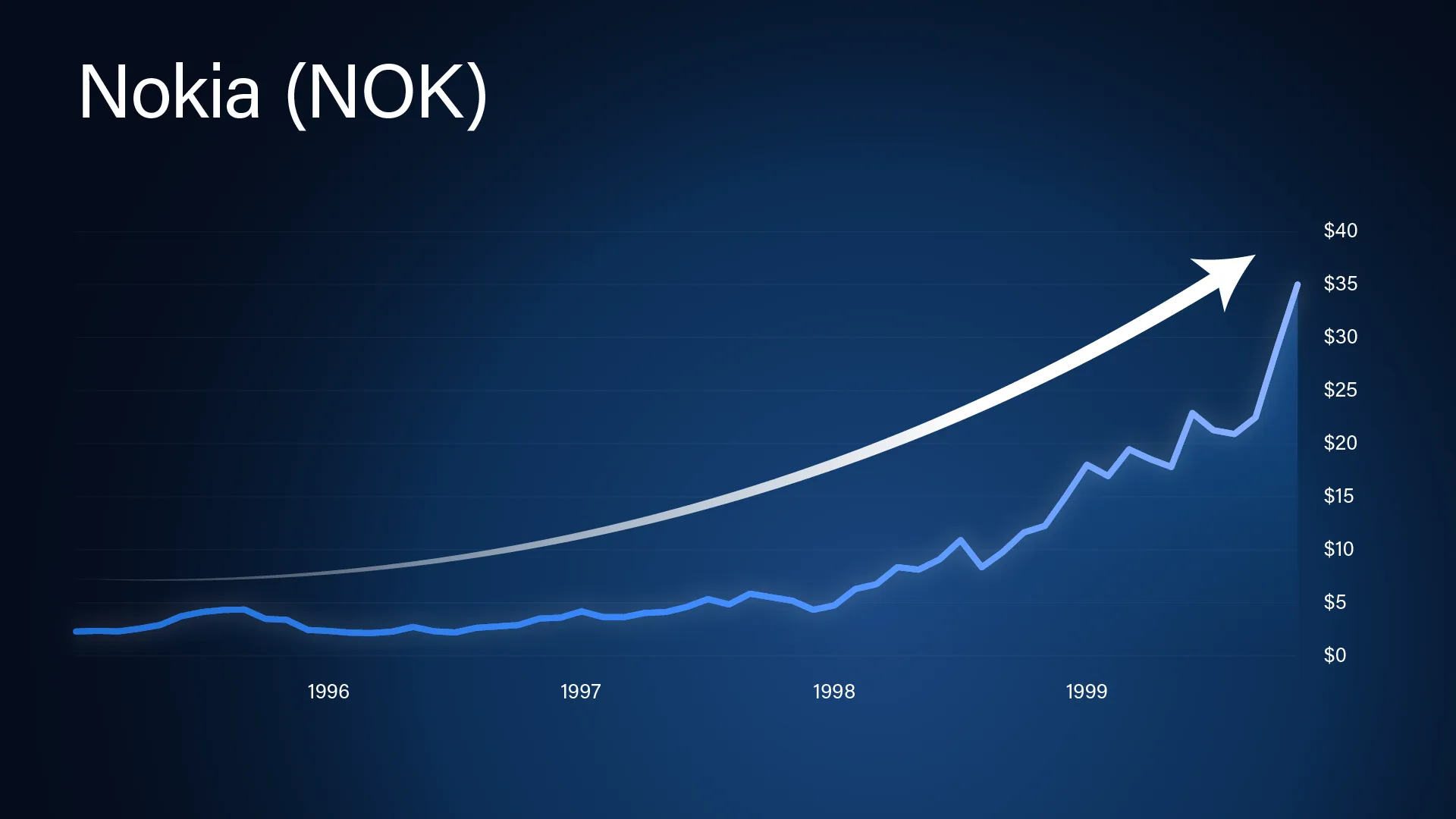
The supporting pattern-evidence is dense and well chosen. When Musk bought the EchoStar spectrum, “the stock went from $15 to $127 in less than a year.” Nokia “sent shares of Nokia from around $3 to close to $35 practically overnight” when it won its antenna placement in the original iPhone; Motorola “quadrupled between 1991 and 1995”; Cadence Design Systems, a Tesla software supplier, “rose as high as 16,000%.” The supplier thesis, in other words, is backed by the actual history of the original smartphone boom.
The urgency is the area to handle with the most care. The legitimate parts: the FCC “just approved new rules to make satellite licensing faster and easier,” 15,000 next-gen satellites are starting to come online, and the SEC IPO filing language describing next-gen direct-to-smartphone service “on par with terrestrial mobile networks” is a real document saying a real thing. The manufactured parts: “He could make the announcement with a single post on X any day now” is unfalsifiable, and “once Starphone becomes a headline instead of a theory, that window closes” is pressure, not analysis. The presentation’s own hedge is the sentence every reader should keep: “Now, Elon Musk hasn’t confirmed that a Starphone is coming, of course.” It sits mid-presentation rather than up top, so weight it yourself. To its credit, the promo also points to its own sourcing: “if you want to check any of the facts in our presentation today, please visit our Details & Disclosures page.”
The Free Ticker
The free pick is named cleanly, with reasoning attached:
“I think everyone watching should put a little bit of money in Qualcomm. Ticker Q-C-O-M.”
“SpaceX is bogged down with speculative money. Meanwhile, it’s already tapped Qualcomm – which is a chipmaker – to build satellite connectivity into their future devices. So, when Starphone finally launches… there’s a real chance it runs through Qualcomm’s satellite chip. I think the stock could easily double over the next few years.”
The logic is sound and grounded in a real commercial relationship rather than a guess. Qualcomm has an announced partnership to build satellite connectivity into future phones, which makes it one of the few large, liquid names with a contractual line into the Direct-to-Cell transition regardless of whether a “Starphone” ever ships. That last clause matters: as a bet on the satellite-to-phone trend itself, Qualcomm works even if Musk’s device stays a rumor. Baylin’s own price target, “could easily double over the next few years,” is modest by this industry’s standards, and it is honest about the timeframe.
The names with the concentrated upside stay in the paid report, teased as companies that have “supplied hardware to SpaceX for close to a decade,” with “most of them trade for under $100.” Our read of the clue profiles points at RF and satcom component suppliers, established machine-vision names, and satellite-communications device makers, and we walk through the candidates in the clue section of our teardown coverage. Qualcomm itself, at over $100 and mega-cap sized, is explicitly the safe way in, not the 50x candidate.
What You Get
The product is the True Innovations Report, and the anchor price is standard Stansberry: “Normally, a one-year membership to the True Innovations Report costs $499. But since Starphone and the technology surrounding it are such a big and lucrative story right now, Josh is giving everyone watching today a huge discount.” The exact discounted price sits behind the Get Started button, a common Stansberry pattern, so check the order page.
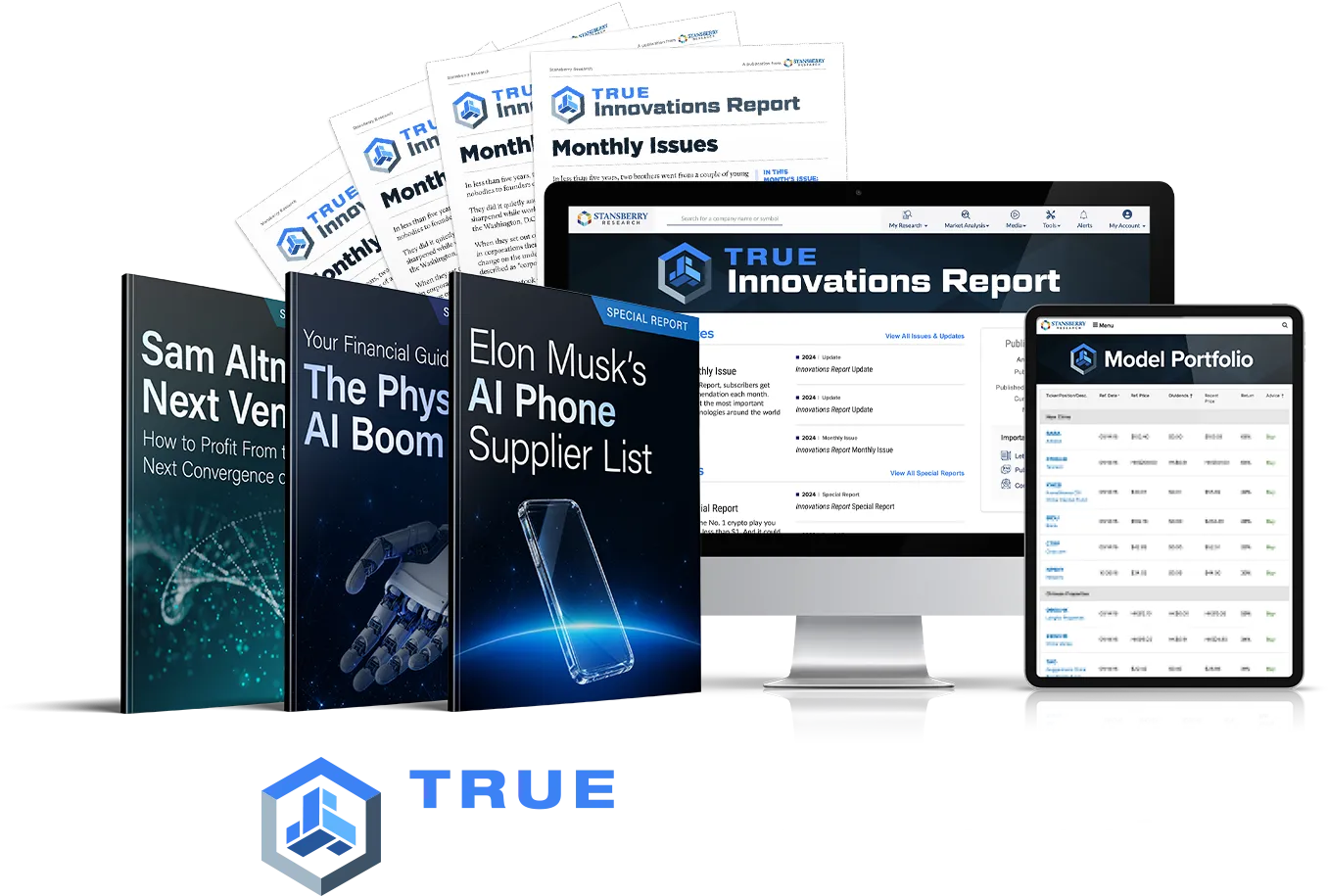
A membership includes twelve monthly issues from “Josh, John, and the rest of their team,” full 24/7 access to the members-only website with “every issue, every special report, every update, and every holding in the complete model portfolio,” plus three bonus reports:
- Elon Musk’s AI Phone Supplier List: the flagship. The companies Baylin expects to benefit first, most trading under $100, including one that “has supplied hardware to SpaceX for close to a decade.”
- Your Financial Guide to the Physical AI Boom: companies “bringing AI out into the real world,” including a satellite-communications veteran, a machine-vision company with “over twenty years allowing technology to ‘see,’” and a company Musk’s team “just brought on to help build the chip plant behind his entire AI operation.”
- Sam Altman’s Next Venture: How to Profit From the Next Convergence of AI: by Lead Equity Analyst John Engel, on what “could be 500 times bigger than ChatGPT,” per McKinsey.
The guarantee matches the publisher’s house standard: “Just try it for 30 days… If at any time during those 30 days, you find you’re not getting the best research you’ve ever seen… You’ll get a full cash refund, no questions asked. I’ve also instructed my team to let you keep everything you’ve already received, at no charge.”
Our Take
This is one of the best-evidenced Musk promos we have reviewed. The factual layer is unusually strong: the WSJ and Reuters reporting, the $17 billion EchoStar spectrum purchase, the same-day trademark filings, the Google compute contract, the FCC licensing changes, and the IPO paperwork language are all dated, checkable events, and Baylin cites them accurately. His denial-handling is also intellectually honest; he does not claim Musk is lying, he claims the word “phone” is doing less work than we assume, which is a defensible read of a man who “doesn’t call Tesla a car” and calls Cybertruck “an armored personnel carrier from the future.” The supplier-thesis evidence wall, Nokia and Motorola in the original iPhone era, Cadence with Tesla, EchoStar in this one, is the correct historical pattern to cite.
The speculative leap is the last step of the syllogism: from “he has all the pieces” to “he will build the device.” That remains unconfirmed, and the presentation says so itself. The 50x figure applies to the supplier names, is framed as “I wouldn’t be surprised if,” and should be treated as the upper tail of a range, not a target. The “any day now” announcement timing should be ignored. And the model portfolio’s “average open gain across our model portfolio is 122%” is unrealized and can reverse; the promo’s own since-inception figure of 55.8% is the number to anchor on.
Our recommendation: this is worth watching for investors who want pre-announcement exposure to the satellite-to-phone transition and are comfortable with event-risk positions. The free Qualcomm pick is the sensible core of the trade, a real company with a real contract that wins under multiple scenarios, and it requires no subscription. The True Innovations Report itself, at the discounted price with the keep-everything 30-day guarantee, is a reasonable exploration vehicle for the supplier list, especially for those who already follow Stansberry’s research. It is a poor fit for anyone who needs a confirmed product before buying the theme; that confirmation may never come, and Baylin is upfront about it. For the complementary Musk theses, see our One Stock Retirement Plan review on the inference-hardware side and our American Atlas review on the government supercomputer side of the AI race.
Where to Learn More
- For Musk’s AI infrastructure buildout, see our One Stock Retirement Plan review covering Jeff Brown’s “golden tablet” inference-chip pitch.
- For the government supercomputer counterweight, read our American Atlas review on the DOE’s FP64 network and the free AMD pick.
- For more from this publisher, see our Stansberry Research publisher profile.
- Have a promo you want us to vet? Submit it here.
- Ready to try True Innovations Report? Click here to see the Starphone presentation. (Note: a tracked affiliate link for this promo will replace the direct URL once the tracking code is provisioned.)
NewsletterVetter is an independent publication. We receive compensation from some of the services we review through affiliate links. Nothing on this site is investment advice. Always do your own research.