Starlink Direct to Cell: Satellites as Cell Towers
Starlink Direct to Cell is the technology that lets an ordinary smartphone send text messages, make calls, and eventually use data without a cell tower in range, by connecting directly to satellites overhead. It is the infrastructure behind the “Starphone” thesis Josh Baylin presents for Stansberry Research’s True Innovations Report, and his summary is the cleanest one-liner in the field: “Instead of a bare-bones emergency lifeline, D2C turns Starlink’s satellites into cell towers. So Starphone would be able to text, call, and use the Internet without a cell tower or Wi-Fi.” For the full backstory, see our Starlink and T-Mobile: The Direct-to-Cell Partnership article.
How it actually works
Traditional satellite phones need special hardware and cost a fortune. Direct to Cell inverts that: the satellite carries the cellular equipment, speaking the same spectrum and protocols your phone already uses. Your phone sees the satellite as just another cell tower, one that happens to be a few hundred miles up and moving 17,000 miles an hour. No new antenna, no new SIM card, nothing to install.
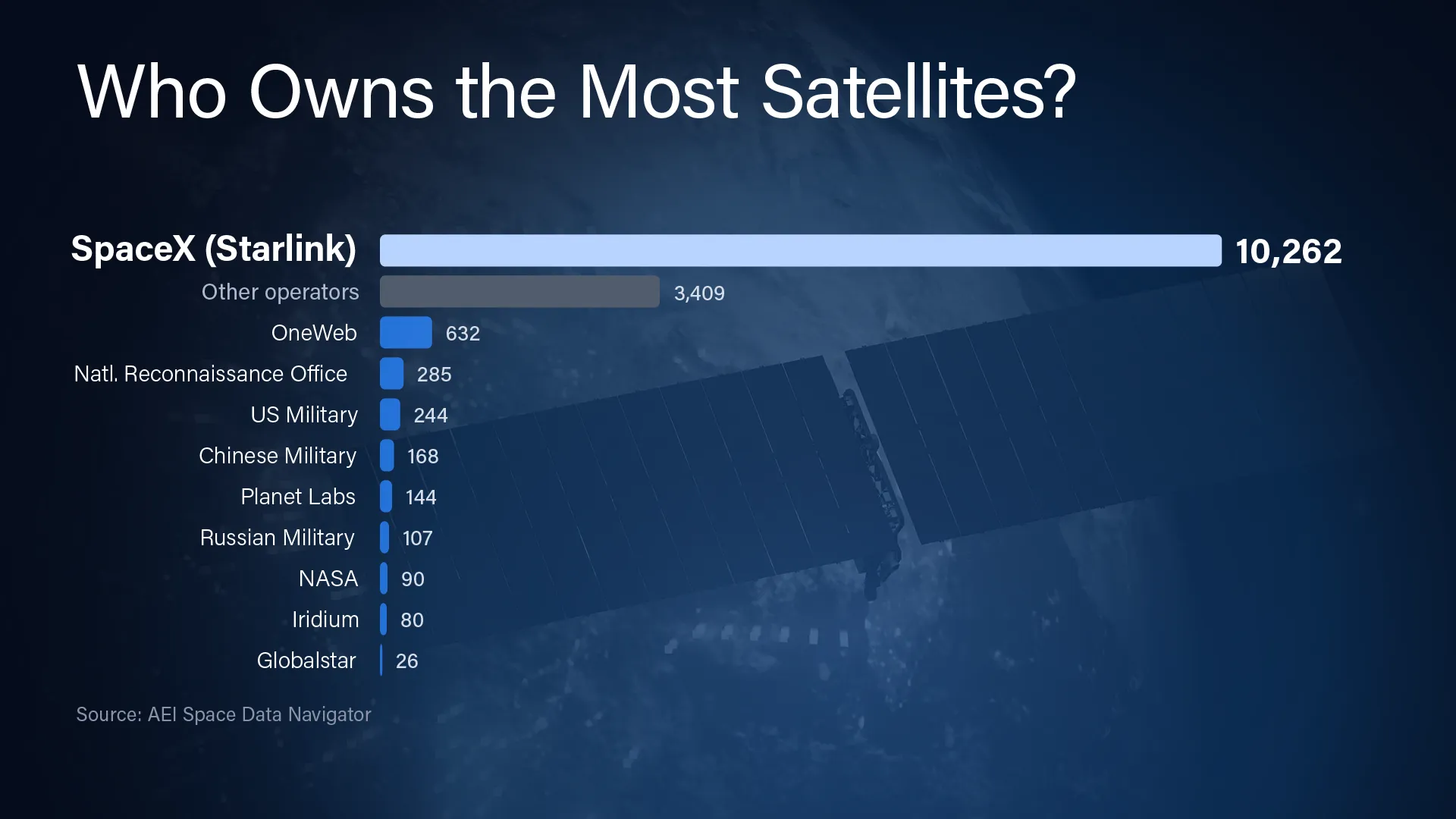
The scale behind Starlink’s version is what makes it interesting. Starlink already accounts for 69% of SpaceX’s revenue, per the presentation’s figures for Q1 2026, and SpaceX operates “19 TIMES more active satellites than even the U.S. military, the Chinese military and the Russian military… combined,” in Baylin’s telling. Roughly 15,000 next-generation satellites, “each about 20 times better than current capacity,” are starting to come online, and the FCC has approved the deployments while also writing “new rules to make satellite licensing faster and easier.”
The partnerships are already real
This is not a hypothetical technology. T-Mobile launched text messaging via Starlink satellites for ordinary phones, and airlines have signed on for in-flight connectivity. The two trademark filings Baylin highlights, “Starlink Mobile” and “Powered by Starlink,” were filed the same day, and SpaceX “bought exclusive-use, nationwide spectrum from EchoStar. For $17 billion,” which gives the service the licensed radio frequencies a nationwide carrier needs. EchoStar’s own stock went from around $15 to $127 in under a year after that deal, a move Baylin cites as precedent for what happens when a company gets swept into the Starlink story.
On the chip side, Qualcomm and MediaTek have both signed deals to build satellite connectivity into future phone hardware. That is Baylin’s free recommendation: “I think everyone watching should put a little bit of money in Qualcomm. Ticker Q-C-O-M… there’s a real chance it runs through Qualcomm’s satellite chip. I think the stock could easily double over the next few years.”
Why the phone is the endpoint of the thesis
Baylin’s argument is that D2C is the legal and technical foundation for a full Starphone. Musk’s own vision, quoted from his Joe Rogan appearance: “I don’t think there’ll be operating systems. I don’t think there’ll be apps. The phone will just display the pixels and make the sounds.” That describes a device where the intelligence lives in the network, not the handset, which is why Baylin calls it potentially “the first truly physical AI device of its kind.” The device would be “usable worldwide without cell towers… running on one of the most powerful AI-based platforms in existence… and likely sell for a price the iPhone could NEVER compete with.”
The supplier-stocks angle
The investable question is who besides SpaceX profits. Baylin’s historical evidence wall is dense: Nokia shares went from around $3 to nearly $35 when its phones hit it big; Motorola quadrupled between 1991 and 1995; supplier names like Cadence Design Systems, Amkor, Skyworks (up as much as 491%), and Cirrus Logic (up as high as 489%) rode the smartphone supply chain to enormous gains. His pitch: “I wouldn’t be surprised if early investors have the chance to make 50 times their money by the time Starphone launches, if you own the right stocks.”
The specific names live in his bonus report, “Elon Musk’s AI Phone Supplier List,” included with a trial of the True Innovations Report, which carries Stansberry’s 30-day full-refund guarantee. One supplier “has supplied hardware to SpaceX for close to a decade,” and most of the list trades under $100 a share.
Considerations
Direct to Cell is real and scaling, but capability arrives in stages: messaging first, then voice, then meaningful data. Full smartphone-grade bandwidth from space for millions of simultaneous users is an engineering challenge that the IPO paperwork’s own phrase, “on par with terrestrial mobile networks,” describes as a target, not a present fact. And the carriers are not standing still; Verizon, AT&T, and T-Mobile are all racing to bundle satellite features. The honest version of the thesis is that the satellite-to-phone transition is happening, the suppliers of the underlying hardware get paid either way, and the Starphone itself is the speculative endpoint rather than the base case.
Where to learn more
For the full phone story, see Oxford’s rival take on Musk’s secret phone partner, plus our earlier pieces on the FCC filing behind Musk’s million-satellite plan and orbital data centers as an investment theme. Stansberry’s own 27-year history is covered in our publisher profile.
NewsletterVetter is an independent publication. We receive compensation from some of the services we review through affiliate links. Nothing on this site is investment advice. Always do your own research.