The $200 Trillion Mineral Payload, Explained
The “$200 trillion payload” is the biggest number in Whitney Tilson’s Mount Rushmore presentation, and it deserves the same treatment every big number in a promo gets: attribution first, then context, then the honest limits of what it can tell an investor. The good news is that this number is attributed. It is not Tilson’s invention. “This new technology is unlocking ALL of America’s vast mineral wealth… what Secretary of the Interior Doug Burgum estimates is a $200 TRILLION payload. That’s enough to pay for our national debt three times over… double our GDP… AND wipe out our trade deficit… with $20 trillion to spare!”
What the number actually measures
The $200 trillion is an estimate of the value of America’s in-ground mineral wealth: the gold, copper, rare earths, lithium, antimony, and other critical materials sitting beneath U.S. territory, valued at current prices. It is a balance-sheet number, not an income statement. The Institute of Energy and the Environment is cited as the backing research, and Burgum’s framing, that America owns “the largest balance sheet in the world, by far,” is the rhetorical use of it.
Three clarifications make the number honest. First, in-ground value is not extractable value: mining has costs, and much of any nation’s mineral endowment stays in the ground permanently for economic reasons. Second, no listed company captures national mineral wealth; the number maps to an industry, not a stock. Third, and most importantly for the thesis, the reason this number is suddenly newsworthy is not that the minerals moved, they have been there for geological ages. It is that the technology for finding and economically extracting them just changed.
The unlock: AI-assisted discovery
The “new technology” in the quote is AI-driven mineral exploration, and this part of the story is concrete. The Pentagon’s MinMod AI “mapped out 670,000 mineral sites across America… Including 184,000 gold sites.” Private-sector results: Earth AI’s discovery hit rate runs “150 times the industry average.” KoBold Metals, backed by “Jeff Bezos, Bill Gates, Mark Zuckerberg, Sam Altman, Marc Andreessen, Michael Bloomberg, and Jack Ma,” is “now valued at nearly $3 billion.”
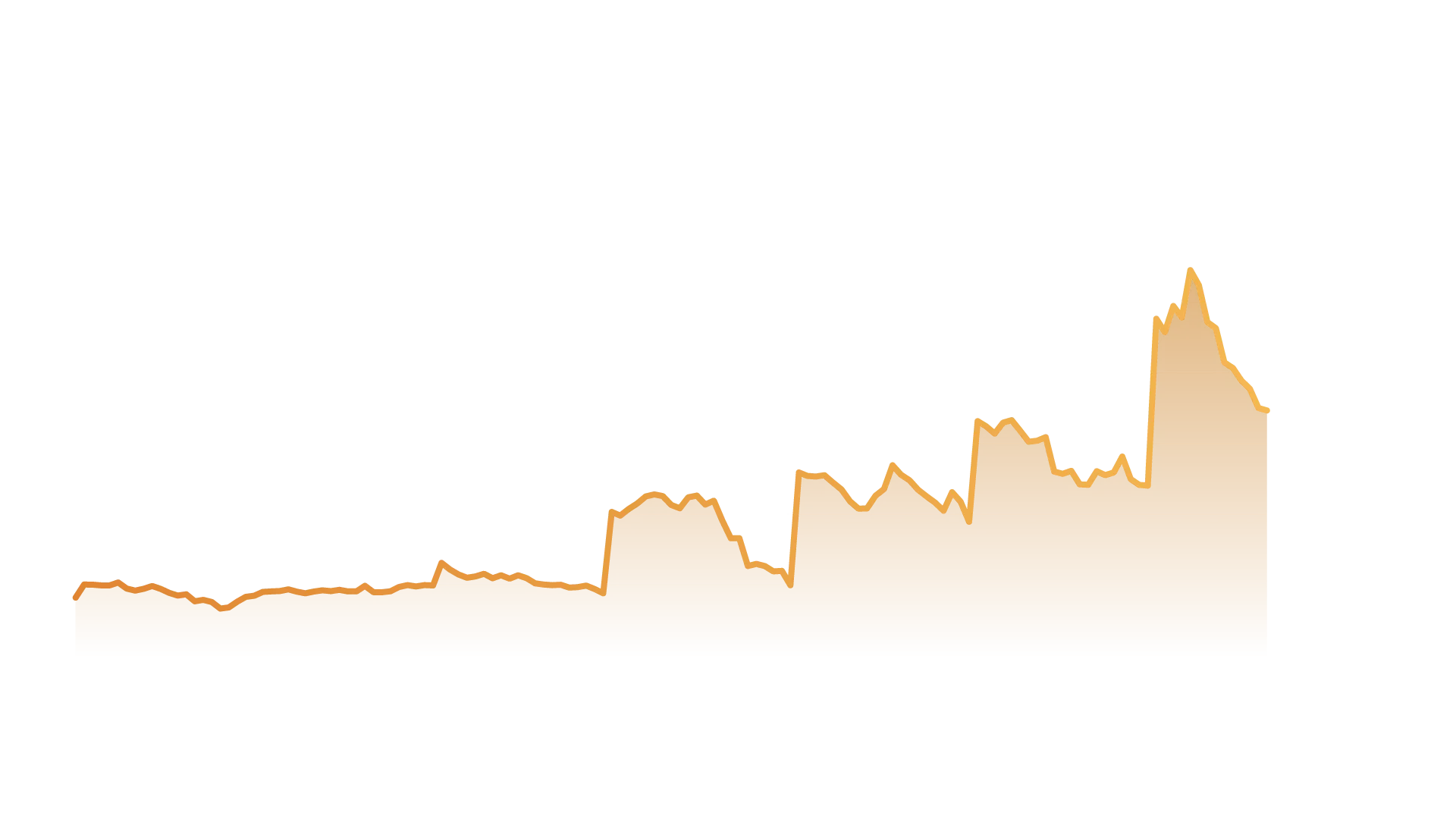
The company-level proof set is what turns the abstract $200 trillion into an investable pattern. Ramaco Resources: DOE scientists used “a new kind of AI that predicts where ‘unconventional’ deposits of natural resources are” on a 100-year-old Wyoming coal mine, and “When Randall started digging, he found 1.7 million tonnes of rare earths, worth about $37 billion.” The stock made “773% in a little more than six months.” Dakota Gold put “145 years of historic records” into AI-powered mining software and “uncovered 114 tons of gold” near Mount Rushmore, “roughly a $22 billion payload… or put another way, 64% of all the gold mined in America last year.” For the full backstory, see our AI Mining Software: The Picks and Shovels of Discovery article. We break down that angle in our The Biggest Resource Boom in American History piece.
The demand side that makes it move
A national endowment only becomes an economic story when policy and demand show up. Tilson’s Boom Factors #2 and #4 cover both: “The White House is backing resource stocks like never before,” through “12 executive orders” and “Project Vault,” “a $12 billion mineral stockpile”; and AI demand itself, “AI is sending stocks FLYING in every market it collides with,” with his evidence set running from Nvidia “+2,088%” to SanDisk “almost 7,500% in a year” to Bloom Energy “+2,074%.” His conclusion: “Now… it’s RESOURCE STOCKS’ turn.”
The honest bottom line
Treat $200 trillion as what it is: a Cabinet official’s estimate of national in-ground value, deployed to frame an industry inflection, not a marketable opportunity. The investable version of the story is the discovery-to-repricing pattern already visible in the sector, Ramaco’s 773%, K2 Gold’s 711%, Ero Copper’s 318%, and the operating companies using AI to add production, Tilson’s four AI Miners picks being his expression of it. His own hedge is the right closing note: “These are some of Whitney’s best recommendations. Past performance is no guarantee of future results.”
Questions readers ask about the number
Where does the $200 trillion come from? Interior Secretary Doug Burgum, as the presentation attributes it: “what Secretary of the Interior Doug Burgum estimates is a $200 TRILLION payload.” That sourcing matters. It is a government official’s estimate of America’s in-ground mineral wealth, not a newsletter’s invention, and the promo deserves credit for attaching a name to the number.
What does the number actually measure? In-ground resource value. Metals still in the ground, at current prices, before extraction costs, before development timelines, before any company’s equity structure. The presentation’s own extension, “enough to pay for our national debt three times over,” is editorial extrapolation on top of the estimate, and readers should treat it as exactly that.
How much of the payload is AI-adjacent? The part that moved recently. The AI-discovery mechanism, MinMod’s 670,000 mapped sites, the 145-year archive that yielded 114 tons of Black Hills gold, the Wyoming coal mine that held $37 billion of rare earths, is what converts an old geology estimate into an investable discovery pipeline. That pipeline is the thesis, and the four operating miners in Tilson’s AI Miners report are the expression of it. Our full Rushmore gold review covers the number and the whole offer in detail.
Where to learn more
For the surrounding coverage, see critical minerals stocks, rare earth stocks, and how to invest in gold mining companies. The full presentation and the AI Miners report are at the Stansberry order page with the 30-day refund guarantee.
NewsletterVetter is an independent publication. We receive compensation from some of the services we review through affiliate links. Nothing on this site is investment advice. Always do your own research.