Whitney Tilson’s $6 Gold Stock Review: Is Stansberry’s Commodity Supercycles Worth It?
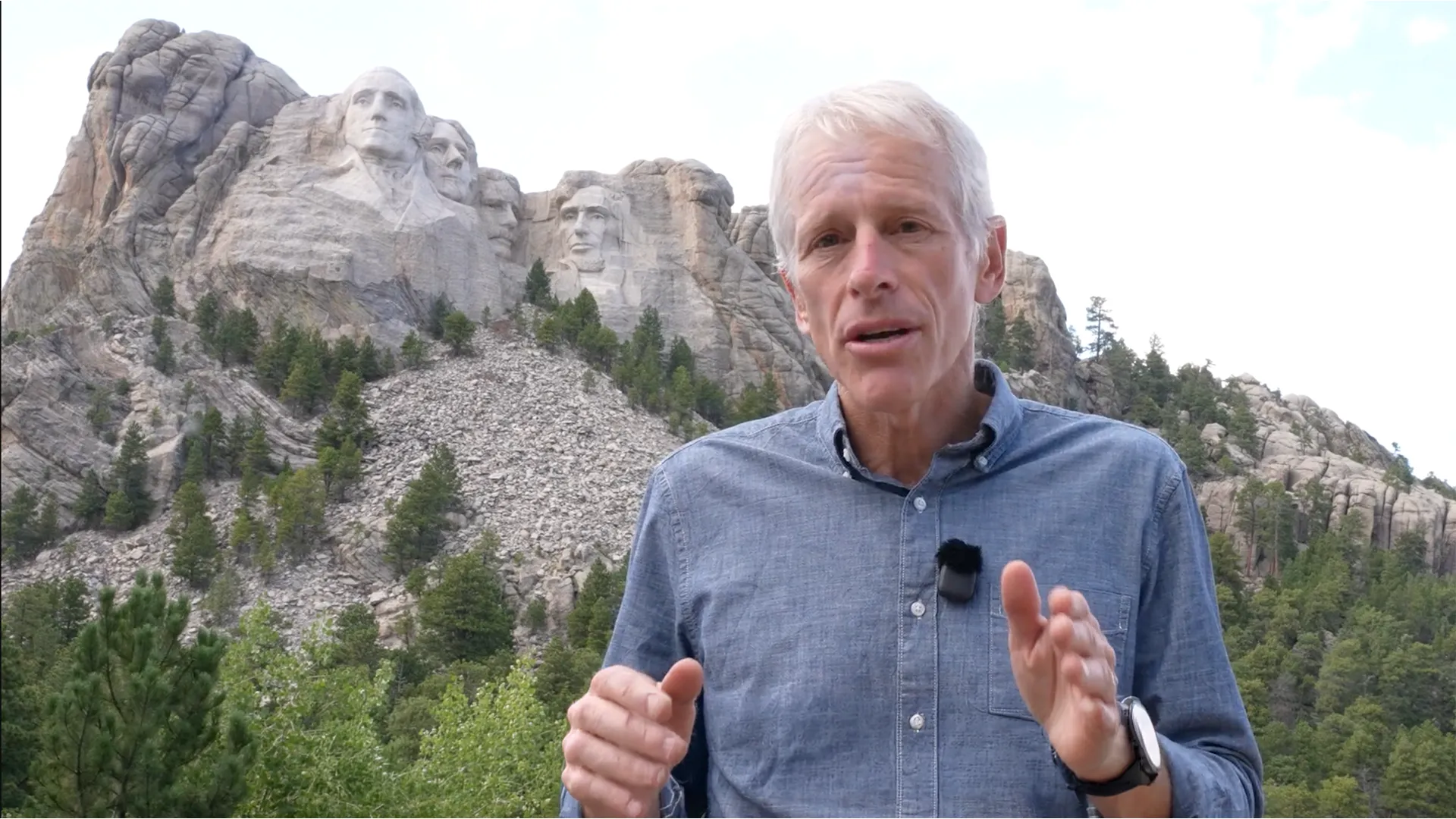
Whitney Tilson opens his newest presentation standing on the ground itself: at Mount Rushmore, a camera crew in tow, pointing at the Black Hills behind him. The story he tells there is a good one. A small gold company used artificial intelligence to dig through 145 years of archival mining records, and found what he calls “one of the biggest – and most important – gold finds in America since the 1870s,” 114 tons of high-grade gold “almost in the shadows of the presidents’ noses.” Then he does something almost no presenter in this genre does: he names the company for free, ticker and all, and tells you why it is not even his top pick.
That structural honesty is the reason we enjoyed reviewing this one. The wider thesis is a $200 trillion American resource boom driven by AI-assisted mineral discovery and a federal critical-minerals push, and the vehicle is Stansberry’s Commodity Supercycles letter. Here is the full review.
The Presenter
Whitney Tilson has one of the most checkable credibility blocks in the newsletter business, and most of it survives a fact-check, which is rarer in this space than it should be. He founded a hedge fund in the late 1990s, “with nothing but a laptop and a folding table,” and built it into “a $200 million giant, tripling my clients’ money along the way.” He appeared on 60 Minutes in December 2008 and called “the bottom of the market. It was one of the greatest buying opportunities of all time.” He called the dot-com peak in 2000. And the call he is justifiably proudest of: “I appeared on CNBC in October 2012 and said that Netflix had the same upside potential as Amazon… Before it went on to rise more than 8,342%.” His personal book included Amazon bought “back in 1999 for a few dollars split-adjusted” and Apple at “a split-adjusted $0.35” before the iPhone.
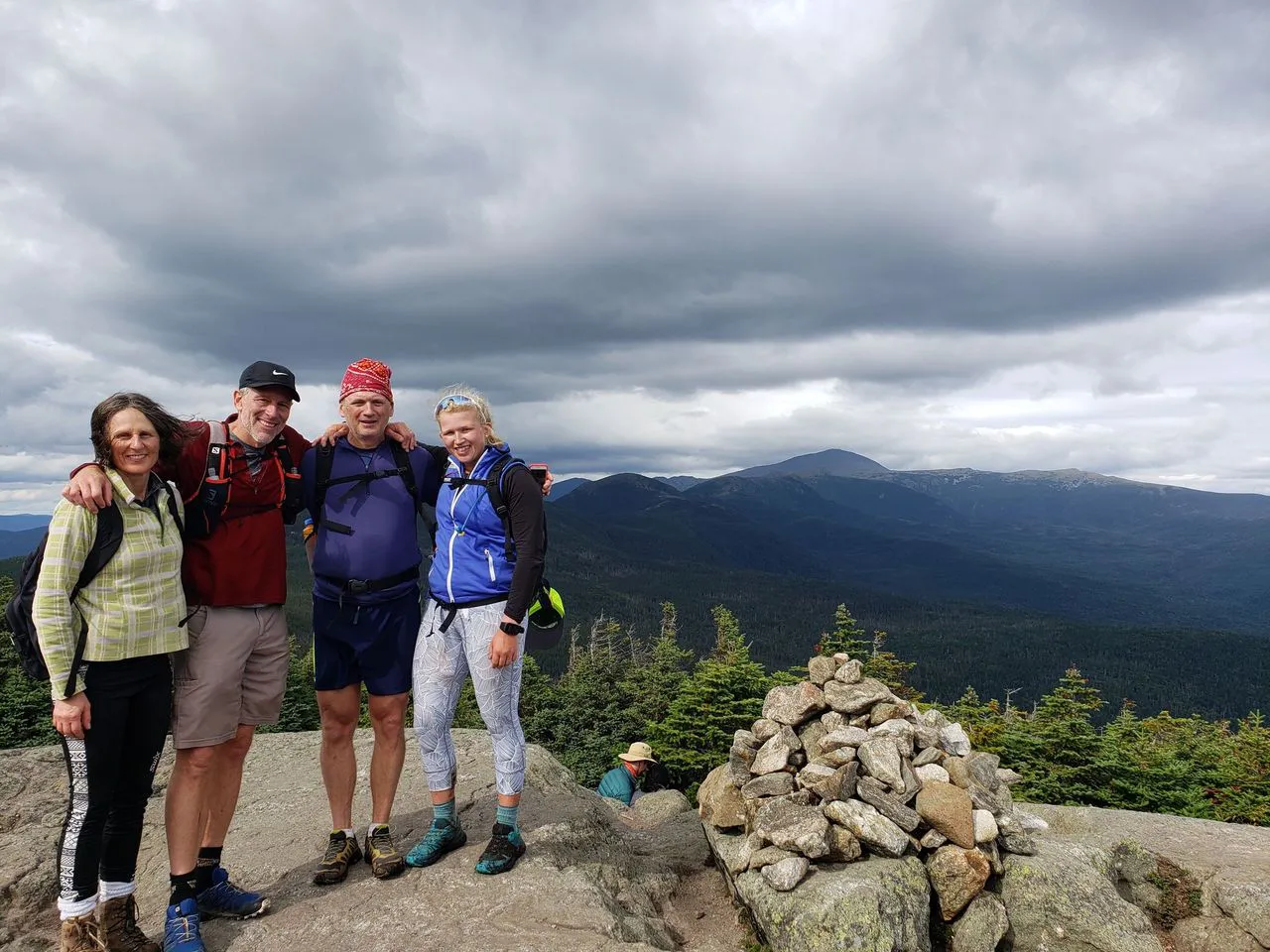
The personal-brand pivot in this presentation is smart and unusually genuine: “But what most people don’t know about me is that my real passion lies far outside of Wall Street… but in the great American outdoors.” He then documents a decade of hard hiking, the Presidential Traverse in the White Mountains, the Nose of El Capitan, Red Rock Canyon, Joshua Tree, and ties it to the thesis: “As beautiful as the great outdoors is… It can be FINANCIALLY bountiful, too.” When a resource pitch is delivered by a man who actually spends his vacations in the terrain he is describing, the credibility lands differently. His subscriber network name-drop is equally real: “some of the biggest names on Wall Street have subscribed to my market research, including my close personal friend, billionaire Bill Ackman, along with… Joel Greenblatt, David Einhorn, Leon Cooperman, and Seth Klarman.”
On the resource side specifically, his track-record slide cites “245% on Kaminak Gold… 339% on Jinshan Gold Mines… 156% on MAG Silver… and 322% on Northern Dynasty Minerals,” with the honest footnote “These are some of Whitney’s best recommendations. Past performance is no guarantee of future results.” He also claims “NINE chances to double their money or more on resource stocks in recent months” for Commodity Supercycles subscribers.
The Big Idea
The mechanism is AI-driven mineral discovery, and the presentation explains it through two stories.
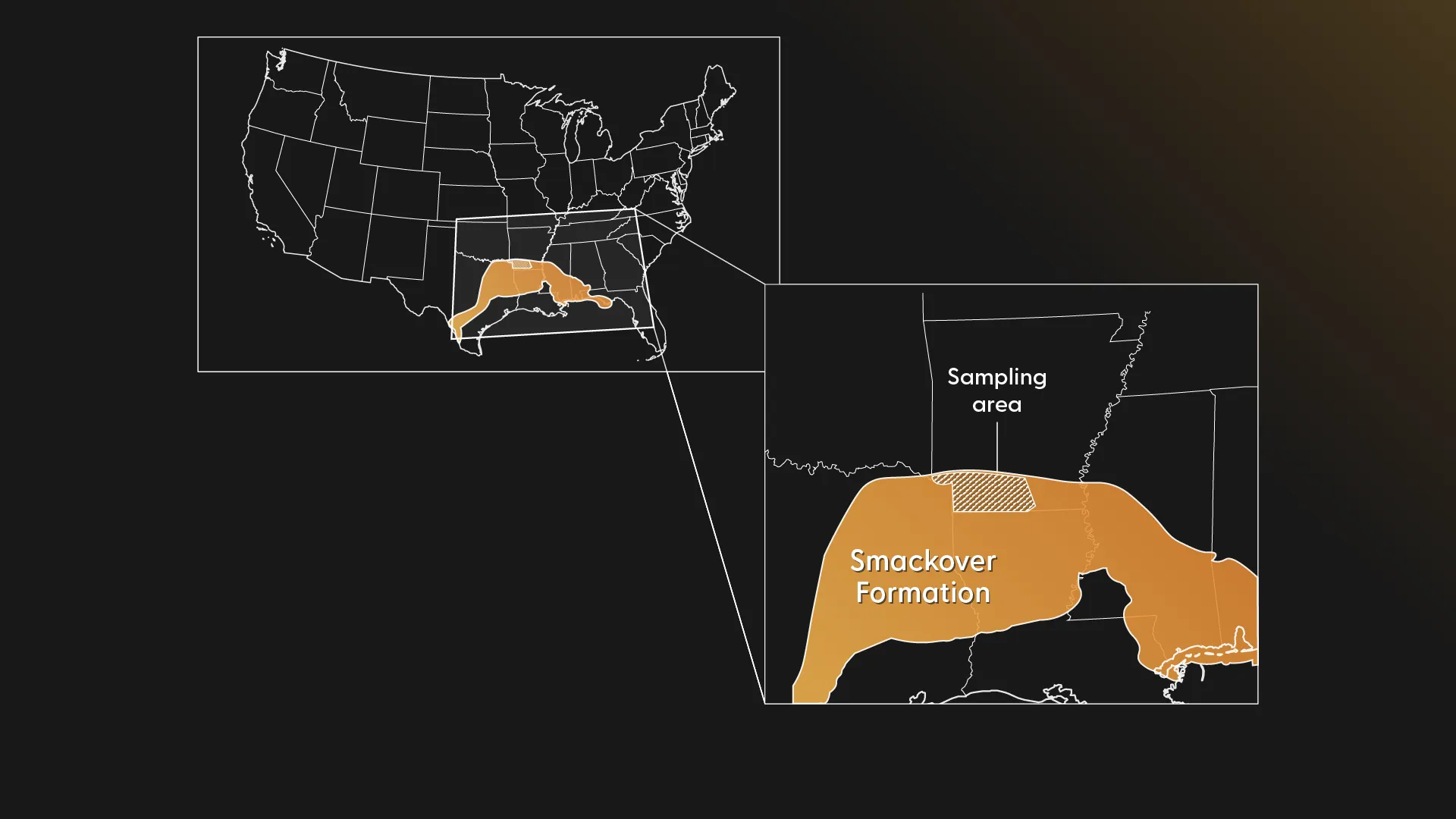
The first is the Randall Atkins story, and it is genuinely one of the best-documented mining narratives of recent years. “A few hours away from Mount Rushmore, in Sheridan County, Wyoming… A man named Randall Atkins bought a 100-year-old coal mine.” Scientists from the Department of Energy turned up with “a new kind of AI that predicts where ‘unconventional’ deposits of natural resources are,” and the result: “When Randall started digging, he found 1.7 million tonnes of rare earths – worth about $37 billion… Enough of these essential resources to supply the entire U.S. for more than 100 years.” The company is Ramaco Resources, and the payoff is on the chart: “anyone holding his stock in his small company, Ramaco Resources, would have made 773% in a little more than six months.”
The second story is the Rushmore find itself, and the mechanism is archival data mining: “Geologists at this firm got access to 145 years of historic records for the area – old maps, drill results, surveys, that kind of thing… It was way too much information for humans to sift through… but not AI. The firm put all this historic data into AI-powered mining software… And it uncovered 114 tons of gold.” That is a real technique being deployed across the industry right now, and the presentation grounds it with the broader proof set: the Pentagon’s “MinMod” AI “mapped out 670,000 mineral sites across America… Including 184,000 gold sites,” and exploration firms like Earth AI are posting discovery hit rates “150 times the industry average.”

The macro layer is the $200 trillion framing, and to the promo’s credit it is attributed rather than asserted: “what Secretary of the Interior Doug Burgum estimates is a $200 TRILLION payload.” The four Boom Factors give the thesis its structure: AI has mapped where America’s mineral wealth lies, “The White House is backing resource stocks like never before” (12 executive orders and a “$12 billion mineral stockpile” called Project Vault), AI is “America’s ‘secret weapon’” for discovery economics, and the AI-collision pattern that ran semiconductors, data centers, and energy stocks is now rotating: “Now… it’s RESOURCE STOCKS’ turn.” The honest core of the pitch is solid ground: AI is materially improving discovery rates, the federal government genuinely wants domestic minerals, and China genuinely holds a “chokehold” on several critical inputs. The $200 trillion is an in-ground resource estimate, not realizable equity value, and readers should hold that distinction.
The Key Claims
The headline numbers, quoted verbatim:
“It found 114 tons of the highest-grade gold… That’s roughly a $22 billion payload… or put another way, 64% of all gold mined in America last year.”
“Soon, this little company could start raking in hundreds of millions of dollars every year… for the next 28 years!”
“And while its stock is currently trading for $6, it probably won’t be for much longer.”
“This new technology is unlocking ALL of America’s vast mineral wealth… a $200 TRILLION payload. That’s enough to pay for our national debt three times over.”
How to weigh these? The $22 billion figure is an in-ground payload estimate, not a revenue number, which matters because in-ground value is not the same as mineable value at a profit. The “hundreds of millions per year for 28 years” is a mine-plan extrapolation. The “$6 won’t last” line is forward-looking price language with no disclaimer at point of use, so treat it as the presenter’s opinion. What the presentation does well is source discipline: nearly every claim is attached to a named company, a named official, or a named study, and it says so directly: “Everything I’m sharing with you today is backed up in my sources on the Details and Disclosures page below this presentation.” The track-record and testimonial slides all carry the proper non-typical-results asterisks, and the claim we appreciated most is the hedged one: the promo’s 42.4% average annualized return figure is “immediately followed by the correct hedge,” in the presenter’s own words, “And, of course, all investments carry risk, and past performance does not guarantee future success.”
The urgency here is softer than most, and mostly earned: the AI-discovery announcements are real news flow, the federal policy push is real policy, and the sector’s recent runs (Standard Lithium up 433%, Albemarle up 329%, Ero Copper up 318%, K2 Gold up 711%) really happened. The manufactured part is the standard “act quickly” scaffolding around it.
The Free Ticker
This is the section where the presentation earns our respect, because Tilson reveals the teased gold miner and then manages expectations honestly:
“First, the firm that discovered gold in the hills around Mount Rushmore is called Dakota Gold and its ticker symbol is DC. It’s an exciting stock – it’s what brought me out into the hills here – but… it won’t start mining its gold find until 2029. That means it’s not producing any revenue yet, so for now I’d just keep an eye on it.”
That is a rare level of candor. Dakota Gold (NYSE American: DC) is a real South Dakota company working the historic Homestake-adjacent Black Hills district, its resource estimates have been publicly reported, and institutional holders include the BlackRock and Vanguard positions the presentation cites. Naming it, giving the 2029 production timeline, and explicitly declining to recommend it as the top pick is a structural honesty upgrade over the standard junior-miner tease, and it does real de-risking work that most promos skip. Anyone can research DC freely from here; the production timeline, the pre-revenue profile, and the junior-explorer risk are the three facts to hold onto.
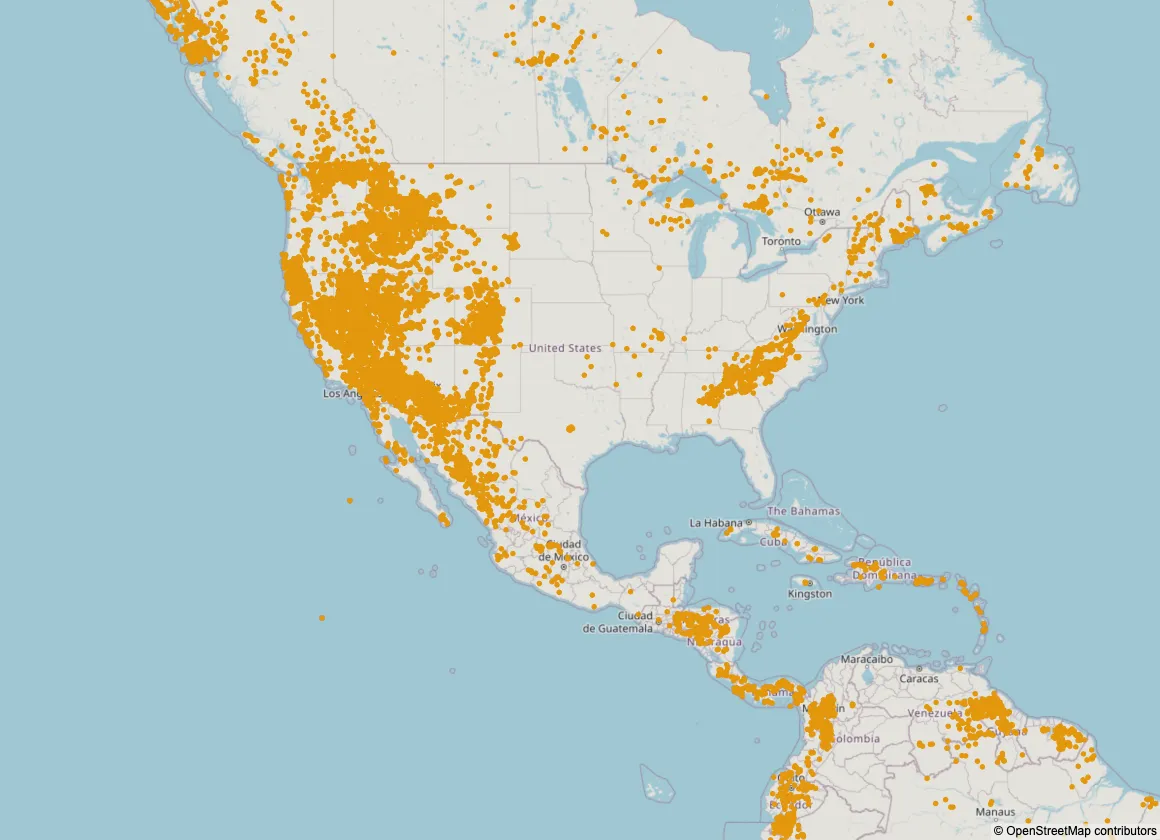
The picks Tilson actually wants subscribers to own sit behind the paywall, four of them in the flagship report, and the clue profiles are specific: an AI-using miner “with the aim to make an additional $250 million every year,” an Arizona copper miner that unlocked “an extra 200 million pounds of ‘hidden’ copper,” an oil-and-gas company with an AI “hive mind” controlling “fleets of AI-powered hydraulic fracking rigs across 7 states,” and a West Texas AI driller that “just penned a deal with a massive tech firm to supply power to one of its data centers for the next two decades.” Our read of the profiles points at mid-cap copper and frac operators and a gas-to-data-center name, with the royalty report’s “145 mines across North America” description suggesting the major streaming companies, but treat those as unconfirmed candidate reads; DC is the only ticker stated in the transcript.
What You Get
The product is a Commodity Supercycles trial membership. It includes twelve monthly issues (“Each new issue will be delivered to you the second Monday of every month”), access to the model portfolio, and three special reports:
- AI Miners: Four Stocks Unlocking America’s $200 Trillion Natural Resource Bounty: the four core picks described above.
- Resource Royalties: Three Income Plays for America’s New AI-Driven Resource Boom: royalty and land plays, including one whose shareholder “payouts… has increased 297X over that time.”
- Limitless Energy: Four Stocks That Could Power America for 30,000 Years: the enhanced geothermal angle, “your gateway into the $3 trillion enhanced geothermal systems, or ‘EGS,’ opportunity,” which the Department of Energy “calls a 50-state solution for virtually ‘limitless’ energy,” and which Tilson compares to “the shale boom of the early 2010s, which saw some stocks run up 37X.”
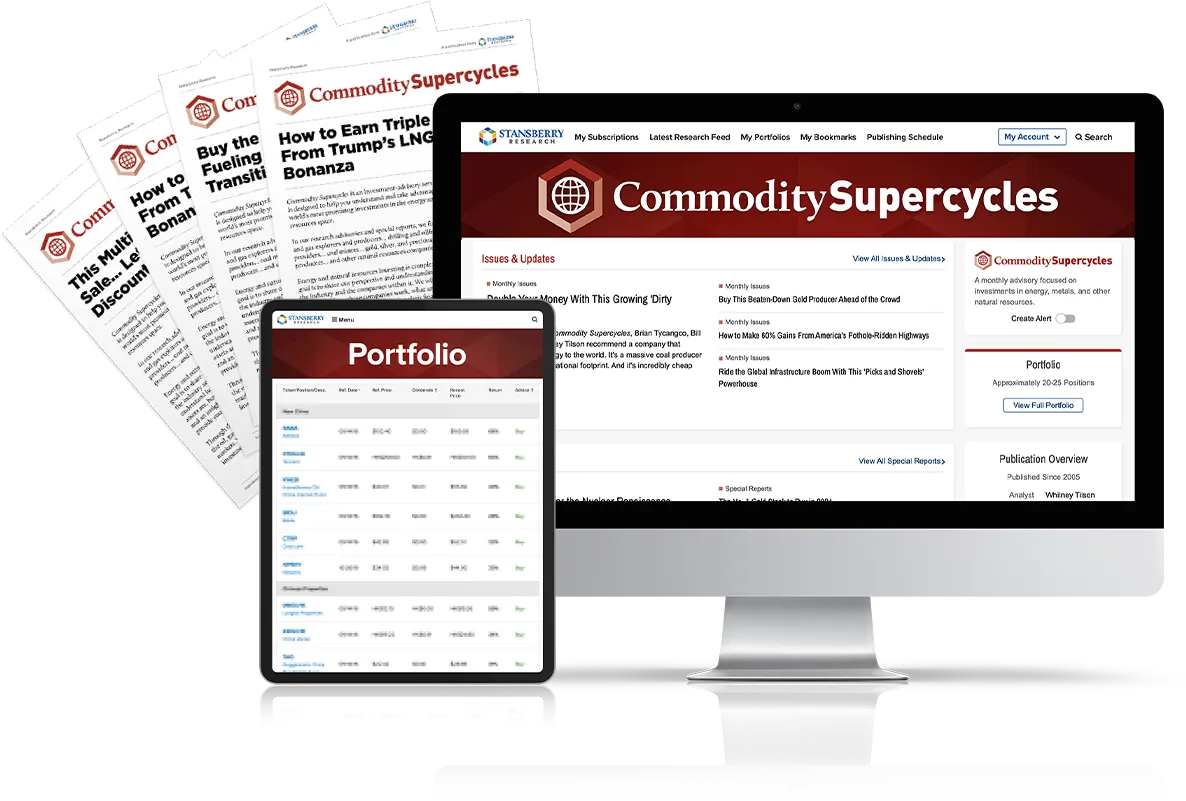
The price anchors at $499: “Usually, a one-year membership costs $499 – that’s the price you’ll find on our website. But today, I’ve arranged a special introductory offer for you to simply try my research.” As with the Starphone offer from the same publisher, the discounted price sits behind the Get Started button. The guarantee is the house standard, stated twice: “If you decide otherwise in the first 30 days, just let us know… You’ll get a full, prompt refund of every penny you paid to join.” The exclusivity line, “you can’t buy any of these research reports separately,” is standard positioning.
Our Take
This is a well-built resource pitch with an unusually honest spine. The presenter’s credibility is checkable and checks out, the mechanism, AI-assisted mineral discovery, is a real and accelerating technology with real proof points like the Ramaco rare earths story, the federal critical-minerals push is actual policy, and the single most impressive move is the free, expectation-managed Dakota Gold reveal. A presenter who names the teased stock and then tells you why it is not his top pick is signaling that the paid picks have to earn their keep on their own merits, and that is the right way to run this genre.
The parts to keep in proportion: the $200 trillion Burgum number is an in-ground resource estimate, and the promo’s arithmetic on top of it, “pay for our national debt three times over,” is editorial extrapolation. The $22 billion Rushmore payload is resource-scale value, not revenue, as Tilson’s own 2029 production caveat concedes. The AI-collision pattern-matching from semiconductor winners to resource stocks is an analogy, not a mechanism, though it is an analogy with the sector’s recent runs behind it. And DC itself is a pre-revenue junior explorer, which means high volatility is the entry fee regardless of how good the deposit is.
Our recommendation: Commodity Supercycles is a strong fit for investors who want curated exposure to the AI-plus-critical-minerals theme and don’t have the time to build their own screen of mid-cap miners, royalty companies, and geothermal names. The 30-day full-refund guarantee makes the trial low-risk, and the three-report stack covers the theme’s main vectors. The free Dakota Gold name is a watch-list stock for most people, not a buy, exactly as the presenter frames it. It is a poor fit for anyone expecting the gold-find story to translate into near-term revenue; 2029 is the word that matters most in the entire presentation. For the Musk-side AI infrastructure stories from this week’s batch, see our Starphone review from the same publisher and our One Stock Retirement Plan review.
Where to Learn More
- For the consumer-device AI story from the same publisher, see our Starphone review covering the Direct-to-Cell thesis and the free Qualcomm pick.
- For more from this publisher, see our Stansberry Research publisher profile.
- For the critical-minerals angle from another team, see our Brownstone critical minerals coverage.
- Have a promo you want us to vet? Submit it here.
- Ready to try Commodity Supercycles? Click here to see the full Rushmore gold presentation at Stansberry Research. (A tracked affiliate link will replace this direct VSL link once a TrackFlow code is provisioned.)
NewsletterVetter is an independent publication. We receive compensation from some of the services we review through affiliate links. Nothing on this site is investment advice. Always do your own research.