A Financial Guide to the Physical AI Boom
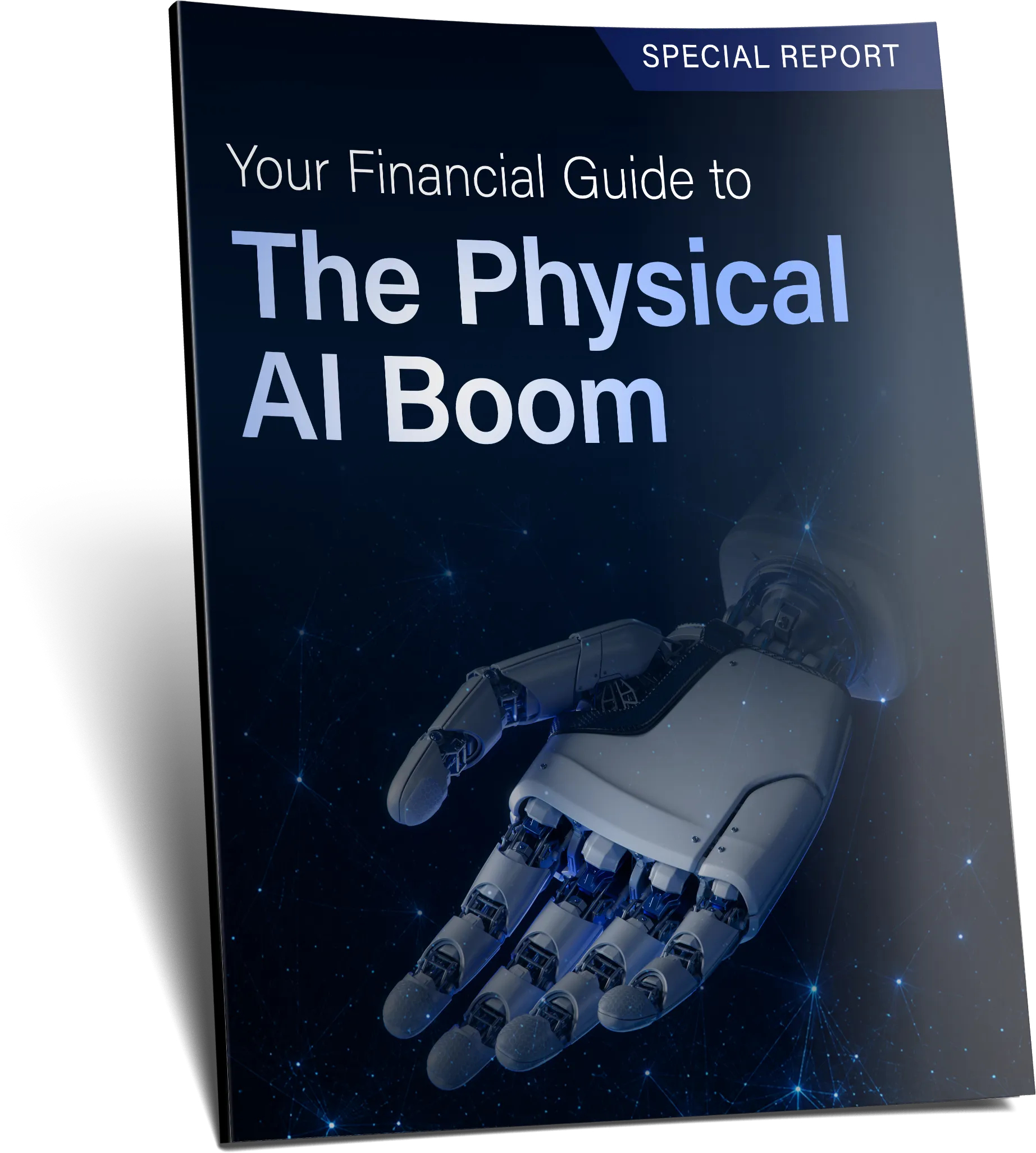
“Your Financial Guide to the Physical AI Boom” is Bonus Report #2 in Stansberry Research’s Starphone package, and unlike the supplier list that anchors the offer, this report is not tied to any single device launching. It targets the broader trend that Josh Baylin calls “one of the defining wealth-building trends of the next few years”: companies “bringing AI out into the real world.” For investors who find the Starphone story intriguing but speculative, this is the more diversified expression of the same thesis, and the presentation describes its contents in enough detail to map the territory. There is more on this in our Physical AI Stocks: The Companies Behind the Trend article. We walk through the specifics in our Physical AI: What Is It and Why Investors Care piece.
The three company profiles
Baylin sketches the report’s holdings by profile rather than by name. The first is a satellite-communications veteran: “Hikers, sailors, pilots… have all relied on this company for years.” That points to the established satcom device and service tier, companies whose hardware already connects people beyond terrestrial coverage, positioned to benefit as satellite connectivity moves from niche to mainstream through Direct-to-Cell. The second is a machine-vision company with “over twenty years allowing technology to ‘see.’” Machine vision is one of the oldest, most proven branches of applied AI, and two decades of shipping systems is the kind of track record that survives contact with reality.
The third profile is the most Musk-specific: “a company Elon’s own team just brought on to help build the chip plant behind his entire AI operation.” That is a reference to the Terafab-class semiconductor buildout, the same theme the presenter targets from the Brownstone side with his own Terafab supplier report. Two independent research houses pointing at the same layer of the stack, the equipment and infrastructure behind Musk’s chip plant, is one of the more convincing convergence signals in the current promo cycle.
Why physical AI is its own thesis
The distinction between digital AI and physical AI is the report’s organizing idea, and it is a real one. The first wave of AI wealth came from software and the chips that train models: chatbots, cloud services, and the data-center buildout. The next wave, on this thesis, comes from AI that acts in the physical world: robots, autonomous systems, satellites, devices, and the infrastructure that connects them. The presentation’s physical-AI growth slide, and the satellite-compute economics behind Starmind, where “the AI1 orbital data-center satellite” has “the wingspan of a Boeing 747” and produces “120 to 150 kilowatts of computing power” running “on sunlight alone,” illustrate how much capital is moving into the physical layer.
The institutional validation Baylin cites for one of the physical AI names: “138 hedge funds own it,” with Steve Mandel’s firm holding “a $1 billion” position. Large-cap institutional favorites exposed to the physical AI theme, semiconductor and robotics platforms among them, are the profile that suggests.
How it fits the offer
The Starphone offer is a year of the True Innovations Report, “twelve full months of research from Josh, John, and the rest of their team, delivered every month, plus the entire research package… which includes all three bonus reports” and “full, 24/7 access” to the members-only website and model portfolio. The list price is $499, discounted for the promotion. The guarantee is generous and stated twice: “If at any time during those 30 days, you find you’re not getting the best research you’ve ever seen… You’ll get a full cash refund, no questions asked. I’ve also instructed my team to let you keep everything you’ve already received, at no charge.”
Considerations
The physical AI thesis is the least device-dependent part of the package: machine-vision and satcom companies earn revenue today, regardless of whether any Starphone ever ships. That makes this report the natural first read for cautious investors evaluating the offer. The standard hedges still apply: past supplier runs like Skyworks “up as much as 491%” are maximum historical gains, not forecasts, and the promo’s own disclaimer, “Please don’t invest more than you’re willing to lose,” is worth taking literally.
Questions readers ask about the report
What companies does the guide cover? Three profiles: a satellite-communications veteran, a machine-vision company with more than twenty years of teaching technology to “see,” and a company Musk’s team just brought on to help build the chip plant behind his AI operation. All three are framed as companies bringing AI out into the real world rather than into chat windows.
How does the report relate to the other two? The supplier list is the phone-adjacent trade; the Altman report is the convergence trade; the Financial Guide is the industrial layer of physical AI, the sensors, communications, and fab equipment that every embodied-AI system needs regardless of whose phone wins. Together the three reports cover device, supplier, and infrastructure.
What should you check before subscribing for it? Whether you want general physical-AI exposure or the specific Starphone event. The report is bundled with the True Innovations Report trial under the 30-day keep-everything refund, so the reading decision is low risk. Our full review covers the whole bundle.
Where to learn more
For related coverage, see our pieces on satellite communication stocks, the Xphone partner thesis, and the Stansberry Research publisher profile. The Physical AI guide is Bonus #2 at the Stansberry order page, included with the discounted True Innovations Report membership.
NewsletterVetter is an independent publication. We receive compensation from some of the services we review through affiliate links. Nothing on this site is investment advice. Always do your own research.