Starphone: Could It Really Kill the iPhone?
“Starphone” is the name Josh Baylin gives to the device he believes Elon Musk is secretly preparing, and the claim attached to it is maximal: the man who predicted the rise of the iPhone “now believes Elon is planning to launch a device that will KILL the iPhone and all its competitors.” The Wall Street Journal reported that SpaceX debuted a phone prototype ahead of its IPO; Musk called the story “utterly false,” and denied it to Reuters as well. So the question any reader should ask is straightforward: what is actually behind the “iPhone killer” framing, and how much of it is evidence rather than extrapolation? There is more on this in our The Cost of a Tesla Phone: What a Musk Phone Costs article.
The spec Baylin describes
The device in Baylin’s telling is defined by four properties: “Thinner than an iPhone… usable worldwide without cell towers… running on one of the most powerful AI-based platforms in existence… It could become the first truly physical AI device of its kind… and likely sell for a price the iPhone could NEVER compete with.” Our The First Truly Physical AI Device, Explained explainer covers this in detail.
The radical part is the last one, and it follows from the structure of Musk’s businesses. A phone that runs on Starlink’s satellites instead of carrier networks, with compute handled by orbital data centers and AI by Grok, does not pay the same cost structure as an iPhone, which bundles carrier economics and a premium hardware margin. Musk’s own words on the Joe Rogan podcast sketch the concept: “I don’t think there’ll be operating systems. I don’t think there’ll be apps. The phone will just display the pixels and make the sounds.”
The evidence trail
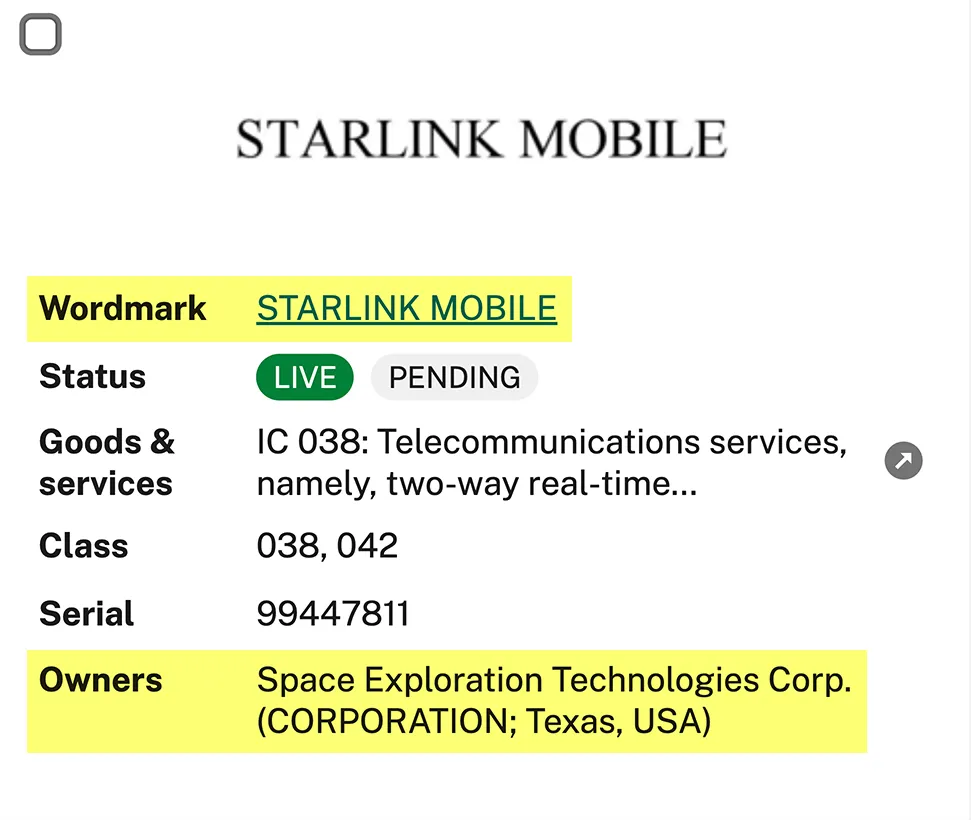
The strongest part of Baylin’s argument is the paper trail, all of it checkable. SpaceX “bought exclusive-use, nationwide spectrum from EchoStar. For $17 billion,” after filing two trademarks the same day, “Starlink Mobile” and “Powered by Starlink.” The spectrum purchase is the tell: “a trillion-dollar company doesn’t jump over all these hurdles just for fun.” When the EchoStar spectrum news hit, that stock “went from $15 to $127 in less than a year,” the template for the supplier gains Baylin expects from a Starphone launch.
On the AI side, Grok is “now part of SpaceX, too” and “consistently ranks among the top AI models in independent benchmarks,” while being “one of the most efficient AI models out there… one of the cheapest to use for each task.” The compute layer is the Starmind trademark and the AI1 orbital data-center satellite, “the wingspan of a Boeing 747,” producing “somewhere around 120 to 150 kilowatts of computing power,” with Google paying “$920 million a month” for capacity through 2029.
The denial, examined
The intellectual core of the presentation is Baylin’s handling of Musk’s denials, and it is genuinely clever. His argument is a “semantic loophole”: “He’s letting you assume ‘phone’ means what it’s always meant. Meanwhile, he’s likely building something totally new.” His precedents: “He doesn’t call Tesla a car. He calls it a ‘robot on wheels’… He doesn’t call Cybertruck a truck.” And the history: “Keep in mind, Jobs denied the iPhone was coming, too… Just like Musk is doing.”
But Baylin himself draws the honest boundary: “I think he’s telling the truth! I don’t think there’s a finished phone sitting in a drawer at SpaceX headquarters right now. But everything required to build one, the spectrum, the chips, the trademark, the legal groundwork, and maybe even a working prototype shown to his own investors, that’s already been filed, funded, and built.” The presentation also states plainly, mid-stream: “Now, Elon Musk hasn’t confirmed that a Starphone is coming, of course.”
Could it actually beat Apple?
History is on Baylin’s side that category killers come from outside the incumbent club: BlackBerry, Nokia, and Motorola all held the “unbeatable” position within living memory. And Musk’s ventures have a documented habit of being called impossible, then shipping, PayPal, Tesla, SpaceX. What would make Starphone a true iPhone killer rather than a niche device is the pricing structure described above plus global coverage with no dead zones, both of which follow from assets Musk verifiably owns. What is unproven is whether the device exists in any finished form, and no reader should treat “50 times their money” as anything more than Baylin’s maximum-case opinion, hedged by the promo’s own disclaimer that “all investments carry risk.”
Where to learn more
See our related coverage of the Xphone partner thesis, Starlink investments, and the Stansberry Research publisher profile. The full Starphone presentation, with the free Qualcomm recommendation, is at the Stansberry offer page with a 30-day refund guarantee.
NewsletterVetter is an independent publication. We receive compensation from some of the services we review through affiliate links. Nothing on this site is investment advice. Always do your own research.