The Cost of a Tesla Phone: What a Musk Phone Costs
“How much would a Tesla phone cost?” is one of the most-searched questions around the Starphone thesis, and the honest answer starts with a disclaimer the presentation itself makes: “Now, Elon Musk hasn’t confirmed that a Starphone is coming, of course.” No official price exists, no official device exists, and Musk has twice denied the phone reports. But there is a serious cost argument inside Josh Baylin’s Stansberry presentation, and it is the most economically interesting part of the whole thesis: why a Musk-built phone could be priced in a range the iPhone, structurally, could not follow. For the full backstory, see our Is Elon Musk Starting a New Phone Company? article. The details are in our Josh Baylin: The Analyst Who Called the iPhone article.
The structural cost argument
Baylin’s claim is that the device would “likely sell for a price the iPhone could NEVER compete with.” That is not a claim about luxury materials; it is a claim about cost structure. The maximal version of the framing — a device that kills the iPhone outright — is what we grade in our Starphone iPhone-killer review. Consider what an iPhone’s price has to cover: premium hardware margins, a share of carrier economics, app-store ecosystem rents, and the amortization of Apple’s entire retail and marketing apparatus. Now consider the Starphone concept as Baylin describes it: “Thinner than an iPhone… usable worldwide without cell towers… running on one of the most powerful AI-based platforms in existence.”
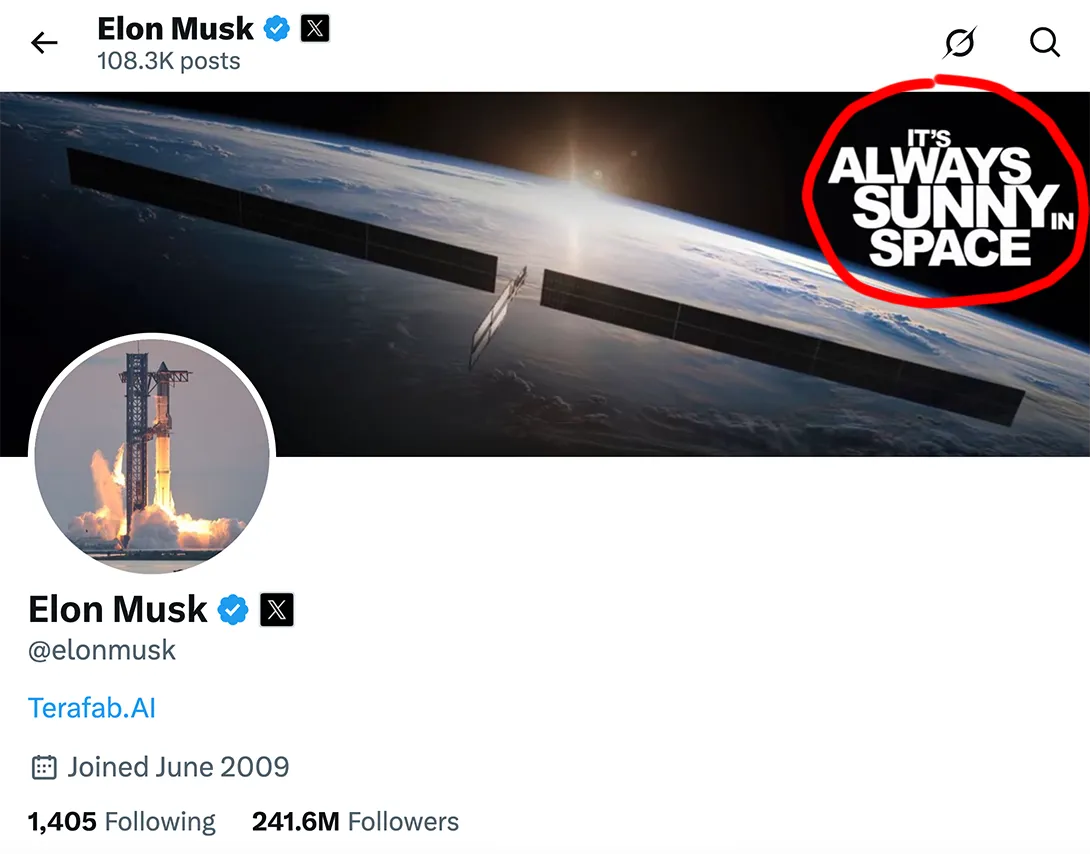
A satellite-native device changes the two biggest line items. Connectivity: instead of paying carriers for spectrum and towers, Musk owns the spectrum outright (the $17 billion EchoStar purchase) and the “towers” are satellites he already operates, “19 TIMES more active satellites than even the U.S. military, the Chinese military and the Russian military… combined,” where the marginal cost of one more connected device trends toward the electricity to run it. Compute: instead of a premium processor in every handset, Musk’s Joe Rogan description pushes the intelligence to orbit, “The phone will just display the pixels and make the sounds,” powered by Starmind compute satellites like the AI1, “the wingspan of a Boeing 747,” producing “120 to 150 kilowatts of computing power” running “on sunlight alone.” In Musk’s phrase, “It’s always sunny in space.”
What the satellite economics imply
The Google contract is the proof that orbital compute is already commercially real: “$920 million a month for SpaceX computing capacity” through 2029, a contract “worth more than $30 billion.” If hyperscalers pay that rate for orbital capacity, the marginal cost of serving a phone’s AI queries from orbit can be low enough to subsidize hardware in a way a terrestrial competitor cannot match, because Apple must buy its AI compute from someone else’s data centers.
Why “Tesla phone” is the wrong frame
The searches for “Tesla Pi phone” and “cost of a Tesla phone” assume a conventional handset from the car company. Baylin’s argument is that the device, if it comes, comes from the SpaceX side of the empire, because that is where the spectrum, the trademarks (“Starlink Mobile,” “Powered by Starlink”), and the SEC IPO paperwork describing direct-to-smartphone service “on par with terrestrial mobile networks” all live. His “semantic loophole” reading is that whatever ships may not be called a phone at all: “He doesn’t call Tesla a car. He calls it a ‘robot on wheels.’”
The honest caveats, again
Because no device is confirmed, any specific price figure you see anywhere is invention. What can be assessed today is the cost logic: whether the assets Musk verifiably owns would allow aggressive pricing. That argument is genuinely strong on paper. The investment expression of it, in Baylin’s construction, is not the device but the suppliers, “One of the companies in the report has supplied hardware to SpaceX for close to a decade… Most of them trade for under $100,” plus the free pick, Qualcomm, contracted to build satellite connectivity into future devices. The 50X upside case requires a launch; the supplier thesis only requires the buildout.
Questions readers ask about the cost question
Is there any official price? No. No device has been confirmed, so there is no price, no release date, and no carrier plan. Any number floating around the internet is speculation, and the presentation itself is careful to frame its device description as “likely” rather than announced.
What does the presentation say about pricing strategy? That the phone would sell at “a price the iPhone could NEVER compete with.” That is a strategy claim, not a price, and the mechanism behind it is cost structure: a direct-to-cell service built on SpaceX’s own satellites and $17 billion of exclusive nationwide spectrum skips the tower networks that make smartphones expensive to support. Musk’s stated device concept, from his Joe Rogan appearance quoted in the pitch, is a phone with no operating systems and no apps that just displays the pixels and makes the sounds, which is a radically simpler device than a modern smartphone.
What can you actually buy today? Not a phone. The trade is the supplier layer: Qualcomm free, the under-$100 supplier list in the paid report. A pricing announcement would be the catalyst that reprices the whole chain, which is why the presentation’s “any day now” framing should be ignored while its checkable evidence, the spectrum, the trademarks, the Google compute contract, gets the attention. Our full review has the details.
Where to learn more
For the full argument, see our related coverage of the Xphone partner thesis, Starlink investments, and the Stansberry Research publisher profile. The full presentation is at the Stansberry offer page, with the supplier list included in the discounted True Innovations Report membership and its 30-day refund guarantee.
NewsletterVetter is an independent publication. We receive compensation from some of the services we review through affiliate links. Nothing on this site is investment advice. Always do your own research.