The First Truly Physical AI Device, Explained
“The first truly physical AI device of its kind” is the phrase Josh Baylin uses for the device he believes Elon Musk is assembling, and it is more than marketing language. It encodes a real distinction in how AI reaches people. ChatGPT and its rivals live in data centers and reach you through an app on a phone that was designed in a pre-AI era. A device built for AI from the ground up, with connectivity, compute, and intelligence all owned by one vertically integrated company, would be a different category of object. Understanding that distinction is the key to the entire Starphone thesis. We walk through the specifics in our Josh Baylin: The Analyst Who Called the iPhone piece. For the full backstory, see our Physical AI Stocks in 2026: Josh Baylin’s Thesis article.
What “physical AI” means
Baylin’s presentation defines the coming wave plainly: “Physical AI is going to be one of the defining wealth-building trends of the next few years.” The concept covers AI embodied in or delivered through the physical world: robots, autonomous vehicles, satellites, and devices. The companion bonus report in the offer, “Your Financial Guide to the Physical AI Boom,” targets exactly these companies, “bringing AI out into the real world.”
The Starphone, in Baylin’s telling, is the consumer expression of the trend: “Thinner than an iPhone… usable worldwide without cell towers… running on one of the most powerful AI-based platforms in existence.” Where the iPhone made the internet portable, the first physical AI device would make intelligence ambient, available anywhere on Earth without depending on terrestrial infrastructure.
The three layers that make it possible
What elevates Baylin’s version of this thesis above the generic “AI phone” chatter is that each layer of the device already exists as a Musk asset. The connectivity layer: Direct-to-Cell, where “D2C turns Starlink’s satellites into cell towers. So Starphone would be able to text, call, and use the Internet without a cell tower or Wi-Fi,” backed by the $17 billion EchoStar spectrum purchase and “19 TIMES more active satellites than even the U.S. military, the Chinese military and the Russian military… combined.”
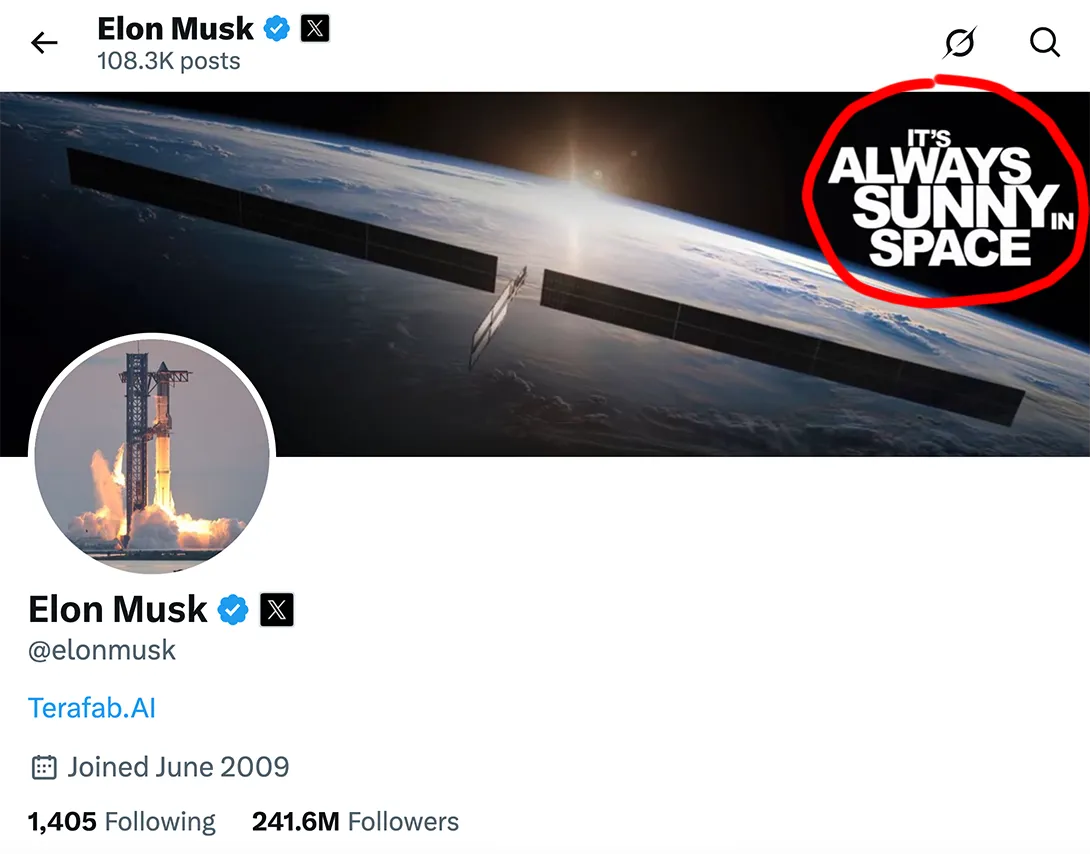
The compute layer: the Starmind trademark covering a new class of compute satellites, with the AI1 orbital data-center satellite “the wingspan of a Boeing 747” generating “somewhere around 120 to 150 kilowatts of computing power,” running “on sunlight alone.” Musk’s phrase for the economics: “It’s always sunny in space.” Google’s contract, “$920 million a month for SpaceX computing capacity” through 2029, proves orbital compute is already a business.
The intelligence layer: Grok, “now part of SpaceX, too,” which “consistently ranks among the top AI models in independent benchmarks” while being “one of the cheapest to use for each task.” Musk’s Joe Rogan quote completes the picture of a device where the phone is just an endpoint: “The phone will just display the pixels and make the sounds.”
Why vertical integration is the story
The reason Baylin frames this as potentially dominant rather than merely competitive is that no other company owns all three layers. Apple designs chips and software but buys connectivity from carriers and AI capacity from partners. A Musk-built device would control spectrum, satellites, orbital compute, and the model, allowing the price structure Baylin describes, “a price the iPhone could NEVER compete with.” The strongest form of the claim — that Starphone could actually kill the iPhone — is the question our Starphone iPhone-killer review grades directly. His analogy for why Musk would not hand this to Apple: “That would be like inventing Tesla’s batteries, camera system, and full self-driving mode… and handing it all over to Ford.”
The honest caveats
The device remains unconfirmed; Musk has denied the phone reports twice, and Baylin’s own framing concedes “I don’t think there’s a finished phone sitting in a drawer at SpaceX headquarters right now.” The investment expression of the thesis is therefore the suppliers, including the free pick, Qualcomm, already contracted to build satellite connectivity into future devices, rather than any bet on the device itself. The FCC’s new rules “to make satellite licensing faster and easier” and the 15,000 next-gen satellites “starting to come online” are the dated, real catalysts to watch.
Questions readers ask about the device claim
What makes a device “the first truly physical AI device”? The concept Baylin sketches from Musk’s own words: no operating systems, no apps, the phone just displays the pixels and makes the sounds, with the intelligence running elsewhere. That was Musk on Joe Rogan, quoted in the presentation. The device would be thinner than an iPhone, work worldwide without cell towers, and run on Grok, which now sits inside SpaceX alongside the Starmind compute satellites.
Why would that be a category killer rather than another phone? Because it moves the intelligence off the device. A phone whose compute lives in orbit, on satellites generating 120 to 150 kilowatts each, on sunlight alone, does not need flagship-class silicon in your pocket. That is a genuinely different architecture, and it explains why Baylin reads Musk’s denials as semantic rather than factual.
What is the checkable core? The spectrum, the trademarks, the satellite count, and the compute contracts are all real and dated. The device is the unconfirmed layer, and the presentation says so itself. We sort the layers in the full Starphone review.
Where to learn more
For the investment side of the trend, see our coverage of physical AI and satellite stocks, the Xphone partner genre, and the Stansberry Research publisher profile. The full presentation and the Physical AI bonus report are at the Stansberry offer page, discounted with a 30-day full-refund guarantee.
NewsletterVetter is an independent publication. We receive compensation from some of the services we review through affiliate links. Nothing on this site is investment advice. Always do your own research.