Canadian Rare Earth Stocks Worth Knowing
Canadian rare earth stocks are a category investors run into quickly once they start following the critical minerals story, because Canada, and the Toronto exchanges specifically, host one of the world’s largest collections of publicly listed mineral explorers and developers. If you have arrived here from Whitney Tilson’s “$6 Miner / Rushmore Gold” presentation for Stansberry Research, or from any critical-minerals pitch, this article explains why so many rare earth names are Canadian, what the categories are, and how to evaluate them without the hype. We walk through the specifics in our Rare Earths Stocks: A Plain-English Investor Guide piece.
Why Canada dominates the listings
Three structural reasons. First, mining is a core Canadian industry with a deep professional ecosystem: geologists, assay labs, drillers, and financiers concentrated in Vancouver and Toronto. Second, the TSX and TSX Venture Exchange are purpose-built for junior resource companies, with listing standards and investor bases that accept pre-revenue explorers, where US exchanges historically made it harder and costlier for small miners to list. Third, Canada is a treaty ally of the United States with abundant critical mineral geology, which makes Canadian projects natural participants in the Western supply chain push that Tilson’s presentation is part of.
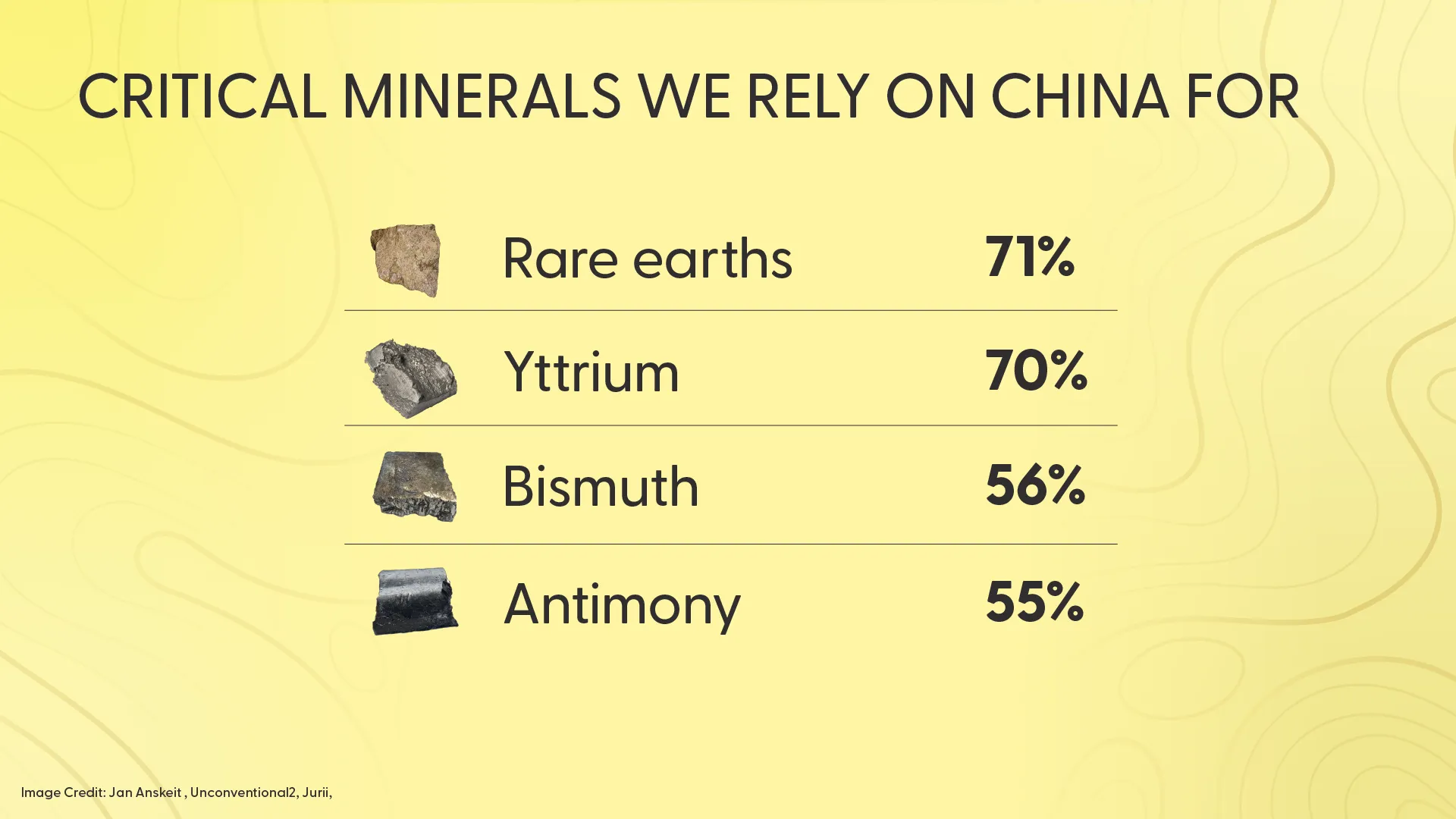
The policy backdrop his pitch rides is real: the US is “100% reliant on imports for 16 of our most important commodities,” China “has us in a ‘chokehold’” on several, and the federal response spans price supports, the “Project Vault” stockpile he describes as “a $12 billion mineral stockpile,” and the Pentagon’s MinMod AI, which “mapped out 670,000 mineral sites across America.” Canadian deposits feed the same Western supply chain those policies are trying to secure.
The categories of Canadian rare earth stocks
Advanced developers have defined deposits with resource estimates and feasibility work underway, years from production but past pure exploration risk. These are the most followed names on the TSX in the sector.
Early explorers hold promising geology and drill programs. This is the highest-risk, highest-reward tier, where discovery news can move a stock violently. The AI-exploration trend Tilson pitches, where companies feed “145 years of historic records” into “AI-powered mining software,” applies directly here: it is making explorers more efficient at exactly the stage where success or failure is decided.
Processors and downstream plays work on separation, the true bottleneck of the Western rare earth chain. Mined ore is not usable magnet material until it is separated, and most separation capacity sits in China, so any Western project that cracks processing economics strategically matters beyond its own deposit.
Byproduct and unconventional stories extract rare earths from coal ash, mine tailings, or as byproducts of uranium or phosphate operations, the model of the Wyoming story at the center of Tilson’s pitch: Ramaco Resources’ old coal property turned up “1.7 million tonnes of rare earths, worth about $37 billion” after DOE scientists used AI-driven surveys, and METC ran 773% in a little more than six months.
What to look for in any of them
The same checklist applies on either side of the border. A resource estimate with a published grade and tonnage, and the metallurgy that says the deposit can actually be processed economically. A feasibility or preliminary economic assessment path with realistic timelines. A funding plan that does not depend on endless dilution, the chronic killer of junior resource stocks. Jurisdiction: Canadian projects sit in a mining-friendly, politically stable regime, a genuine plus against some international alternatives. And for the exploration tier, discovery news flow, the category of event that made both the Ramaco and Dakota Gold stories.
Considerations
The honest cautions for the sector: rare earths pricing is opaque and heavily influenced by Chinese export policy in both directions. Junior miners dilute; that is how they eat between discoveries. Many rare earth deposit stories have died in processing economics rather than geology, so treat “the deposit is huge” as a starting question, not an answer. And when a newsletter, including Tilson’s, frames the sector with a national-scale number like Interior Secretary Doug Burgum’s “$200 TRILLION payload,” remember that is an in-ground estimate, not investable value; Tilson himself attributes it carefully. The details are in our American Rare Earths News: The Wyoming Deposit Story article.
Questions readers ask about the Canadian listings
Why does Canada dominate rare earth listings? Because the Toronto exchanges built the world’s deep junior-mining market over decades, with listing standards calibrated for pre-revenue explorers and an investor base that understands drill results. Most of the world’s publicly traded rare earth developers are listed there, including the Canadian names in Dakota Gold’s orbit and most AI-exploration stories that go public.
How does the American discovery story change the Canadian trade? It adds a policy premium to the U.S.-side assets, 12 executive orders, the $12 billion Project Vault stockpile, and a chokehold problem with China that Washington now treats as security policy. Canadian-listed firms with American projects get both: Canadian listing liquidity and American policy tailwind. The Ramaco precedent, 773% in six months on an AI-assisted U.S. find, is the case study the whole sector trades on.
What should you look for in any of them? Resource estimates with public reporting, a drill program with hit-rate credibility, and a realistic path from discovery to production. Tilson’s own candor is the benchmark: he names Dakota Gold free and immediately flags that it does not mine until 2029. Every rare earth story should be held to that standard of timeline honesty. Our full Rushmore gold review covers the theme and the Commodity Supercycles offer, whose four paid picks are the operating-miner expression of the thesis.
Where to learn more
Tilson’s four picks, including his AI-driven resource plays, are in “AI Miners: Four Stocks Unlocking America’s $200 Trillion Natural Resource Bounty,” included with a trial of Commodity Supercycles under a 30-day full-refund guarantee. For related reading, see our rare earth stocks guide, the critical minerals overview, and the story of Dakota Gold, the free ticker in the Rushmore pitch.
NewsletterVetter is an independent publication. We receive compensation from some of the services we review through affiliate links. Nothing on this site is investment advice. Always do your own research.