Project Vault: America’s $12 Billion Mineral Stockpile
Project Vault is the policy centerpiece of the American resource boom thesis, and it is the piece that converts geology into guaranteed demand. In Whitney Tilson’s Mount Rushmore presentation for Stansberry Research, it appears as Boom Factor #2: “The White House is backing resource stocks like never before,” backed by “12 executive orders” and “Project Vault,” described as “a $12 billion mineral stockpile.” For investors weighing whether the AI-mining story is real or promo packaging, a federally funded purchasing program is the hardest kind of evidence to dismiss. The details are in our Tilson’s Limitless Energy Report: Geothermal Stocks article. For the full backstory, see our Whitney Tilson’s Resource Royalties Report: Income Plays article.
What a national stockpile does
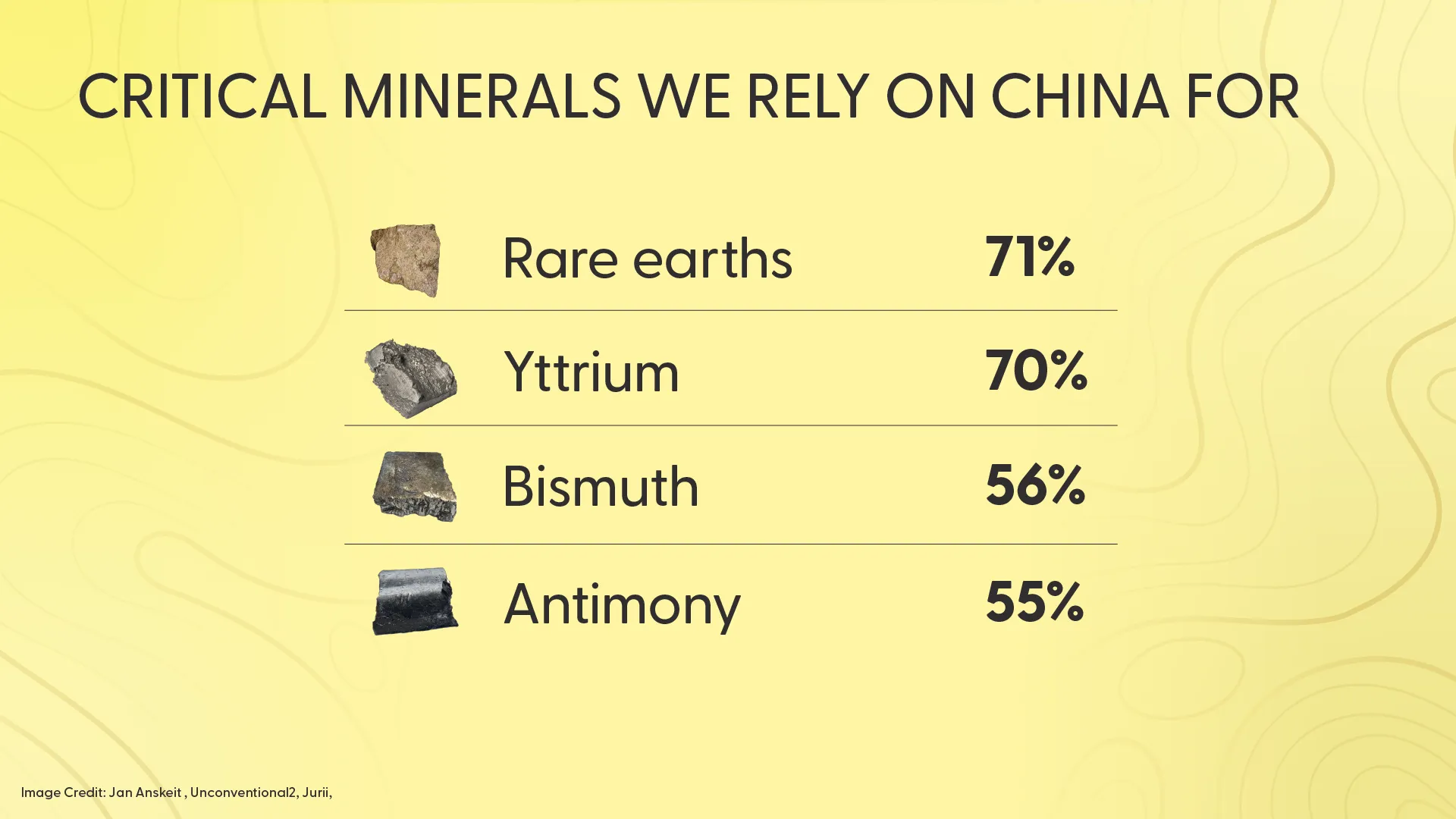
A mineral stockpile is the state acting as a buyer of last resort and first resort for materials it deems strategically necessary. The logic is as old as the Cold War-era stockpiling programs: import-dependent commodities, “We are 100% reliant on imports for 16 of our most important commodities” in Tilson’s framing, create national security exposure, and the state closes that exposure by contracting for domestic supply. What Project Vault adds to the historical template is scale and a modern critical-minerals list: rare earths, antimony, gallium, germanium, the materials where “China has us in a ‘chokehold’ for more than half of our antimony.”
For mining and exploration companies, the effect is direct: a stockpile creates a buyer with a mandate, which converts speculative deposits into contractable future revenue, and it does so on a timeline set by national security rather than commodity cycles. That is why the announcement of a stockpile, and the executive orders around it, belong in the same category of catalysts as the Pentagon’s MinMod AI mapping “670,000 mineral sites across America… Including 184,000 gold sites.”
The discovery layer that feeds it
Project Vault is the demand side; the supply side is the AI-driven discovery boom the rest of Tilson’s presentation documents. The Randall Atkins story is the emblem: “A man named Randall Atkins bought a 100-year-old coal mine” in Wyoming, DOE scientists arrived with “a new kind of AI that predicts where ‘unconventional’ deposits of natural resources are,” and “When Randall started digging, he found 1.7 million tonnes of rare earths, worth about $37 billion… Enough of these essential resources to supply the entire U.S. for more than 100 years.” Ramaco Resources made “773% in a little more than six months” on the discovery.
Around it, the same mechanism keeps firing: Equinor on Arkansas lithium, “nearly doubled in a little over three months”; Standard Lithium “rose 433%”; Intrepid Metals “went up 277% in six months” on AI-assisted Arizona copper; K2 Gold “soared 711%.” And at Mount Rushmore itself, Dakota Gold’s geologists put “145 years of historic records” into AI-powered mining software and “uncovered 114 tons of gold,” “roughly a $22 billion payload.”
The honest scale check
The numbers that frame the boom deserve careful reading. Secretary of the Interior Doug Burgum’s “$200 TRILLION payload” estimate, which Tilson attributes precisely, is the value of America’s total in-ground mineral wealth, not an addressable market for any listed company, and Tilson’s own framing (“That’s enough to pay for our national debt three times over”) is national-scale rhetoric rather than stock analysis. The $12 billion stockpile, by contrast, is a concrete purchasing program, and its per-material contracts will land on specific companies. The investable question is which producers and royalty holders sit on the materials the stockpile is mandated to buy, which is exactly the screen behind Tilson’s paid reports.
What the stockpile means for investors
Project Vault is the $12 billion mineral stockpile inside the pitch’s fourth Boom Factor, the White House backing resource stocks “like never before.” A national stockpile changes demand in two ways: it buys directly, and it signals a durable federal commitment to domestic sourcing that private capital can plan around. Tilson’s presentation cites 12 executive orders alongside the stockpile, and the demand-side case ties to China’s chokehold on several critical inputs, which is the security argument underneath the whole resource thesis.
The honest scale check matters here, and the presentation gives you the tools for it. The $200 trillion figure is Interior Secretary Doug Burgum’s in-ground resource estimate, not realizable equity value. A stockpile accelerates the development of the resources it buys, but it does not convert in-ground value into revenue on its own. The companies that benefit are the ones actually producing or near-producing, which is exactly why Tilson’s four paid picks are operating miners rather than exploration stories.
Questions readers ask
What is the connection to the Rushmore gold find? The same AI-discovery mechanism that found Dakota Gold’s 114-ton Black Hills deposit is what makes a stockpile buildable at national scale. The Pentagon’s MinMod AI has mapped 670,000 mineral sites across America, including 184,000 gold sites, and exploration firms like Earth AI are posting hit rates 150 times the industry average. You cannot stockpile what you have not found, and AI is what found it.
How does an investor act on the stockpile theme? Through the producing and near-producing names, and through the critical-minerals angle generally. Dakota Gold itself is the expectation-managed watch-list case: Tilson names it free, ticker DC, and immediately notes it will not start mining until 2029, “so for now I’d just keep an eye on it.” That candor is the model for how to read the whole pitch. Our full Rushmore gold review covers the offer in detail.
Where to learn more
For the resource investment context, see our coverage of critical minerals stocks, rare earth mining stocks, and how to invest in gold mining companies. The full Mount Rushmore presentation, with the AI Miners and Resource Royalties reports, is at the Stansberry order page with the 30-day refund guarantee.
NewsletterVetter is an independent publication. We receive compensation from some of the services we review through affiliate links. Nothing on this site is investment advice. Always do your own research.