Whitney Tilson’s Resource Royalties Report: Income Plays
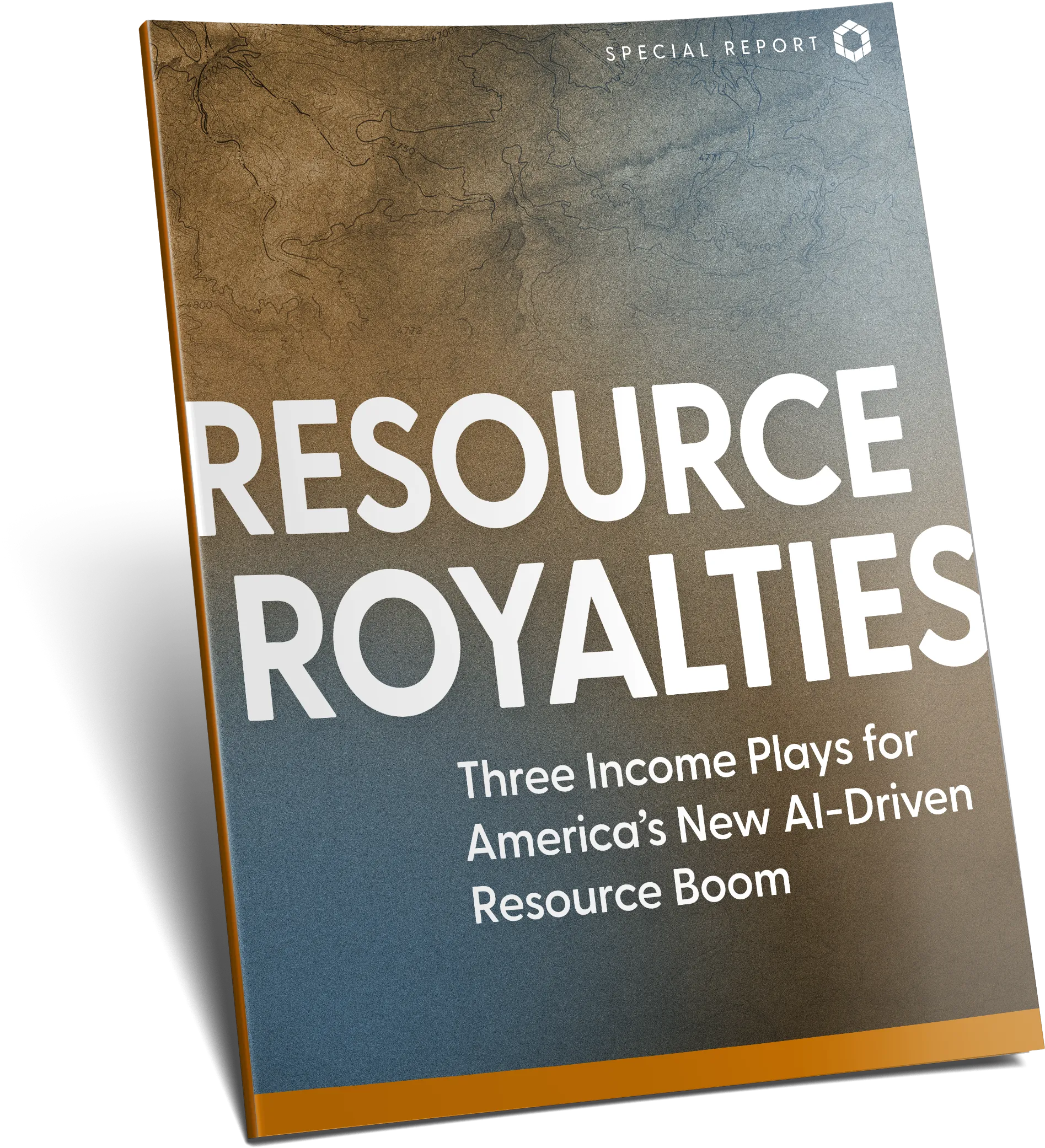
“Resource Royalties: Three Income Plays for America’s New AI-Driven Resource Boom” is Special Report #2 in Whitney Tilson’s Commodity Supercycles package for Stansberry Research, and it is the piece of the offer aimed at a different investor temperament than the AI Miners stock picks. Where the flagship report targets capital gains from AI-assisted discovery, the royalties report targets income, companies that collect payments from resource production without operating the mines themselves. For income-oriented readers watching the resource boom from the sidelines, this is the most interesting part of the package. We break down that angle in our Whitney Tilson’s $6 Miner: The Full Story piece. Our Whitney Tilson’s AI Miners Report: Four Stocks explainer covers this in detail.
Why royalties fit this boom
The royalty model is structurally elegant for a discovery-driven cycle. A royalty company buys or holds a claim on future production, so when AI exploration turns “hidden wealth” into new mines, the royalty holder participates in the revenue without the capital cost or operational risk of building the mine. Tilson’s framing ties it directly to the theme: the same AI-driven resource boom that is repricing miners, the Pentagon’s MinMod AI “mapped out 670,000 mineral sites across America… Including 184,000 gold sites,” and discoveries like Dakota Gold’s 114-ton Rushmore find, flows through to the land and royalty holders around the new production.
The historical parallel Tilson draws is the shale boom of the early 2010s, where land and royalty positions produced some of the era’s most consistent income streams as production ramped. The royalty structure means an income investor can hold a position across a multi-year development timeline, like Dakota Gold’s path to production in 2029, without betting on any single operator’s execution.
The picks by profile
Tilson describes the report’s three income plays by character rather than name, and the detail he spotlights is the growth of the payouts: one whose “payouts to shareholders has increased 297X over that time.” A 297-fold increase in distributions is the signature of a royalty or land company that caught a production wave early, and it is the template the report applies to the AI-driven resource cycle. The report targets royalty and land plays positioned around newly discovered American mineral wealth, the same geography the rest of the presentation maps: gold in the Black Hills, rare earths in Wyoming coal country, lithium in Arkansas, copper in Arizona.
The honest framing
Tilson’s credibility on resource income is checkable. He founded a hedge fund “with nothing but a laptop and a folding table” and built it into “a $200 million giant, tripling my clients’ money along the way,” called the dot-com peak in 2000, the market bottom around his 60 Minutes appearance in December 2008, and Netflix on CNBC in October 2012, “said that Netflix had the same upside potential as Amazon… Before it went on to rise more than 8,342%.” On resources specifically, his slide cites “245% on Kaminak Gold… 339% on Jinshan Gold Mines… 156% on MAG Silver… and 322% on Northern Dynasty Minerals,” with the correct footnote: “These are some of Whitney’s best recommendations. Past performance is no guarantee of future results.”
The 297X payout figure should be read the same way: it is a maximum historical outcome from the best position in the report’s evidence set, not a forecast for the new picks. What the royalty report offers is structural participation in a boom Tilson believes is just starting, with an income stream attached, rather than a call on any single discovery.
The offer around the report
Resource Royalties is Special Report #2, alongside AI Miners and Limitless Energy, in the Commodity Supercycles package: twelve monthly issues, delivered “the second Monday of every month,” model portfolio access, and the 30-day guarantee, “You’ll get a full, prompt refund of every penny you paid to join.” The list price is $499, discounted for the promotion, with the price behind the Get Started button.
Questions readers ask about the royalties report
Why do royalties fit an AI-discovery boom? Because royalty companies get paid from production without paying for the mines. When AI raises the discovery hit rate, the royalty model’s diversification, the presentation describes one holding’s royalty portfolio as spanning 145 mines across North America, gets more shots at the new deposits without new capital at risk. Discovery upside with operating-cost insulation is the whole appeal.
What is in “Resource Royalties: Three Income Plays for America’s New AI-Driven Resource Boom”? Three picks built around income rather than exploration upside, including one whose shareholder payouts the presentation says have increased 297X over time. The profile descriptions point toward the established royalty and streaming space, though the names stay behind the paywall.
How does it fit the offer? It is the second of three reports with the Commodity Supercycles trial, alongside AI Miners and Limitless Energy, under the 30-day full-refund guarantee. For income-focused readers it is the most natural of the three, since royalties convert a capital-appreciation theme into a cash-flow theme. Our full Rushmore gold review covers the offer, including the $499 anchor price and where the discount shows up.
Where to learn more
For the wider resource thesis, see our coverage of royalty companies and royalty stocks, critical minerals, and how to invest in gold mining companies. The full presentation is at the Stansberry order page.
NewsletterVetter is an independent publication. We receive compensation from some of the services we review through affiliate links. Nothing on this site is investment advice. Always do your own research.