Whitney Tilson’s $6 Miner: The Full Story
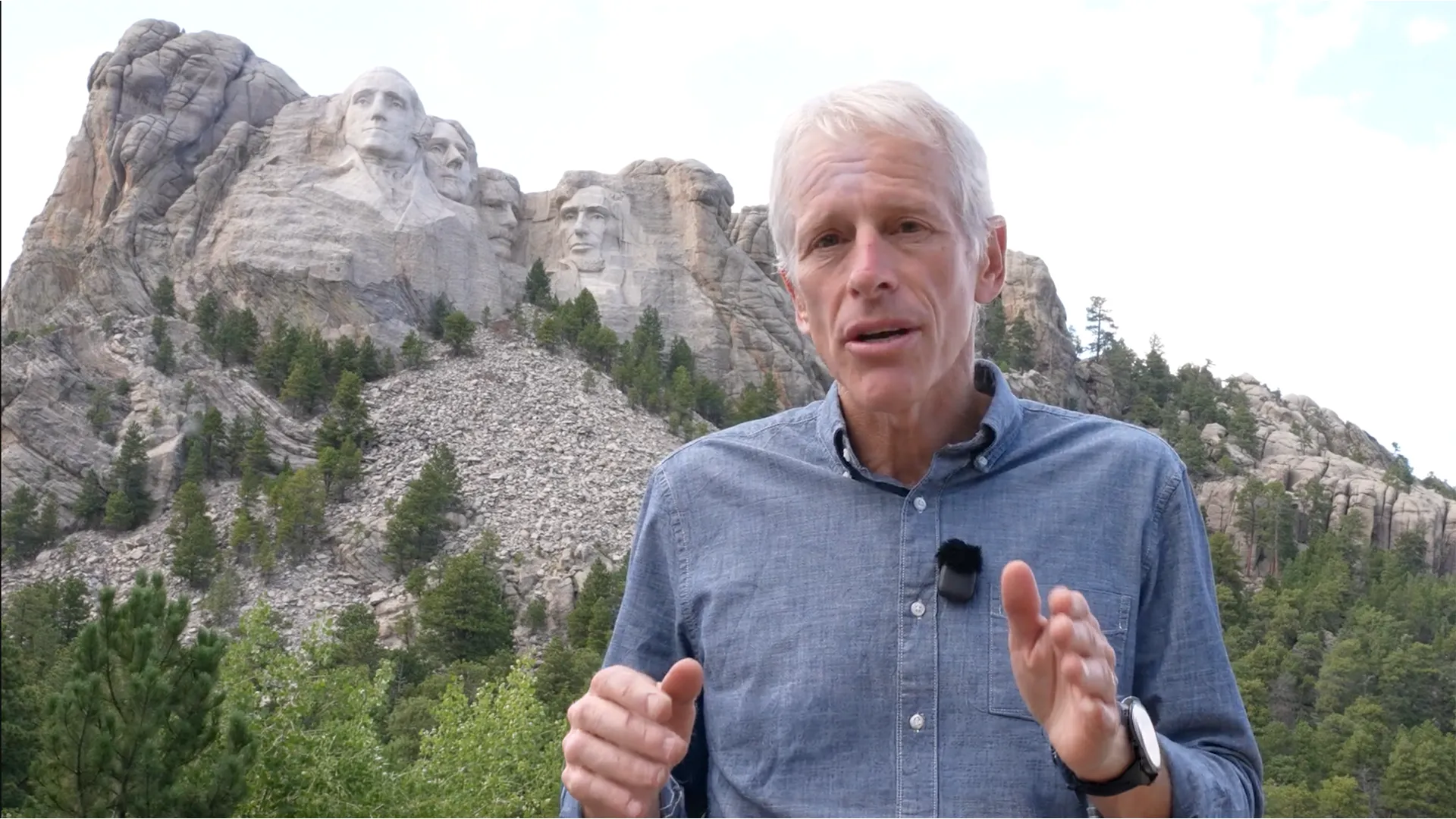
Whitney Tilson’s “$6 miner” is the hook of his Mount Rushmore presentation for Stansberry Research, and the story itself is genuinely one of the better mining narratives of recent years. Tilson opens on camera at the monument itself: “Hi, my name’s Whitney Tilson. Usually you’d find me in Manhattan, New York, where I spent 30 years working on Wall Street. But one of the most exciting investment opportunities I’ve ever come across has brought me here… To Mount Rushmore.” The tale he tells from there: “last year, in the hills just over there… A small mining company hit on one of the biggest, and most important, gold finds in America since the 1870s.”
The company, named
The miner is Dakota Gold, ticker DC, and to his considerable credit, Tilson names it plainly rather than teasing it: “First, the firm that discovered gold in the hills around Mount Rushmore is called Dakota Gold and its ticker symbol is DC.” The find: “114 tons of the highest-grade gold,” which Tilson values as “roughly a $22 billion payload… or put another way, 64% of all the gold mined in America last year,” located “almost in the shadows of the presidents’ noses.”
The mechanism behind the discovery is what elevates the story above treasure-hunt romance: “Geologists at this firm got access to 145 years of historic records for the area, old maps, drill results, surveys, that kind of thing. It had just been collecting dust in archives and storage lockers for decades. It was way too much information for humans to sift through… but not AI. The firm put all this historic data into AI-powered mining software… And it uncovered 114 tons of gold.” Archival data mining is a real, deploying technique across the industry, and the Rushmore find is its flagship result.
The honesty that sets this promo apart
What makes this presentation unusual is what Tilson says next: “It’s an exciting stock, it’s what brought me out into the hills here, but… it won’t start mining its gold find until 2029. That means it’s not producing any revenue yet, so for now I’d just keep an eye on it.” A presenter who names his teaser stock, discloses the production timeline, and explicitly declines to make it his top pick is doing something the genre almost never does. His argument is that “I’ve uncovered four stocks… that I believe could see much bigger and faster gains” while Dakota Gold’s discovery is developed.
The context that makes the story credible
The Rushmore find sits inside a pattern of AI-assisted discoveries Tilson documents. The Randall Atkins story is the anchor: “A man named Randall Atkins bought a 100-year-old coal mine” in Wyoming, DOE scientists arrived with “a new kind of AI that predicts where ‘unconventional’ deposits of natural resources are,” and “When Randall started digging, he found 1.7 million tonnes of rare earths, worth about $37 billion.” Ramaco Resources, his company, made “773% in a little more than six months.” Around it: Equinor “nearly doubled in a little over three months” on Arkansas lithium, Ero Copper “ran up 318%”, Intrepid Metals “went up 277% in six months,” and K2 Gold “soared 711%.”
Tilson’s own record supports his standing to make resource calls: he called the dot-com peak in 2000, the market bottom around his December 2008 60 Minutes appearance, and Netflix on CNBC in October 2012 before it “went on to rise more than 8,342%.” His resource track record cites “245% on Kaminak Gold… 339% on Jinshan Gold Mines… 156% on MAG Silver… and 322% on Northern Dynasty Minerals,” with the standard hedge attached.
Considerations
For anyone researching the $6 miner itself: the $22 billion figure is an in-ground payload estimate, not cash flow, and production is years away, 2029 by Tilson’s own statement. The institutional interest he cites, “BlackRock, Vanguard, and other Wall Street firms have been quietly buying this stock,” is the bull case’s strongest leg. The better-vehicle argument, his four AI Miners picks, is where the paid research lives. Both the free name and the paid picks come with the same instruction: “Past performance is no guarantee of future results.”
Questions readers ask about the $6 miner
What do we know about the company? It is Dakota Gold, ticker DC, a South Dakota company working the historic Black Hills district, with institutional holders including the BlackRock and Vanguard positions the presentation cites. The stock traded around $6 at the time of the pitch, and the deposit is the 114-ton AI-assisted find the whole presentation is built around.
Why did Tilson name it for free? Structural honesty, and it is the move that sets this promo apart. He identifies the company, ticker and all, on location at Mount Rushmore, and then declines to make it his top pick because it “won’t start mining its gold find until 2029… so for now I’d just keep an eye on it.” Most teaser presentations withhold the name to force the subscription; Tilson gives it away and makes the case that his paid picks, four operating miners, have to earn their keep on their own merits.
What should someone do with the free name? Exactly what the presenter says: watch it. A pre-revenue junior explorer with a real deposit is a legitimate watch-list holding, and 2029 is the date that matters. Anyone who wants the operating-expression picks, the AI-using miner targeting $250 million a year, the Arizona copper name, the fracking fleet operator, and the West Texas AI driller, finds them in the AI Miners report with the 30-day refund. Our full Rushmore gold review covers the whole offer.
Where to learn more
For the wider theme, see our coverage of gold mining companies, critical minerals stocks, and Tilson’s Commodity Supercycles background. The full presentation, including the $6 stock detail and the four-pick report, is at the Stansberry order page with the 30-day refund guarantee. We walk through the specifics in our Tilson’s Limitless Energy Report: Geothermal Stocks piece. We break down that angle in our Whitney Tilson’s Resource Royalties Report: Income Plays piece.
NewsletterVetter is an independent publication. We receive compensation from some of the services we review through affiliate links. Nothing on this site is investment advice. Always do your own research.