The Hook
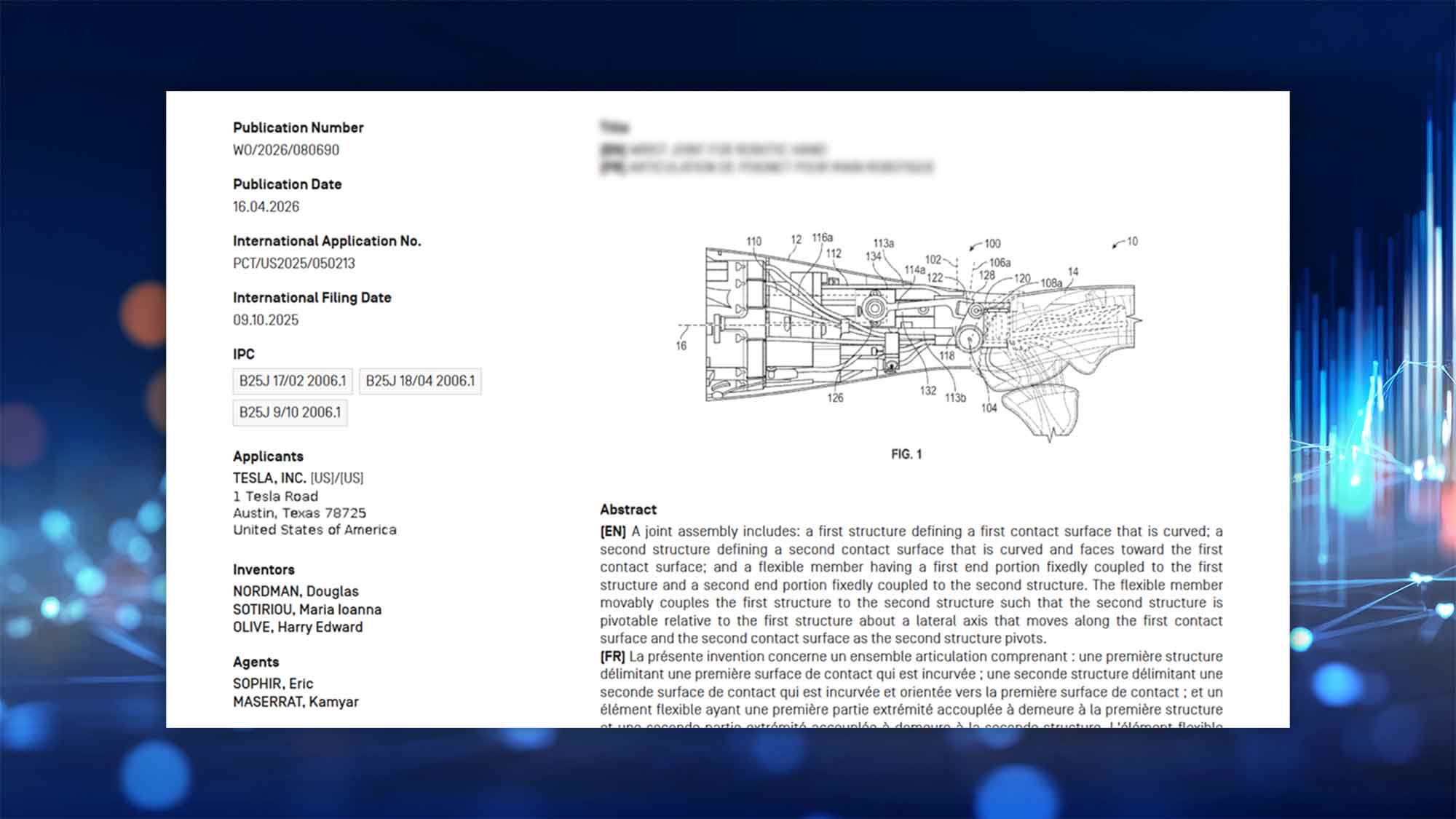
Jeff Brown and Marc Chaikin’s MAGI presentation opens with Elon Musk filing a patent to protect what Brown calls “a new type of AI.” The acronym stands for Manifested AGI, artificial general intelligence that “escapes the digital realm and manifests itself in the physical world through robotics and autonomous systems.”
What makes this presentation different from the typical AI promo is the dual-presenter format. Brown brings deep technology expertise from decades inside the semiconductor industry. Chaikin brings 60 years of Wall Street experience and a quantitative system called the Power Gauge that has been licensed by hundreds of banks and hedge funds. Together, they combine the “what is the technology” question with the “when do you buy” question, and that combination is genuinely interesting.
We watched the full presentation, cross-referenced the claims, and put together this review.
The Presenters
Jeff Brown is a former senior executive at Qualcomm, NXP Semiconductors, and Juniper Networks. These are three firms that collectively generate more than $50 billion in annual sales. He has advised the Department of Commerce, NIST, and the Defense Intelligence Agency on technology matters. That is not a typical newsletter presenter resume. He has been inside the rooms where the technology decisions get made.
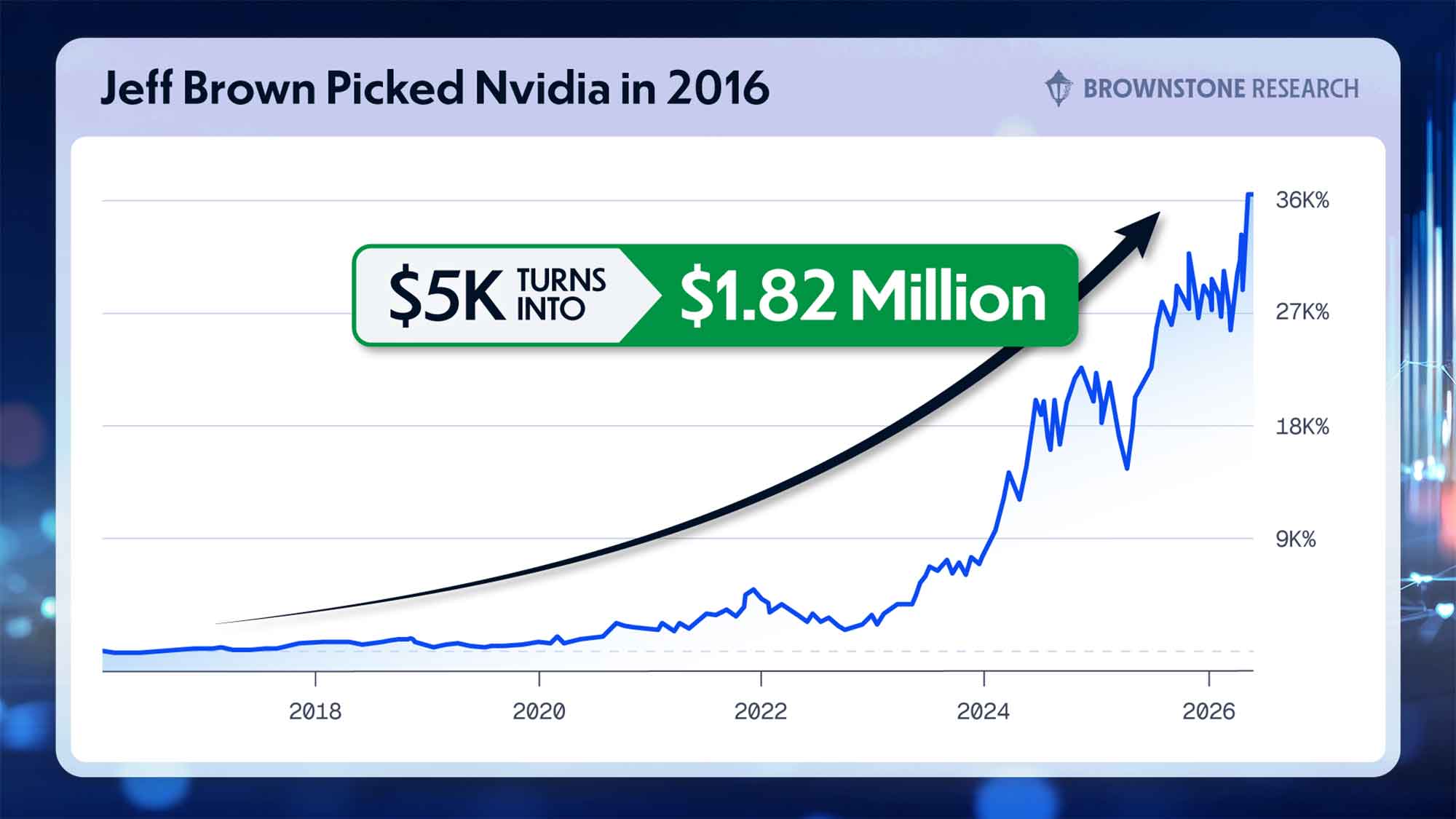
His track record is specific and verifiable. He picked Nvidia before it rose 36,000 percent. He picked Tesla before it rose 2,150 percent. He picked AMD before it rose 4,100 percent. He picked Taiwan Semiconductor before it rose 1,100 percent. He called Micron in early 2025, and it went on to peak at over 1,281 percent gains, making it the second best performing stock on the S&P 500 that year.
He also made what might be his most prescient call in 2018, when he said Tesla was “an AI company” at a time when JPMorgan was telling investors to dump it. He predicted SpaceX’s IPO, Starlink’s commercialization, and that Grok would beat ChatGPT. All of those have materialized. And on March 17, 2020, during the pandemic crash, he told his readers it was “one of the best opportunities to make investments over the course of the next decade.” The S&P 500 is up over 200 percent since that call.
Marc Chaikin has spent 60 years on Wall Street. He has worked with Paul Tudor Jones, George Soros, and Steve Cohen. He created the Chaikin Money Flow indicator, which is used by hundreds of banks, hedge funds, and professional traders. Jim Cramer has said he “learned to never bet against Marc.” He created three Nasdaq indices, rang the opening bell, and has survived nine bear markets.
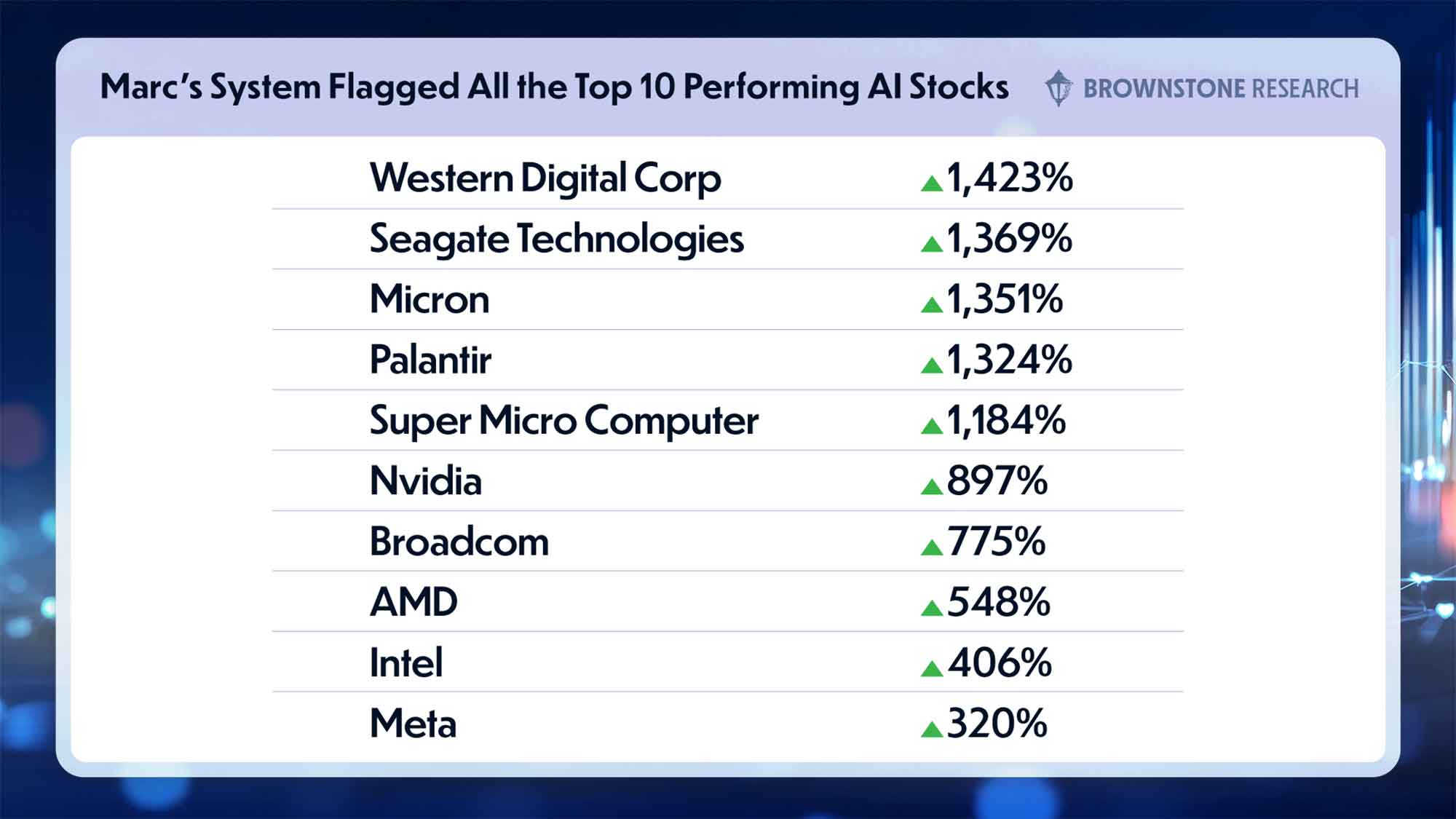
His Power Gauge system is the quantitative engine behind the timing calls in this presentation. It rates over 6,000 stocks and ETFs using 20 factors. After ChatGPT launched, the Power Gauge “flashed bullish for all the top AI stocks” with peak gains of 775 percent on Broadcom, 1,324 percent on Palantir, and 1,423 percent on Western Digital. Chaikin says the system “flagged all of the top 10 performing AI stocks, no exception.”
Having two presenters with complementary expertise is a genuine advantage. Brown understands the technology from the inside. Chaikin understands the market timing from the data. Most newsletters give you one or the other. This presentation gives you both.
For more on the publisher, see our Brownstone Research publisher profile.
The Big Idea
The MAGI thesis is built on two converging ideas: Elon Musk’s robotics and AGI breakthrough, and a 75-year market cycle pattern.
Manifested AGI. Brown defines MAGI as artificial general intelligence that moves beyond software and into the physical world through robotics. The three companies converging to make this happen are:
-
Tesla is building the hardware. The Terafab, planned as the world’s largest AI chip fabrication plant, is designed to produce up to 200 billion chips per year, which would be roughly 10 times what Taiwan Semiconductor currently makes. Tesla’s fifth-generation AI5 chip is said to be 40 times more powerful than current chips. And the Optimus humanoid robot, now in its third generation, features a patented hand with 25 motors and flexible composite ligaments that mimic human tendons.
-
xAI is developing the software. Grok 5 is described as “at least three times more powerful than the latest version of ChatGPT” and is positioned as “the very first artificial general intelligence or AGI.”
-
SpaceX is planning to use satellites to power AI from space using free solar energy. This is the most speculative part of the thesis, but it is consistent with Musk’s integrated approach across his companies.
The Optimus hand patent is the technical centerpiece. Brown explains that scientists have been working on robotic hands since the 1930s, and the challenge has always been combining strength with dexterity. Tesla’s solution, packing 25 motors into the forearm with composite ligaments that mimic human tendons, allows the hand to “delicately crack an egg, thread a needle, or swing a sledgehammer.” That is a genuine engineering breakthrough, not a marketing claim.
The Election Cycle. Chaikin’s framework is a market pattern he says has never failed since 1950. The pattern works like this:
- Midterm election years bring political uncertainty, which triggers market corrections.
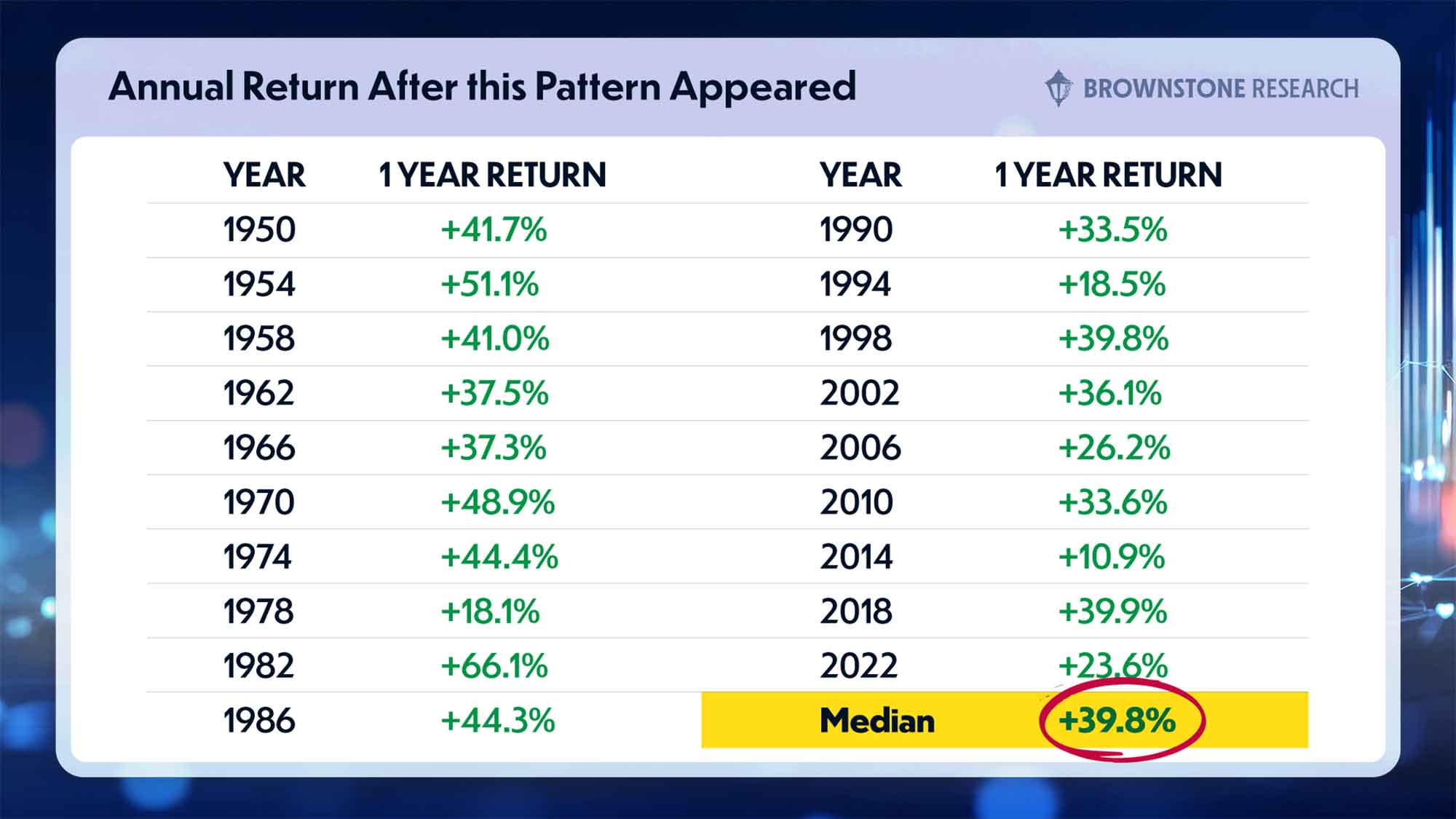
- Buying during that correction has produced gains 12 months later in 100 percent of cases going back to 1950.
- The average gain for the entire market has been nearly 40 percent.
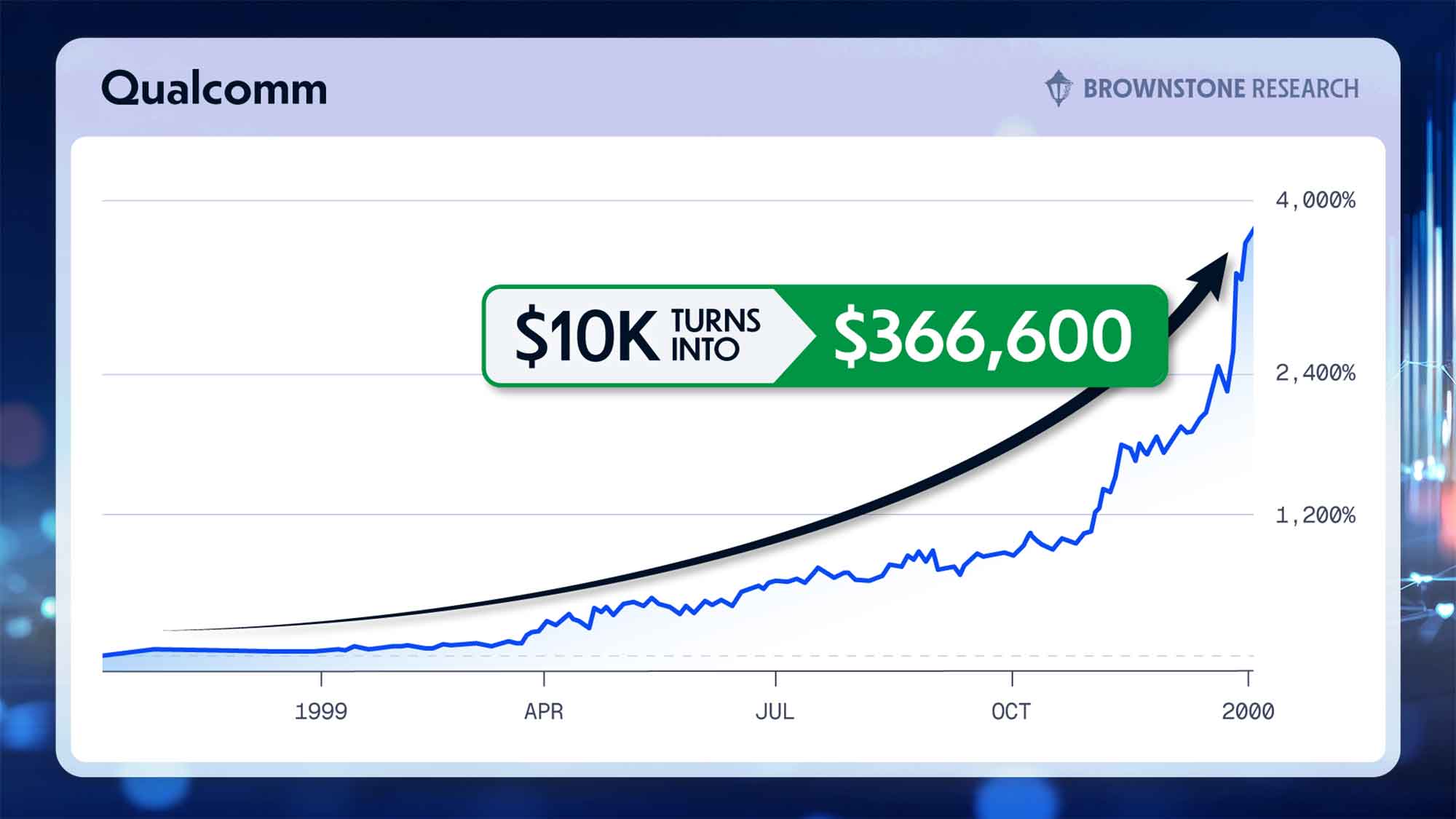
The last time this pattern aligned with a technology revolution was 1998, a midterm election year during the dot-com acceleration. During that window, Magic Software Enterprises turned $10,000 into $185,000 in 12 months. InterDigital turned $10,000 into about $240,000 in 15 months. Qualcomm turned $10,000 into $366,000 in 14 months. Harmonic turned $10,000 into $360,000 in 18 months.
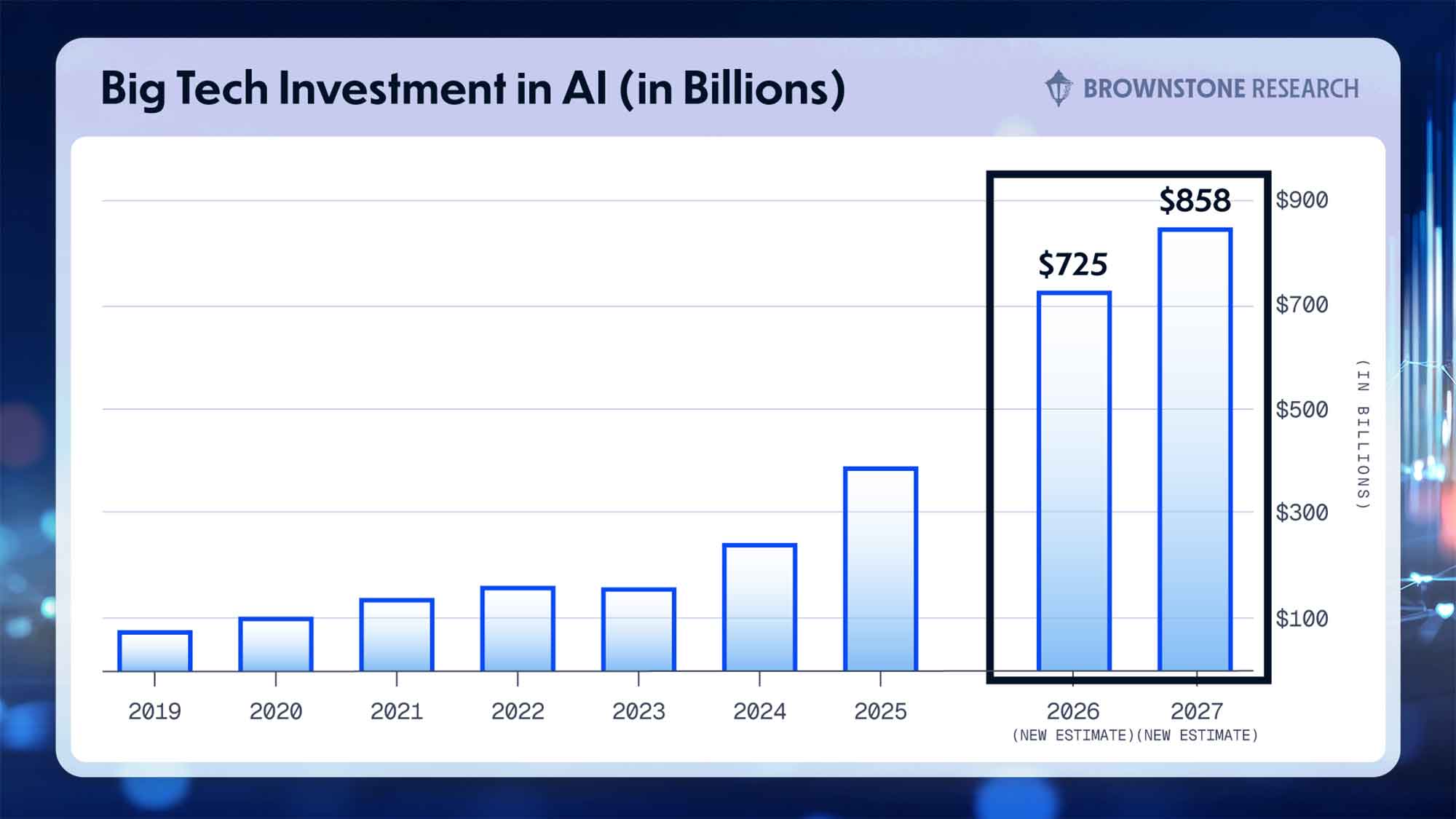
Brown and Chaikin argue that the current moment is a repeat of 1998, but bigger. The technology is more transformative (AGI and robotics versus web browsing), the capital is larger (big tech capex has grown from $400 billion last year to $725 billion this year to a projected $850 billion next year, what they call “the largest capital-expenditure wave in history”), and the election cycle is creating the same kind of correction buying window.
In the last midterm cycle (2022), Chaikin’s system flagged Meta, Builders First Source, and AMD. All three more than doubled within 12 months.

The Key Claims
Here is what Brown and Chaikin claim in the presentation, with direct context:
-
“Elon is predicting growth of 7,692,207%, which would dwarf Tesla and SpaceX.” This is Elon Musk’s own projection for the Optimus robot and the MAGI ecosystem, not a guarantee of investment returns. Brown frames it carefully: “Even if Elon is only 10 percent right, that still grows $100 into $700,000.” The 10 percent framing is a reasonable way to contextualize an extreme projection.
-
“A $1 quadrillion new wealth wave.” Brown describes this as “enough to send a check for $2.8 million to every single American.” This is a thought experiment, not a financial projection. It is meant to convey the scale of what AGI could mean for the global economy, and it is consistent with what other serious technologists have projected about the economic impact of artificial general intelligence.
-
“The single biggest investment opportunity of this century.” This is a superlative, and it is unverifiable. But coming from a presenter who called Nvidia before 36,000 percent gains and the March 2020 bottom, it carries more weight than it would from a less credentialed source.
-
“A flawless, unbroken market prophecy that has never failed since 1950.” This refers to the election cycle pattern. The pattern is real, and the data going back to 1950 supports it. However, “100 percent of cases” and “guaranteed” are strong claims. Past performance does not guarantee future results, and the presentation does include a disclaimer, though it is not as prominent as it should be.
-
Tesla’s Fremont facility has “stopped all production of cars” and is “100 percent focused on Optimus’ production.” This is a factual claim about Tesla’s manufacturing pivot. Tesla has indeed been converting Fremont to support Optimus production, targeting 1 million units per year initially and projecting 10 million units annually by next year. The 10 million figure is ambitious and uncertain, but the direction is clear.
-
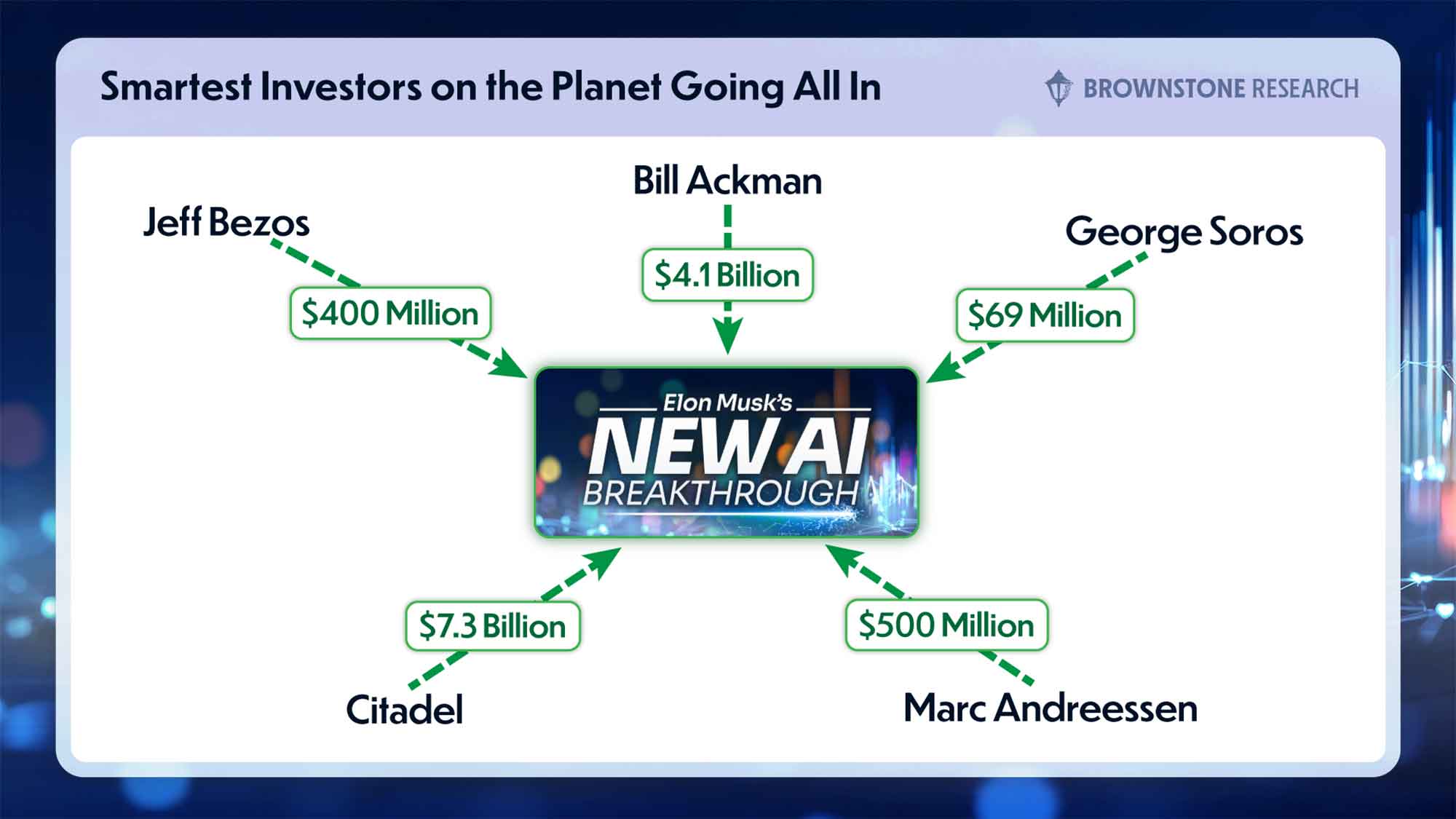
Institutional money is already positioning. Brown names Jeff Bezos ($400 million), George Soros ($69 million), Bill Ackman ($4.1 billion), Citadel ($7.3 billion), and Marc Andreessen ($500 million) as already investing in the robotics and AI space. He also says tech insider buying has hit “the highest level we’ve seen in 15 years.” These are real data points about institutional capital flowing into AI and robotics, though they are not necessarily endorsements of the specific MAGI thesis.
-
Big tech capex: $400 billion (last year), $725 billion (this year), $850 billion (next year). These figures are in the right range for total big tech infrastructure spending and are consistent with public earnings reports.
The Free Ticker
Brown reveals AMD for free in the presentation. He says: “The name is Advanced Micro Devices and the ticker is AMD.” This is a major company, not a speculative micro-cap, and the analysis is genuinely useful even if you never subscribe.
Here is why AMD matters to the MAGI thesis:
- Brown first recommended AMD in 2017. It is up 4,100 percent since.
- AMD is “called ‘the next Nvidia’ because it’s quickly becoming a huge competitor” in the AI chip market.
- The Instinct MI300 and MI350 series GPUs are “winning huge deals with OpenAI, Meta, Microsoft, and others because they deliver strong performance for a lot less money” than Nvidia’s offerings.
- AMD makes both CPUs and GPUs for AI data centers, which means “everything works together more efficiently” in systems that use both.
- Big tech firms are set to spend more than $700 billion in AI infrastructure this year, and AMD is a primary recipient of that spending.
- AMD earnings are “expected to jump 76 percent this year alone.”
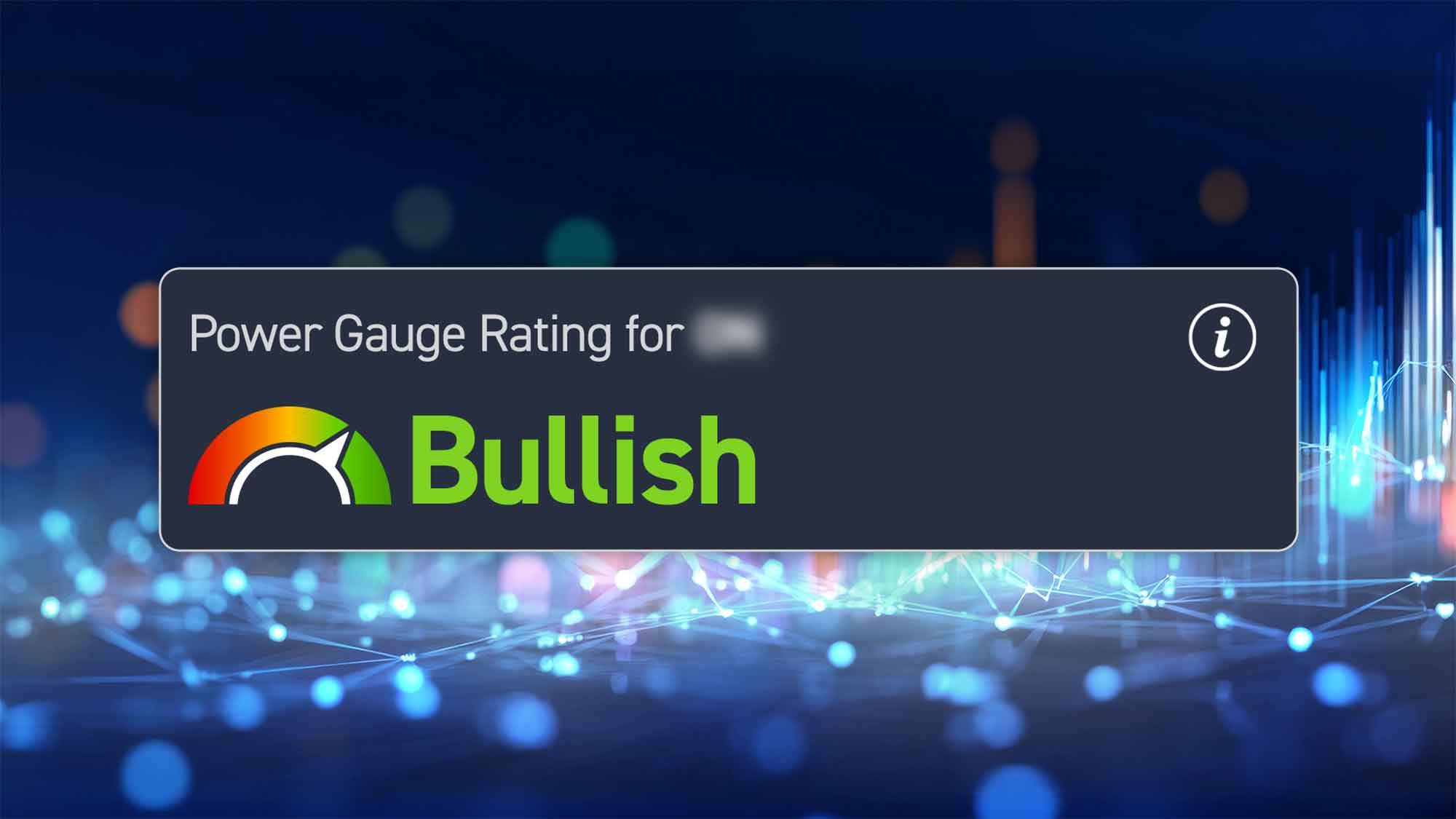
- Chaikin’s Power Gauge gives AMD a “bullish rating” and shows that “institutional investors are buying heavily.”
Brown adds an important caveat: “AMD is larger than the little-known Elon Musk supplier I’m recommending, and it’s larger than the company behind Terafab. So if you’re looking for more extreme upside potential, I highly recommend getting those special reports.” This is an honest framing. AMD is the safe, large-cap way to play the AI infrastructure buildout. The bonus reports target the smaller, higher-risk, higher-reward picks.
The AMD analysis alone, provided for free, is a solid reason to watch the presentation. It is one of the few promos where the free ticker is a major, widely-held stock that most investors can buy through any brokerage.
What You Get
The offer bundles two products together at a significant discount:
- The Near Future Report (12-month membership) — Brown’s flagship technology research service, normally $499 alone.
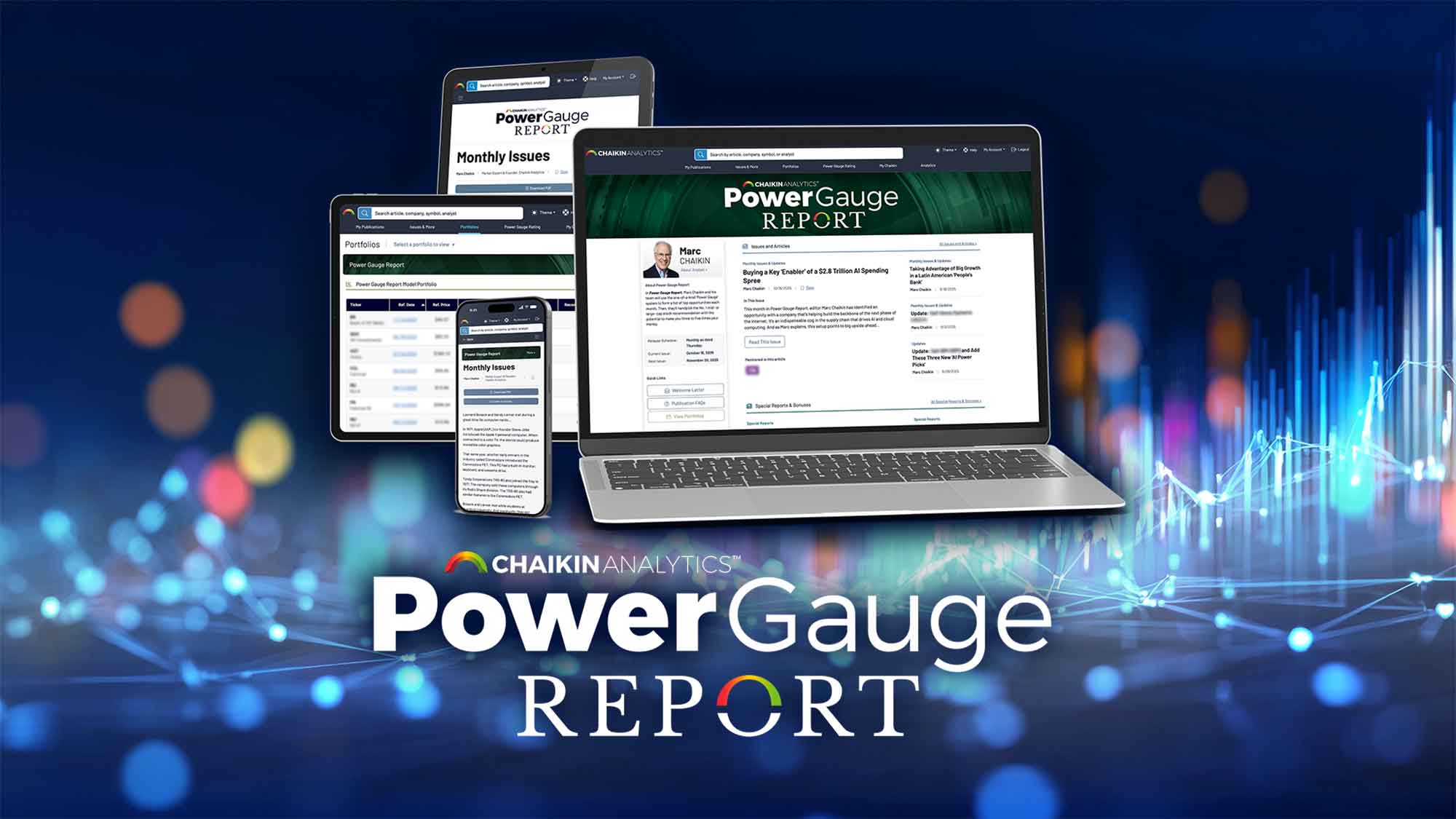
- Power Gauge Report (12 months, included free) — Chaikin’s quantitative stock-rating system access, normally a separate subscription with a stated value of about $1,000.
The combined price is $179, which Brown describes as a discount from the combined retail value of approximately $2,000.
Here is what is included:
-
12 months of The Near Future Report — regular technology stock recommendations, model portfolio, market analysis, and full members-only website access.
-
12 months of Power Gauge Report — access to the Power Gauge stock rating system covering 6,000+ stocks and ETFs across 20 factors.
-
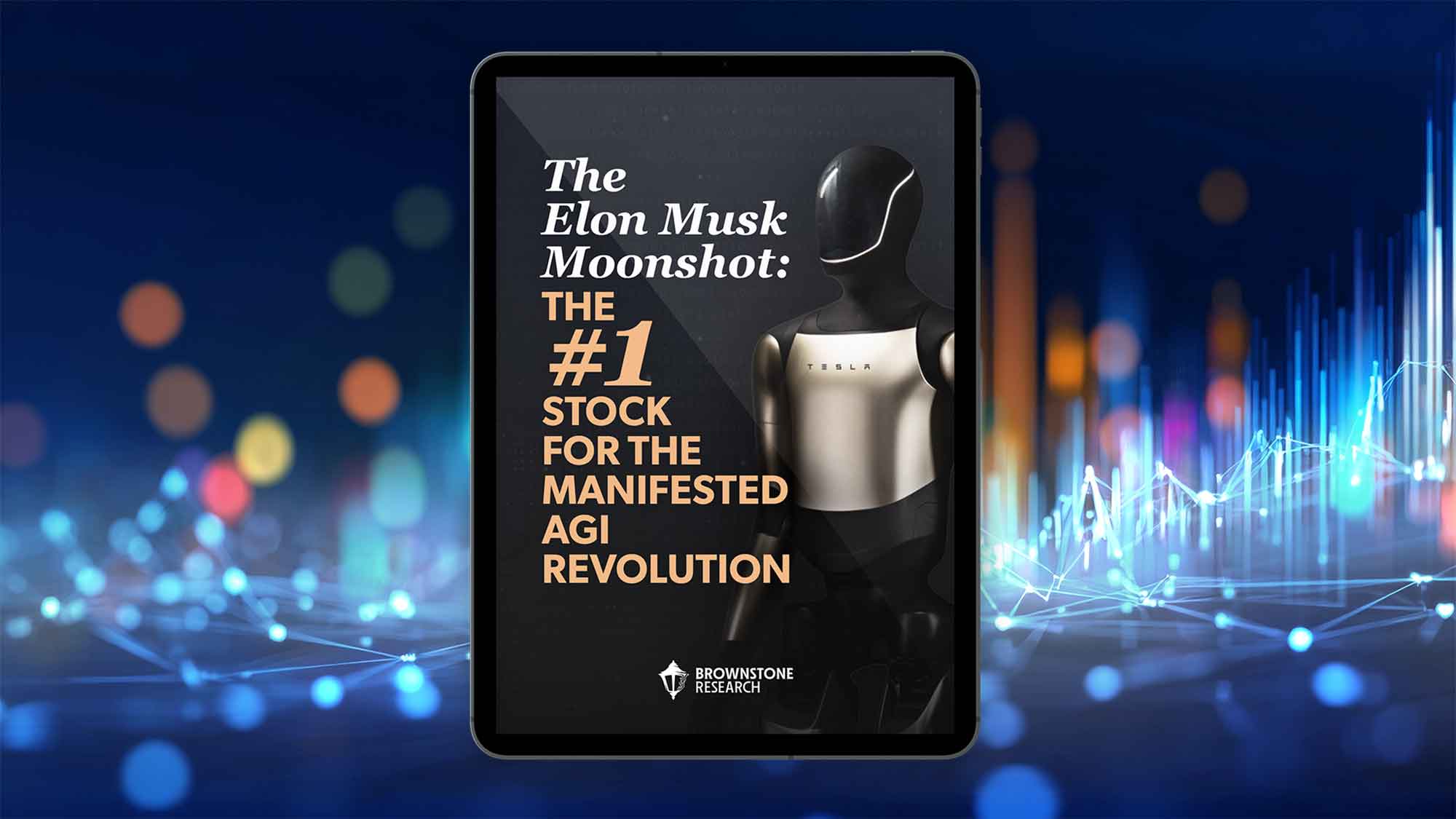
Bonus Report #1: “The Elon Musk Moonshot: The #1 Stock for the Manifested AGI Revolution” — identifies the hidden Tesla supplier that makes power-delivery technology for Optimus robot actuators. Morgan Stanley has recommended this stock as a key way to play the robotics trend, and 39 hedge funds are already invested.
-
Bonus Report #2: “How to Profit from Elon Musk’s New Terafab Project” — identifies the semiconductor equipment supplier that has been approached by Tesla for the Terafab project. At least 26 brokerage firms have raised their price targets on this company.
-
Bonus Report #3: “The Chaikin Buy List for the Mid-Term Election Cycle” — Chaikin’s top stock picks based on the election cycle pattern.
-
Full team support and 24/7 members-only website access.
The guarantee is 30 days, full money-back, and you keep everything. “Call Jeff’s Member Services team and cancel your membership. They’ll give you a full refund on your order, no questions asked. And we’ll let you keep everything you received.” That is a standard and fair risk reversal, though shorter than Alexander Green’s 365-day guarantee at The Oxford Club.
At $179 for two research services, the value proposition is strong. You are getting Brown’s technology analysis, Chaikin’s quantitative system, and three bonus reports targeting a specific and timely thesis. The dual-product bundle is what sets this offer apart from the other promos we are reviewing.
Our Take
This is the most ambitious of the four promos we are reviewing, and it has the strongest presenter credentials.
The dual-presenter format is a genuine differentiator. Brown’s technology background at Qualcomm, NXP, and Juniper gives him insider credibility that most newsletter presenters lack. Chaikin’s 60-year Wall Street career and the Power Gauge system add a quantitative discipline that most technology newsletters do not have. The combination of “what to buy” (Brown) and “when to buy it” (Chaikin) is more useful than either alone.
The technology thesis is grounded in real engineering. The Optimus hand patent, with 25 motors and composite ligaments mimicking human tendons, is a real breakthrough. The Terafab project, targeting 200 billion chips per year, is an enormous undertaking but consistent with Tesla’s manufacturing ambitions. Grok 5 being three times more powerful than current ChatGPT models is a credible claim given the pace of AI model development. Brown’s background in semiconductors means he can explain why these things matter in a way that most financial presenters cannot.
The election cycle data is compelling. The pattern of buying during midterm election year corrections producing gains 12 months later, going back to 1950 with a 100 percent success rate, is a remarkable data set. The 1998 parallel, where the election cycle aligned with the dot-com acceleration, is a genuinely useful historical analogy. And the 2022 track record, where the system flagged Meta, Builders First Source, and AMD, all of which doubled within 12 months, adds recent validation.
The free ticker is excellent. AMD is a major, widely-held stock that most investors can buy through any brokerage. The analysis of AMD’s position in the AI chip market, its MI300 and MI350 GPU deals with OpenAI and Meta, and the 76 percent earnings growth projection is genuinely useful research, provided for free.
The institutional validation is real. Jeff Bezos, George Soros, Bill Ackman, Citadel, and Marc Andreessen are all investing in AI and robotics. The $725 billion big tech capex figure is real. The 39 hedge funds already in the hidden supplier stock, and the 26 brokerage firms raising price targets on the Terafab supplier, are the kind of institutional footprints that warrant attention.
What to consider: The 7,692,207 percent growth claim and the $1 quadrillion wealth wave are extreme projections, even though they are attributed to Musk and contextualized with the “even if only 10 percent right” framing. The election cycle “100 percent track record since 1950” is a strong claim that should be understood as a historical pattern, not a guarantee. The Ray Dalio “biggest bubble in history” quote is used as bullish confirmation, but Dalio was issuing a warning, not an endorsement. And the 30-day guarantee is shorter than some competitors offer. These are standard newsletter marketing techniques, and Brown and Chaikin are more transparent about the uncertainty than most, but they are worth noting.
Overall, this is the most credentialed and most technically detailed of the four promos we are reviewing. If you are interested in the intersection of robotics, AGI, and market timing, and if you value having both a technology insider and a quantitative analyst on the same team, the Near Future Report plus Power Gauge bundle is worth serious consideration.
Where to Learn More
- For Marc Chaikin’s standalone frontier AI thesis, see our CPGR Frontier AI review covering the Power Gauge system, Magna International, Fabrinet, and the Alphabet starburst opportunity.
- For a complementary SpaceX-Tesla merger thesis, see our INI XPanse review covering Luke Lango’s presentation at InvestorPlace.
- For a complementary AI infrastructure thesis focused on photonics, see our Accelerated AI review covering Jason Bodner’s presentation, also from Brownstone Research.
- For a picks-and-shovels approach to AI infrastructure, see our ASI Fund review covering Alexander Green’s presentation at The Oxford Club.
- For a non-AI contrarian play, our Prediction Markets review covers Luke Lango’s thesis on prediction market infrastructure stocks.
- See our Brownstone Research publisher profile for more on the publisher behind this promo.
- Marc Chaikin returns to AMD in his September 2026 End of Elon / American Atlas presentation, this time on the strength of the Oak Ridge Lux supercomputer.
- Have a promo you want us to vet? Submit it here.
- Ready to try The Near Future Report? Click here to learn more.
NewsletterVetter is an independent publication. We receive compensation from some of the services we review through affiliate links. Nothing on this site is investment advice. Always do your own research.