Starlink Direct-to-Cell Partnerships in 2026
The Direct-to-Cell partnership map expanded materially through 2026, and it is the part of the Starphone story that requires no speculation at all. Every element is regulatory filings, satellite deployments, and signed commercial contracts. For investors trying to separate the checkable from the promotional in the satellite-to-phone boom, this is the checkable layer, and Josh Baylin’s Stansberry presentation assembles it into a coherent picture worth walking through.
The regulatory tailwinds
Two FCC actions anchor the 2026 setup. First, the FCC permitted SpaceX’s next-generation Starlink satellites, “15,000 next-gen satellites… each about 20 times better than current capacity… starting to come online starting in a few weeks.” Capacity per satellite 20 times current levels is what moves Direct-to-Cell from text-and-voice emergency service toward the “on par with terrestrial mobile networks” standard that SpaceX’s SEC IPO paperwork describes. Second, “the FCC just approved new rules to make satellite licensing faster and easier,” which shortens the deployment cycle for every satellite operator chasing the same market, and lowers the moat around first movers. We walk through the specifics in our Starlink Direct to Cell: Satellites as Cell Towers piece.
The commercial web
The carrier side is anchored by the T-Mobile partnership, which uses Starlink satellites to fill coverage gaps for ordinary phones, and the pattern has since been followed by other carriers arranging Direct-to-Cell-style coverage of their own. The device side runs through the chipmakers: SpaceX “already tapped Qualcomm, which is a chipmaker, to build satellite connectivity into their future devices,” with MediaTek working the same problem. When the modem layer ships in mainstream phones, satellite connectivity stops being an app and becomes a radio, which is the structural shift Baylin builds his free Qualcomm recommendation on: “I think everyone watching should put a little bit of money in Qualcomm.” We break down that angle in our Starlink and T-Mobile: The Direct-to-Cell Partnership piece.
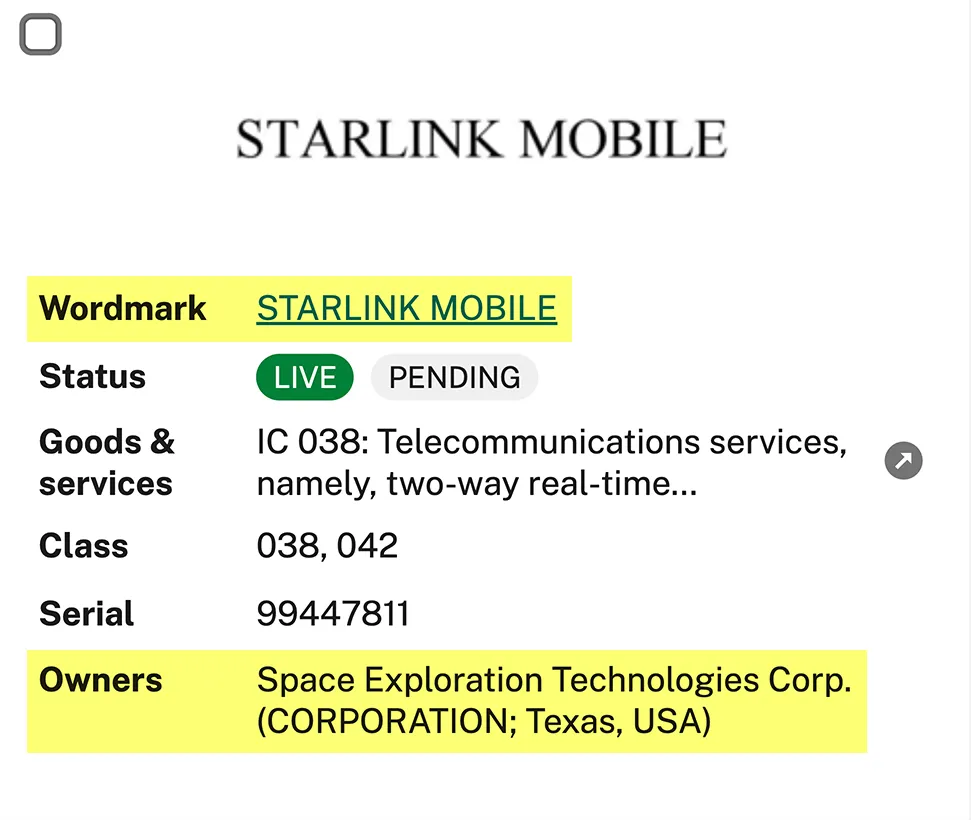
The spectrum piece completed the picture: SpaceX “bought exclusive-use, nationwide spectrum from EchoStar. For $17 billion,” after filing the “Starlink Mobile” and “Powered by Starlink” trademarks the same day. Baylin’s reading: “a trillion-dollar company doesn’t jump over all these hurdles just for fun.” Exclusive spectrum gives the operator the option to serve devices directly rather than only wholesale through carrier partners.
The compute overlay
What distinguishes 2026’s Direct-to-Cell map from a plain coverage story is the compute layer being built alongside it. The “Starmind” trademark covers a new class of compute satellites; the AI1 orbital data-center satellite, “the wingspan of a Boeing 747,” produces “somewhere around 120 to 150 kilowatts of computing power” running “on sunlight alone,” and Google “agreed to pay SpaceX $920 million a month for SpaceX computing capacity” through 2029. The reason a connectivity story starts mentioning data centers is convergence: if phones lean on orbital compute for AI workloads, the satellite network becomes more than coverage, it becomes the cloud. Musk’s Joe Rogan framing of the endpoint: “The phone will just display the pixels and make the sounds.”
What it means for investors
The investment expression of the 2026 partnership map is the component and equipment tier, not the operators. Baylin’s supplier list targets exactly that: “One of the companies in the report has supplied hardware to SpaceX for close to a decade… Most of them trade for under $100.” His historical evidence wall for the supplier pattern includes Skyworks “up as much as 491%” and Cirrus Logic “up as high as 489%” on the iPhone buildout, and Nokia-era suppliers going “from around $3 to close to $35 practically overnight.” The 2026 catalysts, satellite deployments, FCC rulings, chip deals, are dated and verifiable, which is more than can be said for most promo urgency. The blanket hedge stands: “all investments carry risk, and past performance never guarantees future results.”
Questions readers ask about the 2026 partnership map
Which partnerships actually exist on paper? The dated, checkable set: the $17 billion exclusive nationwide spectrum purchase from EchoStar, the same-day “Starlink Mobile” and “Powered by Starlink” trademark filings, the T-Mobile Direct-to-Cell arrangement, the Google contract paying $920 million a month for orbital compute capacity through 2029, and SEC IPO paperwork describing direct-to-smartphone service on par with terrestrial mobile networks. Each one is an event, not a rumor.
What changed in regulation? The FCC approved new rules to make satellite licensing faster and easier, which shortens the path for the roughly 15,000 next-gen satellites now starting to come online. That matters because Direct-to-Cell economics depend on constellation density, and faster licensing is a real tailwind rather than a talking point.
How should investors read the partnership news flow? As confirmation of the infrastructure, not the device. Every partnership above strengthens the network layer whether or not a Starphone ever ships, which is why Baylin’s free pick is Qualcomm, the chipmaker SpaceX has already tapped for satellite connectivity, rather than a phone-maker bet. The concentrated supplier names, most under $100, are for investors who want pre-announcement exposure and can tolerate event risk. The presentation’s own hedge deserves the last word: “Now, Elon Musk hasn’t confirmed that a Starphone is coming, of course.” Our full review covers the evidence wall in detail.
Where to learn more
For the wider thesis, see our coverage of direct-to-device satellite investing, Starlink stocks, and the Stansberry Research publisher profile. The full presentation, with the supplier list and the 30-day refund guarantee, is at the Stansberry order page.
NewsletterVetter is an independent publication. We receive compensation from some of the services we review through affiliate links. Nothing on this site is investment advice. Always do your own research.